Representative E. S. Johnny Walker
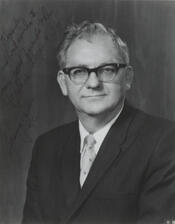
Here you will find contact information for Representative E. S. Johnny Walker, including email address, phone number, and mailing address.
| Name | E. S. Johnny Walker |
| Position | Representative |
| State | New Mexico |
| District | At-Large |
| Party | Democratic |
| Status | Former Representative |
| Term Start | January 4, 1965 |
| Term End | January 3, 1969 |
| Terms Served | 2 |
| Born | June 18, 1911 |
| Gender | Male |
| Bioguide ID | W000049 |
About Representative E. S. Johnny Walker
E. S. Johnny Walker (June 18, 1911 – October 8, 2000) was an American World War II veteran and Democratic politician who served two terms as a United States Representative from New Mexico from 1965 to 1969. Over a long career in public service, he held multiple state offices, played a notable role in modernizing New Mexico’s legal and administrative structures, and contributed to federal legislation, including the creation of Pecos National Monument.
Walker was born in Fulton, Kentucky, on June 18, 1911. He attended public schools in Fulton until 1926, when his family moved to Albuquerque, New Mexico. Settling permanently in the Southwest, he continued his education in Albuquerque’s public school system and graduated from Albuquerque High School. He went on to attend the University of New Mexico and later studied at George Washington University in Washington, D.C., gaining exposure to both state and national political environments that would shape his subsequent public career.
With the onset of World War II, Walker enlisted in the United States Army in 1942. He served in the North African and European Theaters of operation, participating in the Allied campaigns that ultimately led to victory in Europe. His military service continued through the duration of the war, and he was honorably discharged in 1945. This experience as a World War II veteran informed his later legislative interests, particularly in defense and veterans’ affairs.
Walker entered elective office in New Mexico shortly after the war. In 1948, he was elected to the New Mexico House of Representatives, where he served as majority whip. During his tenure in the state legislature, one of his most notable accomplishments was sponsoring legislation that allowed women to serve on juries in New Mexico, a significant step in expanding civic participation and modernizing the state’s legal system. His effectiveness in the legislature helped establish his reputation as a capable and reform-minded public official.
Building on his legislative experience, Walker was elected New Mexico commissioner of public lands in 1952. He served two consecutive two-year terms in that office, overseeing the management and leasing of state trust lands, which provided important revenue for public institutions. After completing those terms, he was appointed commissioner of the New Mexico Bureau of Revenue, where he was involved in the administration of the state’s tax and revenue systems. In 1960, he returned to the office of commissioner of public lands, again winning election to two more consecutive two-year terms. These positions placed him at the center of New Mexico’s land and fiscal policy during a period of growth and change.
In 1964, Walker was elected to the United States House of Representatives as a Democrat, winning the at-large seat previously held by Joseph Montoya, who successfully ran for the United States Senate that year. He took office in January 1965 and served two terms in Congress, from 1965 to 1969. As a member of the House of Representatives, he participated in the democratic process during a significant period in American history, representing the interests of New Mexico’s constituents during the era of the Great Society and the Vietnam War. In Congress, he served on the House Committee on Armed Services, where his World War II background and familiarity with defense issues informed his work. Among his legislative achievements was sponsoring the bill that created Pecos National Monument in New Mexico, helping to preserve an important historical and cultural site.
Walker’s congressional career was shaped by changes in New Mexico’s electoral system. Until the 1968 election, New Mexico elected its representatives at large, but that year the state drew congressional districts for the first time. Walker’s home was placed in the newly created 2nd congressional district, which encompassed most of the southern half of the state as well as a small portion of Albuquerque. His support for gun control measures and the Pentagon’s decision to close Walker Air Force Base near Roswell—an action he adamantly opposed but was nonetheless associated with in the public mind—cost him political goodwill in parts of the new district. In the 1968 general election, he faced Ed Foreman, a former congressman from Texas, who mounted what was then the most expensive campaign in New Mexico’s history. Walker was narrowly defeated in November 1968 by a margin of about one-half of one percentage point, ending his service in the House in January 1969.
After leaving Congress, Walker remained minimally involved in state politics but did not seek further elected office. He continued to reside in Albuquerque, maintaining ties to the community he had represented and served for much of his life. He died of leukemia in Albuquerque on October 8, 2000, at the age of 89. His long record of military and public service was recognized by colleagues and successors; United States Senator Jeff Bingaman honored his memory on the floor of the Senate, noting his contributions to New Mexico and to the nation.