Representative Earl Hutto
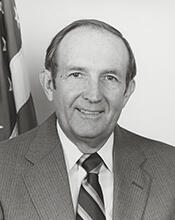
Here you will find contact information for Representative Earl Hutto, including email address, phone number, and mailing address.
| Name | Earl Hutto |
| Position | Representative |
| State | Florida |
| District | 1 |
| Party | Democratic |
| Status | Former Representative |
| Term Start | January 15, 1979 |
| Term End | January 3, 1995 |
| Terms Served | 8 |
| Born | May 12, 1926 |
| Gender | Male |
| Bioguide ID | H001018 |
About Representative Earl Hutto
Earl Dewitt Hutto (May 12, 1926 – December 14, 2020) was an American politician, sports director, and advertising executive who served as the U.S. Representative for Florida’s 1st congressional district from January 3, 1979, to January 3, 1995. A member of the Democratic Party, he represented a largely conservative constituency in the Florida Panhandle for eight consecutive terms and was regarded as one of the most conservative Democrats in Congress during his tenure.
Hutto was born in Midland City, Dale County, Alabama, to Lemmie and Ellie (née Mathis) Hutto. He attended the public schools of Dale County and came of age during the Second World War. From 1944 to 1946 he served in the United States Navy, an experience that coincided with the closing years of the war and the immediate postwar period. After his military service, he pursued higher education in Alabama, earning a Bachelor of Science degree from Troy State University (then Troy State Teachers College) in 1949. Seeking further training in communications, he undertook graduate study in broadcasting at Northwestern University in 1951, laying the foundation for a career in media and public communication.
Following his academic preparation, Hutto embarked on a professional career in broadcasting that would make him a familiar figure across parts of Alabama and Florida. He worked as sports director at WEAR-TV in Pensacola, Florida, from 1954 to 1961, where he covered regional athletics and developed a public profile in the Gulf Coast area. He then served as sports director at WSFA-TV in Montgomery, Alabama, from 1961 to 1963. Returning to Florida, he became sports director at WJHG-TV in Panama City, holding that position from 1961 to 1973 as the station’s sports coverage expanded along with the region’s growth. After leaving full-time broadcasting, he operated an advertising agency from 1973 to 1979, gaining additional experience in business, marketing, and public relations that would later inform his political career.
Hutto entered elective office in the early 1970s. He was elected as a Democrat to the Florida House of Representatives in 1972 and was reelected in 1974 and 1976, serving three terms in the state legislature. In the Florida House, he represented a Panhandle constituency and built a reputation as a conservative Democrat aligned with the views of many of his North Florida constituents. His state legislative service provided him with legislative experience and name recognition that positioned him for a bid for national office.
In 1978, Hutto was elected as a Democrat to the 96th Congress from Florida’s 1st congressional district and was subsequently reelected to seven succeeding Congresses, serving from January 3, 1979, to January 3, 1995. His service in Congress occurred during a significant period in American history, spanning the final years of the Cold War, the Reagan and George H. W. Bush administrations, and the early years of the Clinton administration. As a member of the U.S. House of Representatives, Hutto participated in the legislative process, represented the interests of his constituents in the Florida Panhandle, and contributed to debates on national policy. Reflecting both his district’s political orientation and his own views, he was widely regarded as one of the most conservative Democrats in the House. Among his notable votes, he opposed the Comprehensive Anti-Apartheid Act in 1986, aligning with a minority position on sanctions policy toward South Africa.
Hutto’s electoral record underscored both his personal popularity and the evolving partisan character of his district. Florida’s 1st district, historically part of the “Solid South,” began shifting toward Republican presidential candidates earlier than many other areas of the state, with white voters increasingly splitting their tickets from the 1950s onward. Nonetheless, from 1978 through 1988 Hutto was repeatedly returned to Congress by comfortable margins, never dropping below 61 percent of the vote in that period. He often faced only nominal Republican opposition, and in 1984 he ran completely unopposed for reelection even as President Ronald Reagan carried the district with more than 70 percent of the vote. In 1988, when George H. W. Bush won the district by a margin similar to Reagan’s, Hutto was reelected with 66 percent of the vote. The district became more competitive in the 1990s: in 1990 Republican challenger Terry Ketchel held him to 52 percent of the vote in the district’s first closely contested race in many years. Hutto defeated Ketchel again in a 1992 rematch, once more with 52 percent. He chose not to run for reelection in 1994 to the 104th Congress and was succeeded by Republican Joe Scarborough. The subsequent electoral history of the district underscored its Republican realignment: Hutto remained the last Democrat to win over 40 percent of the district’s vote, or to carry a county within the district, until Gay Valimont in the 2025 special election.
After leaving Congress in January 1995, Hutto retired from elective office but remained engaged in public affairs. In 2017 he joined the bipartisan ReFormers Caucus, a group of former members of Congress and other former elected officials focused on government and political reform, reflecting his continued interest in the functioning of American democratic institutions and the integrity of the electoral process.
Earl Dewitt Hutto died on December 14, 2020, at the age of 94. His long career spanned military service in World War II, decades in broadcasting and advertising, service in the Florida House of Representatives, and eight terms in the U.S. House of Representatives, during which he represented Florida’s 1st congressional district and participated in the national legislative process over a period of substantial political and social change.