Representative Earl Ramage Lewis
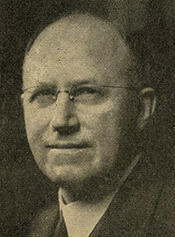
Here you will find contact information for Representative Earl Ramage Lewis, including email address, phone number, and mailing address.
| Name | Earl Ramage Lewis |
| Position | Representative |
| State | Ohio |
| District | 18 |
| Party | Republican |
| Status | Former Representative |
| Term Start | January 3, 1939 |
| Term End | January 3, 1949 |
| Terms Served | 4 |
| Born | February 22, 1887 |
| Gender | Male |
| Bioguide ID | L000279 |
About Representative Earl Ramage Lewis
Earl Ramage Lewis (February 22, 1887 – February 1, 1956) was an American lawyer and Republican politician who served four terms as a U.S. Representative from Ohio. Born in Lamira, Belmont County, Ohio, he was educated in the local public and high schools, laying the foundation for a career that combined law and public service at both the state and national levels.
Lewis pursued higher education at Muskingum College in New Concord, Ohio, from which he graduated in 1911. He then studied law at the law department of Western Reserve University in Cleveland, Ohio, earning his degree in 1914. That same year he was admitted to the bar and commenced the practice of law in St. Clairsville, Ohio. His legal practice in St. Clairsville became the professional base from which he entered state politics and later national office.
Lewis’s political career began in the Ohio State Senate, where he first served as a member in 1927 and 1928. He quickly rose in prominence within the state Republican Party, serving as chairman of the Republican State campaign committee for Ohio in 1930. Returning to the Ohio Senate in 1931, he served there until 1934. During this second period of legislative service, he held key leadership posts, including president pro tempore of the Senate in 1931 and 1932 and Republican floor leader from 1931 to 1934. In addition to his legislative responsibilities, Lewis was a member of the Interstate Commission on Conflicting Taxation of the American Legislators Association from 1931 to 1935, reflecting his engagement with complex issues of state and interstate taxation and fiscal policy.
Building on his state-level experience, Lewis was elected as a Republican to the Seventy-sixth Congress, representing Ohio in the U.S. House of Representatives from January 3, 1939, to January 3, 1941. His service in Congress occurred during a significant period in American history, on the eve of the United States’ entry into World War II. As a member of the House of Representatives, Earl Ramage Lewis participated in the democratic process and represented the interests of his Ohio constituents, contributing to the legislative process during his term in office. After an unsuccessful campaign for reelection in 1940, he returned to St. Clairsville and resumed the practice of law.
Lewis reentered national politics two years later and was elected again as a Republican to the Seventy-eighth, Seventy-ninth, and Eightieth Congresses, serving from January 3, 1943, to January 3, 1949. In these three consecutive terms, he served in the House during World War II and the immediate postwar years, a period marked by major decisions on wartime mobilization, veterans’ affairs, and the transition to a peacetime economy. Over the course of these four terms in Congress—spanning 1939 to 1941 and 1943 to 1949—Earl Ramage Lewis contributed to the legislative process and represented the interests of his constituents as a member of the Republican Party. He was an unsuccessful candidate for reelection in 1948 and again returned to his legal practice.
In his later years, Lewis remained active in civic and educational affairs. He served as a trustee of his alma mater, Muskingum College, maintaining a long-standing connection to the institution that had shaped his early academic and professional development. He continued to reside in the Ohio Valley region while practicing law and engaging in public and community service.
Earl Ramage Lewis died on February 1, 1956, in Wheeling, West Virginia. He was interred in Union Cemetery in St. Clairsville, Ohio, the community where he had built his legal career and from which he had launched his long tenure in public office.