Representative Earle Cabell
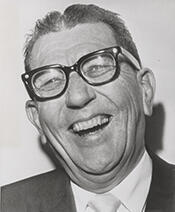
Here you will find contact information for Representative Earle Cabell, including email address, phone number, and mailing address.
| Name | Earle Cabell |
| Position | Representative |
| State | Texas |
| District | 5 |
| Party | Democratic |
| Status | Former Representative |
| Term Start | January 4, 1965 |
| Term End | January 3, 1973 |
| Terms Served | 4 |
| Born | October 27, 1906 |
| Gender | Male |
| Bioguide ID | C000002 |
About Representative Earle Cabell
Earle Cabell (October 27, 1906 – September 24, 1975) was an American businessman and politician who served as the 48th mayor of Dallas, Texas, from 1961 to 1964 and as a Democratic Representative from Texas in the United States Congress from 1965 to 1973. A conservative Democrat, he played a prominent role in Dallas civic life and in national politics during a turbulent era that included the assassination of President John F. Kennedy and the escalation of the Vietnam War.
Cabell was born in Dallas, Texas, the youngest of four sons of former Dallas mayor Ben E. Cabell and the grandson of William L. Cabell, a former Dallas mayor and Confederate general. He grew up in a family deeply involved in the civic and political affairs of the city, and his brother Charles P. Cabell later served as deputy director of the Central Intelligence Agency from 1953 to 1962. Earle Cabell attended North Dallas High School, graduating in 1925. He pursued higher education briefly, attending Texas A&M University for one term—where he met future Texas figures Jack Crichton and H. R. “Bum” Bright—and then Southern Methodist University for one term, before turning his attention to business.
In the years following his formal education, Cabell entered the dairy and retail business with his brothers. Together they founded Cabell’s Inc., a chain of dairies and convenience stores that became a well-known regional enterprise. He rose through the company’s leadership, serving as executive vice president and later president of Cabell’s Inc. at the time of its sale to the Southland Corporation. In addition to his business responsibilities, Cabell was active in local commercial and civic organizations. He served as vice president of the Dallas chapter of the Texas Manufacturers Association and held membership in the Dallas Sales Executive Club and the Dallas Crime Commission. He was also involved in anti-communist and conservative civic efforts, including participation in the Dallas Crusade for Freedom, and he attended the founding of the Dallas chapter of the John Birch Society.
Cabell entered electoral politics in Dallas at the beginning of the 1960s. Running for mayor in 1961, he campaigned on a strongly anti-communist platform. He condemned proposals for slum clearance and urban redevelopment in Dallas as “the most socialistic measure to be passed onto the citizens of Dallas,” a stance that resonated with many voters and contributed to his election as the city’s 48th mayor. After taking office, he appeared on WFAA-TV to introduce the documentary “Communist Encirclement,” produced by George S. Benson’s National Education Program, and he publicly supported retired Army General Edwin Walker, a prominent anti-communist figure, whom he declared an honorary citizen of Dallas and presented with a cowboy hat at an event in the city’s Memorial Auditorium. In October 1961, when President John F. Kennedy flew to Dallas, Cabell did not greet him at the airport, later claiming he was too busy; the White House was reported to have been displeased by what it viewed as an official slight.
Cabell’s tenure as mayor became inextricably linked with the assassination of President Kennedy on November 22, 1963. On that morning, Cabell and his wife met President Kennedy and First Lady Jacqueline Kennedy at Love Field in Dallas. Cabell’s wife later reported that while riding in the presidential motorcade through Dealey Plaza, she observed “a rather long looking thing” protruding from a window of the Texas School Book Depository immediately after the first shot was fired. Following the assassination, Cabell was informed by the Federal Bureau of Investigation that he was the subject of a death threat. He was provided police protection when he traveled to Washington, D.C., to attend President Kennedy’s funeral and upon his return to Dallas. In the aftermath of the killing of accused assassin Lee Harvey Oswald by Jack Ruby while in police custody, Cabell defended the Dallas Police Department, stating that he was proud of the force and asserting that critics were merely seeking “someone else to blame.” He maintained that the police had “performed admirable under the most difficult of circumstances.” Years later, documents released by the Assassination Records Review Board in 1999 indicated that Kennedy’s original coffin, damaged during transport from Dallas to Washington, had been disposed of in the Atlantic Ocean at a depth of 9,000 feet, reportedly at Cabell’s suggestion. He believed the casket had “value for the morbidly curious” and argued that destroying it would help curb such morbid interest. Over time, some versions of Kennedy assassination conspiracy theories, including the so‑called “Renegade CIA Clique” theory, implicated Cabell alongside CIA officials James Jesus Angleton and William King Harvey and his brother Charles Cabell, alleging that Earle Cabell re-routed Kennedy’s motorcade as a favor to his brother. In 2017, documents declassified under the JFK Records Act revealed that Cabell had been a CIA asset since 1956, further fueling speculative accounts, though no official body has substantiated these conspiracy claims.
On February 3, 1964, Cabell resigned as mayor of Dallas in order to run for Congress. In the 1964 election he unseated ten-year Republican incumbent Bruce Alger, becoming a Democratic Representative from Texas in the United States Congress. He took office in January 1965 and served four consecutive terms, remaining in the House of Representatives until January 3, 1973. His service in Congress thus extended over a significant period in American history marked by the civil rights movement, the Great Society legislative agenda, and the Vietnam War. As a member of the House, he participated in the legislative process and represented the interests of his Texas constituents, contributing to debates on civil rights, education, and foreign policy.
During his congressional career, Cabell’s voting record reflected both his conservative Democratic orientation and the shifting political landscape of the 1960s. He voted in favor of the Voting Rights Act of 1965 and the Civil Rights Act of 1968, supporting landmark federal protections for minority voting rights and fair housing. At the same time, he opposed court-ordered desegregation busing. In 1971, he joined Congressman Ray Roberts in introducing a proposed constitutional amendment that would have prevented any public school student from being required to attend a particular school as part of a busing program. Cabell was also a strong supporter of the Vietnam War. He condemned the draft resistance movement, claiming that some resisters deliberately committed crimes such as robbery, burglary, and assault, or falsely claimed to be homosexual, in order to secure dishonorable discharges—actions he characterized as “Communist-inspired.” He criticized the Fulbright hearings held by the Senate Committee on Foreign Relations to evaluate U.S. policy in Vietnam, describing them as a “witch-hunt” and a disservice to the United States. In the 1972 presidential election, when Senator George McGovern became the Democratic nominee, Cabell publicly distanced himself from his party’s standard-bearer, later asserting that McGovern was “poison in this area” and recalling, “I denounced him immediately. Sincerely, I thought he was a menace.” Cabell at least partially attributed his own defeat in the 1972 congressional race, when he lost to Republican Alan Steelman, to McGovern’s unpopularity in his district.
After leaving Congress in January 1973, Cabell retired from public office and returned to private life in Dallas. He remained in the city where his family had long been prominent and where he had built his business and political career. Cabell died in Dallas on September 24, 1975, from emphysema. He was buried at Restland Cemetery in Dallas. His legacy in the city is commemorated by the Earle Cabell Federal Building and Courthouse on Commerce Street in downtown Dallas, which bears his name and reflects his long association with the civic and political life of his native city.