Senator Earle Bradford Mayfield
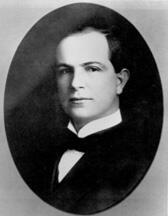
Here you will find contact information for Senator Earle Bradford Mayfield, including email address, phone number, and mailing address.
| Name | Earle Bradford Mayfield |
| Position | Senator |
| State | Texas |
| Party | Democratic |
| Status | Former Representative |
| Term Start | December 3, 1923 |
| Term End | March 3, 1929 |
| Terms Served | 1 |
| Born | April 12, 1881 |
| Gender | Male |
| Bioguide ID | M000281 |
About Senator Earle Bradford Mayfield
Earle Bradford Mayfield (April 12, 1881 – June 23, 1964) was a Texas lawyer, businessman, and Democratic politician who served one term as a United States Senator from Texas from 1923 to 1929. He was widely regarded by voters of his era as the first U.S. Senator associated with the revived Ku Klux Klan in the 1920s, a connection that shaped both his rise to national office and his eventual defeat for reelection. Over the course of his public career, he also served in the Texas State Senate and on the Texas Railroad Commission, and remained active in law and business for many years after leaving Congress.
Mayfield was born in Overton, Rusk County, Texas, on April 12, 1881, the son of John Blythe Mayfield (1857–1921) and Mary Ellen DeGuerin Mayfield (1859–1886). He spent his early years in East Texas and completed his secondary education at the high school in Timpson, Texas. He then attended Tyler Business College, where he received training that supported his later commercial activities. In 1900, he graduated from Southwestern University in Georgetown, Texas. Immediately afterward, he pursued legal studies at the University of Texas at Austin from 1900 to 1901, and continued reading law independently until he was admitted to the bar in 1907.
Upon admission to the bar, Mayfield began practicing law in Meridian, Bosque County, Texas. Alongside his legal work, he engaged in several business ventures, including participation in the wholesale grocery trade and the operation of multiple farms, reflecting the agrarian and commercial character of early twentieth-century Texas. His family connections also linked him to state public life: his uncle, Allison Mayfield (1860–1923), served as Texas Secretary of State and, beginning January 5, 1897, as chairman of the Texas Railroad Commission, a position he held until his death on January 23, 1923. On June 10, 1902, in Bosque County, Mayfield married Ora Lumpkin (1882–1979); the couple became the parents of three sons.
Mayfield’s formal political career began with his election as a Democrat to the Texas State Senate, where he served from 1907 to 1913. During this period he represented his district in Austin at a time when Texas politics were dominated by the Democratic Party and shaped by issues such as railroad regulation, agricultural policy, and the emerging prohibition movement. In 1913 he advanced to statewide office as a member of the Texas Railroad Commission, an influential regulatory body overseeing railroads and, increasingly, other utilities and transportation interests. He served on the commission from 1913 to 1923, a decade that coincided with rapid economic and infrastructural growth in Texas.
In 1922, Mayfield sought national office and entered the Democratic primary for the United States Senate, challenging five-term incumbent Senator Charles A. Culberson. In a crowded field of six candidates, Mayfield emerged as a leading contender and advanced to a runoff against former Governor James E. Ferguson. The campaign occurred against the backdrop of the Eighteenth Amendment and nationwide prohibition of alcoholic beverages. Mayfield was openly aligned with the revived Ku Klux Klan, which in Texas strongly supported prohibition and the continued segregation of white and Black citizens. Ferguson, by contrast, publicly opposed the Klan and was strongly against prohibition. Mayfield quietly accepted Klan support but never stated that he had formally joined the organization. With the endorsement of Texas’s other U.S. Senator, Morris Sheppard of Texarkana, Mayfield secured the Democratic nomination, which in Texas at that time was usually tantamount to election.
In the general election of November 7, 1922, Mayfield faced Independent candidate George Peddy, who enjoyed the backing of the Republican Party. Because of disputes over filing deadlines and ballot access, Peddy’s name did not appear on the ballot, and his supporters mounted a write-in campaign that ultimately garnered about one-third of the vote. After Mayfield’s apparent victory, Peddy challenged the result on technical and procedural grounds. A Senate committee investigated and ruled in Mayfield’s favor, and the full Senate voted to seat him, though his swearing-in was delayed while the contest was resolved. Mayfield formally took office on December 3, 1923, and served in the United States Senate until 1929. During his single term, he participated in the legislative process and represented the interests of his Texas constituents in a period marked by post–World War I adjustment, agricultural distress, and the early years of the Roaring Twenties.
Mayfield’s association with the Ku Klux Klan, which had aided his initial election, became a central issue in his bid for a second term. In the 1928 Democratic primary he faced a large field of challengers and was forced into a runoff with Representative Tom Connally of McLennan County. Connally and other opponents attacked Mayfield’s Klan ties and used the changing political climate of the late 1920s, in which the Klan’s influence was waning, to their advantage. Mayfield was defeated in the runoff, and because winning the Democratic nomination in Texas was effectively equivalent to winning the general election, Connally went on to claim the Senate seat, succeeding Mayfield in 1929. In 1930, Mayfield attempted a political comeback by seeking the Democratic nomination for governor of Texas, but he finished seventh in a field of eleven candidates; Ross Sterling ultimately won the governorship.
After leaving the Senate, Mayfield moved to Tyler, Texas. There he resumed the practice of law and continued to manage his various business interests, remaining active in professional and commercial affairs until his retirement in 1952. In recognition of his career and public prominence, he received an honorary degree of Doctor of Humane Letters from John Brown University in Siloam Springs, Arkansas. Mayfield lived in retirement in Tyler until his death on June 23, 1964. He was buried in Oakwood Cemetery in Tyler, closing a long life that had spanned from the post-Reconstruction era through the mid-twentieth century and had left a complex imprint on Texas and national politics.