Representative Earle Dukes Willey
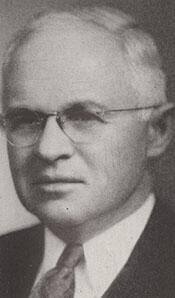
Here you will find contact information for Representative Earle Dukes Willey, including email address, phone number, and mailing address.
| Name | Earle Dukes Willey |
| Position | Representative |
| State | Delaware |
| District | At-Large |
| Party | Republican |
| Status | Former Representative |
| Term Start | January 6, 1943 |
| Term End | January 3, 1945 |
| Terms Served | 1 |
| Born | July 21, 1889 |
| Gender | Male |
| Bioguide ID | W000483 |
About Representative Earle Dukes Willey
Earle Dukes Willey (July 21, 1889 – March 17, 1950) was an American lawyer, jurist, and Republican politician from Dover, in Kent County, Delaware, who served one term as the U.S. Representative from Delaware from 1943 to 1945. Over the course of his career he held a succession of educational, legal, and statewide offices, becoming a prominent figure in Delaware public life during the first half of the twentieth century.
Willey was born in Greenwood, Sussex County, Delaware, on July 21, 1889. He attended the public schools of Delaware before pursuing higher education at Dickinson College in Carlisle, Pennsylvania, from which he was graduated in 1911. Seeking a legal career, he later attended the George Washington University Law School in Washington, D.C. After completing his legal studies, he was admitted to the Delaware Bar in 1920, formally beginning his work as an attorney in his home state.
Before entering law and elective politics, Willey began his professional life in education. Immediately after his graduation from Dickinson College, he served as principal of Greenwood High School from 1911 until 1915. His experience in education was followed by service at the federal level when he became secretary to U.S. Representative Thomas W. Miller in Washington, D.C., a position he held from 1915 until 1917. Returning to Delaware, he was appointed state librarian, serving from 1917 until 1921, a role that placed him at the center of the state’s archival and informational resources during and immediately after World War I.
Upon his admission to the bar, Willey embarked on a substantial legal and judicial career. He was appointed deputy attorney general and prosecuting attorney for Kent County, Delaware, serving from 1921 until 1931. In 1931 he was appointed Judge of the Court of Common Pleas of Kent County, a position he held until 1939. During part of this period he also served as Judge of the juvenile court of Kent and Sussex counties from 1933 until 1939, reflecting his involvement in the development and administration of Delaware’s juvenile justice system. Beyond the courtroom, Willey contributed to educational and charitable institutions as a trustee of the University of Delaware, the Elizabeth W. Murphy School for Orphan Children, and the State College for Colored Students, underscoring his engagement with higher education and social welfare in the state.
Willey’s statewide political career advanced in the late 1930s and early 1940s. In 1940 he was the Republican candidate for Lieutenant Governor of Delaware but was unsuccessful, losing to Democrat Isaac J. MacCollum. Despite this setback, he remained an influential Republican figure. He served as Secretary of State of Delaware from 1941 until 1943, administering key aspects of state government on the eve of and during the early years of U.S. involvement in World War II. His tenure in this office further elevated his profile and positioned him for national office.
In 1942 Willey was elected to the United States House of Representatives as a Republican, defeating incumbent Democratic Representative Philip A. Traynor in the at-large seat for Delaware. He took office on January 3, 1943, and served in the Republican minority in the 78th Congress during the administration of President Franklin D. Roosevelt. His term, which lasted from January 3, 1943, until January 3, 1945, coincided with a critical phase of World War II, and he participated in the legislative process and democratic deliberations of the House of Representatives while representing the interests of his Delaware constituents. In the 1944 election, Willey sought a second term but was defeated by his predecessor, Philip A. Traynor, and thus concluded his congressional service after one two-year term, in accordance with the constitutional schedule under which elections are held the first Tuesday after November 1 and representatives take office on January 3.
After leaving Congress, Willey returned to Dover and resumed the practice of law, continuing his long association with the legal profession in Delaware. He remained a respected figure in state political and civic circles, drawing on his extensive experience as educator, attorney, judge, and former congressman. Earle Dukes Willey died in Dover, Delaware, on March 17, 1950. He was buried in St. Johnstown Cemetery near his birthplace of Greenwood, Delaware, closing a life spent largely in public service to his state and its institutions.