Representative Ebenezer J. Hill
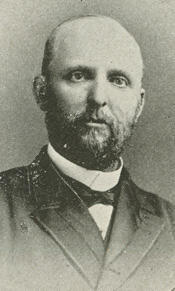
Here you will find contact information for Representative Ebenezer J. Hill, including email address, phone number, and mailing address.
| Name | Ebenezer J. Hill |
| Position | Representative |
| State | Connecticut |
| District | 4 |
| Party | Republican |
| Status | Former Representative |
| Term Start | December 2, 1895 |
| Term End | March 3, 1919 |
| Terms Served | 11 |
| Born | August 4, 1845 |
| Gender | Male |
| Bioguide ID | H000591 |
About Representative Ebenezer J. Hill
Ebenezer J. Hill (August 4, 1845 – September 27, 1917) was an American politician and banker who served as a Republican member of the United States House of Representatives from Connecticut’s 4th congressional district for eleven terms between 1895 and 1917. Over the course of his long tenure in Congress, he became known among his colleagues as an authority on banking and tariffs and played a significant role in the legislative process during a transformative period in American history. He also served in the Connecticut State Senate from 1886 to 1887, helping to shape state policy before his election to national office.
Hill was born on August 4, 1845, in Redding, Connecticut, the son of Reverend Moses Hill and Charlotte Ilsley McLellan. He attended local public schools and then pursued further study at the Center Academy. During the American Civil War, in 1863, he enlisted in the Union Army and served in the Quartermaster Department as an assistant to his brother, who held the rank of major. Hill remained in this position until the end of the war, gaining early experience in logistics and administration that would later inform his public career.
After the Civil War, Hill attended Yale College from 1865 to 1866. Although he did not complete a degree program, his connection with Yale remained strong, and in 1895 the university conferred upon him an honorary degree in recognition of his public service and professional accomplishments. Following his brief period at Yale, Hill settled in Norwalk, Connecticut, where he embarked on a career in business and banking that established him as a prominent local figure.
In Norwalk, Hill engaged actively in civic affairs while building his business interests. He served as a Burgess of Norwalk, a position that placed him in the municipal leadership of the growing community, and he chaired the board of school visitors, contributing to the oversight and improvement of local public education. His involvement in Republican Party politics expanded in the 1880s; he was a delegate to the Republican National Convention in 1884 and served a term on the Republican State central committee, helping to shape party strategy and policy in Connecticut.
Hill’s state-level political career advanced when he was elected to the Connecticut State Senate, in which he served from 1886 to 1887. His single term in the Senate provided him with legislative experience and a broader platform within the Republican Party. Building on this record, he sought national office in the 1890s, positioning himself as a candidate with both business expertise and legislative experience.
In 1894, Hill was elected as a Republican to the Fifty-fourth Congress and took his seat in the U.S. House of Representatives on March 4, 1895. He was subsequently reelected to eight succeeding Congresses, serving continuously from March 4, 1895, to March 3, 1913. Throughout these years, he represented Connecticut’s 4th congressional district and participated actively in the work of the House during a period marked by industrial expansion, debates over monetary policy, and the emergence of the United States as a global power. His service in Congress during these eleven terms placed him at the center of national deliberations on economic and social policy.
Within the House of Representatives, Hill developed particular influence in financial and fiscal matters. He served for eight years on the Committee on Banking and Currency, where he contributed to legislation affecting the nation’s banking system and monetary policy. He also served for fourteen years on the powerful Committee on Ways and Means, which oversaw revenue, tariffs, and taxation. During the Sixty-first Congress, he was chairman of the Committee on Expenditures in the Department of the Treasury, supervising oversight of federal spending in that department. Hill was widely regarded as a proponent of the gold standard and a protectionist in tariff policy, and he was also known as an outspoken supporter of women’s suffrage, aligning himself with efforts to expand voting rights to women at the national level.
Hill’s long tenure was briefly interrupted when he was an unsuccessful candidate for reelection in 1912 to the Sixty-third Congress. After leaving office at the conclusion of his term on March 3, 1913, he remained a significant figure in Connecticut Republican politics and public life. He returned to Congress when he was elected again as a Republican to the Sixty-fourth and Sixty-fifth Congresses, resuming his service on March 4, 1915. In this final period in the House, he continued to represent the interests of his constituents from Connecticut’s 4th district and to participate in debates over fiscal policy and national preparedness on the eve of and during World War I.
Ebenezer J. Hill served in the House of Representatives from 1895 to 1913 and from 1915 until his death in 1917, encompassing eleven terms in office and reflecting more than two decades of continuous engagement with the legislative process. He died in Norwalk, Connecticut, on September 27, 1917, while still serving in Congress. Hill was interred in Riverside Cemetery in Norwalk. His career, spanning local office, state legislative service, and long-standing membership in the national legislature, marked him as a significant Republican figure in Connecticut and a notable participant in the political and economic debates of his era.