Representative Ed Bryant
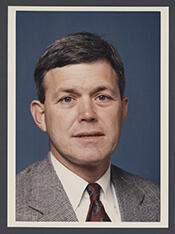
Here you will find contact information for Representative Ed Bryant, including email address, phone number, and mailing address.
| Name | Ed Bryant |
| Position | Representative |
| State | Tennessee |
| District | 7 |
| Party | Republican |
| Status | Former Representative |
| Term Start | January 4, 1995 |
| Term End | January 3, 2003 |
| Terms Served | 4 |
| Born | September 7, 1948 |
| Gender | Male |
| Bioguide ID | B000996 |
About Representative Ed Bryant
Edward Glenn Bryant (born September 7, 1948) is an American politician, attorney, and jurist who served as a Republican member of the United States House of Representatives from Tennessee from January 3, 1995, to January 3, 2003. Over the course of four terms in Congress, he represented his constituents during a significant period in American political history and contributed to the legislative process as a solidly conservative voice within the House of Representatives. He later served as United States Attorney for the Western District of Tennessee from 1991 to 1993 and, subsequently, as a United States magistrate judge for the Western District of Tennessee from December 12, 2008, until his retirement from the bench on February 28, 2019.
Bryant was born and raised in Jackson, Tennessee. His mother worked as a registered nurse, and his father was an electrician, giving him a family background rooted in the working and professional middle class of West Tennessee. He attended Tennessee Technological University for one year before transferring to the University of Mississippi. At Ole Miss, he earned a Bachelor of Arts degree in 1970 and a Juris Doctor degree in 1972. During his student years he was active in campus life, joining the Sigma Nu fraternity and being selected for membership in Omicron Delta Kappa, a national leadership honor society, reflecting early recognition of his leadership potential.
Following his graduation from law school, Bryant received a commission as a second lieutenant in the United States Army through the Reserve Officers’ Training Corps. He initially served in the Military Intelligence Corps and was later selected for the Judge Advocate General’s Corps, combining his legal training with military service. His assignments included work with the Ballistic Missile Defense System Command in Huntsville, Alabama, service with the 4th Infantry Division at Fort Carson, Colorado, and an academic posting at the United States Military Academy at West Point, where he taught constitutional law to cadets. After his active-duty service, Bryant completed an additional year of service in the Tennessee Army National Guard, further extending his military involvement.
Upon returning to civilian life in Jackson, Tennessee, Bryant entered private legal practice, joining the law firm of Waldrop & Hall. He built a regional legal career and became active in the local bar, eventually being elected president of the Madison County Bar Association. His growing professional reputation and longstanding interest in public affairs led him toward more visible political activity by the late 1980s.
Bryant’s first prominent foray into politics came in 1988, when he served as an early organizer in Tennessee for the presidential campaign of conservative televangelist Pat Robertson. That same year, Representative Ed Jones of Tennessee’s 8th Congressional District, a largely Democratic district in the northwestern part of the state, chose not to seek reelection. Bryant secured the Republican nomination for the open seat but was defeated in the general election by Democratic nominee John S. Tanner, an attorney and state representative from Union City. After this loss, Bryant returned to the practice of law until President George H. W. Bush appointed him United States Attorney for the Western District of Tennessee in 1991. He served in that federal prosecutorial post until 1993, gaining further experience in federal law enforcement and the federal court system. He later moved to Henderson, near Jackson, in the neighboring 7th Congressional District, positioning himself for a future congressional bid.
In 1994, when Representative Don Sundquist of Tennessee’s 7th Congressional District declined to run for reelection in order to pursue a successful campaign for governor, Bryant entered the race to succeed him. The 7th District, one of the most reliably Republican districts in Tennessee outside of East Tennessee, offered a favorable landscape for a GOP candidate. Bryant won the Republican primary and, as widely expected, prevailed in the general election. He took office on January 3, 1995, and went on to serve four consecutive terms, remaining in Congress until January 3, 2003. In his three subsequent reelection campaigns, he never received less than 60 percent of the vote. His most competitive race came in his first reelection bid, when he defeated Clarksville mayor Don Trotter, a well-financed Democratic challenger, by more than 30 percentage points. Bryant ran unopposed in 1998 and was reelected by more than 40 points in 2000. As of the 2016 elections, Trotter remained the last reasonably well-financed Democrat to mount a serious challenge in the 7th District, and one of only a few Democrats to do so since the district first became reliably Republican in the early 1970s.
During his tenure in the House of Representatives, Bryant established a firmly conservative record. He became a favored figure among business-oriented and social conservative organizations, receiving support and high ratings from groups such as the National Federation of Independent Business, the American Conservative Union, the National Rifle Association of America, and National Right to Life. He was best known nationally for his role as one of the House managers—effectively prosecutors—in the impeachment trial of President Bill Clinton before the United States Senate in 1999. In that role, Bryant was often regarded as one of the less strident and more personable of the managers, a reputation that reportedly contributed to Monica Lewinsky’s preference that he be the manager to conduct her interview in connection with the case. Throughout his service, he participated in the democratic process on behalf of his West Tennessee constituents and played an active role in the legislative and oversight responsibilities of the House.
In 2002, Bryant chose not to seek reelection to the House and instead entered the Republican primary for the United States Senate seat held by Senator Fred Thompson, who had announced that he would not seek another term. The timing of Thompson’s decision required Bryant to assemble a relatively hurried and underfinanced statewide campaign. He faced former Tennessee governor and U.S. secretary of education Lamar Alexander, a two-time presidential candidate with substantial name recognition and financial backing, despite Alexander’s two-decade absence from Tennessee statewide ballots. In the August 2002 Republican primary, Alexander defeated Bryant with approximately 55 percent of the vote to Bryant’s 44 percent. Although unsuccessful, Bryant’s campaign impressed many Republican activists, and he remained active in party politics, making appearances on behalf of the Republican ticket during the general election campaign that followed his primary defeat.
After the 2002 Senate primary, Bryant briefly relocated to Nashville before returning to West Tennessee. He again sought higher office in 2006, entering the Republican primary for the U.S. Senate seat then held by Senate Majority Leader Bill Frist, who chose not to run for reelection. In the August 3, 2006, primary, Bryant faced two major Republican opponents: former Chattanooga mayor and 1994 Senate candidate Bob Corker and former U.S. Representative and 2002 Republican gubernatorial nominee Van Hilleary. During the campaign, Bryant drew attention for remarks in a Fox News interview with John Gibson in which he questioned whether Democratic candidate Harold Ford Jr. should be considered a serious contender for the Senate because of Ford’s then-age of 36. In the end, Bryant conceded the Republican primary to Corker, who went on to win the general election.
Following his Senate campaigns, Bryant returned to the legal profession and, on December 12, 2008, was sworn in as a United States magistrate judge for the Western District of Tennessee, marking his return to federal service in a judicial capacity. In this role, he handled a wide range of pretrial matters and other judicial responsibilities within the federal district court system. He served in that position for more than a decade, retiring from the bench on February 28, 2019. Throughout his varied career—as an Army officer, attorney, federal prosecutor, member of Congress, Senate candidate, and federal magistrate judge—Ed Bryant remained a prominent figure in Tennessee public life and in the broader Republican politics of his era.