Representative Ed Pastor
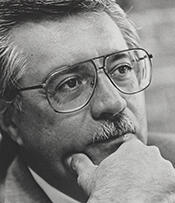
Here you will find contact information for Representative Ed Pastor, including email address, phone number, and mailing address.
| Name | Ed Pastor |
| Position | Representative |
| State | Arizona |
| District | 7 |
| Party | Democratic |
| Status | Former Representative |
| Term Start | January 3, 1991 |
| Term End | January 3, 2015 |
| Terms Served | 12 |
| Born | June 28, 1943 |
| Gender | Male |
| Bioguide ID | P000099 |
About Representative Ed Pastor
Edward Lopez Pastor (June 28, 1943 – November 27, 2018) was an American politician and attorney who served as a member of the United States House of Representatives from Arizona from 1991 to 2015. A member of the Democratic Party, he represented Arizona’s 2nd congressional district from 1991 to 2003, its 4th district from 2003 to 2013, and its 7th district from 2013 to 2015, all of which were anchored in downtown Phoenix. Over 12 terms in office, Pastor contributed to the legislative process during a significant period in American history, participating in the democratic process and representing the interests of his constituents. He was the first Latino to represent Arizona in Congress.
Pastor was born in Claypool, Arizona, on June 28, 1943, the oldest of three children. Raised in a working-class, mining-region community, he attended local schools before pursuing higher education in the state. After graduating from high school, he enrolled at Arizona State University (ASU), where he earned a Bachelor of Arts degree in chemistry. His early life in rural Arizona and his experience as the eldest child in his family informed his later commitment to public service and advocacy for underrepresented communities.
Following completion of his undergraduate degree, Pastor became a chemistry teacher at North High School in Phoenix. His work as an educator in an urban public school exposed him to the challenges facing students and families in the Phoenix area. He later transitioned from teaching to community organizing, serving as deputy director of the Guadalupe Organization Inc., a community service group focused on improving conditions in the predominantly Latino town of Guadalupe, Arizona. Seeking to expand his impact through law and public policy, Pastor returned to Arizona State University to earn a J.D. degree, which prepared him for a career in government and politics.
After law school, Pastor entered state-level public service as an assistant to Arizona Governor Raúl Héctor Castro. In this role he gained experience in executive administration and statewide policy issues. In 1976, he was elected to the Maricopa County Board of Supervisors, where he served three terms as a county executive. During his tenure on the Board of Supervisors, he became known for his attention to local governance, public services, and fiscal matters in the rapidly growing Phoenix metropolitan area, building a political base that would later support his congressional career.
In 1991, Pastor entered a special election to succeed retiring 30-year incumbent Democrat Morris K. “Mo” Udall in Arizona’s 2nd congressional district, which at the time comprised the southwestern part of Arizona, including half of Tucson and portions of southern Phoenix. In a four-way Democratic primary, he won a narrow victory, defeating his closest challenger, Tucson mayor Tom Volgy, by approximately 1,800 votes; Pastor was the only major candidate from the Phoenix share of the district. He then won the special general election a month later with 55 percent of the vote, becoming the first Latino to represent Arizona in the U.S. House of Representatives. He was reelected four times in the 2nd district without substantive Republican opposition, never dropping below 60 percent of the vote, while write-in candidates received 44 votes in 1990 and 5 votes in 1992.
Following the 2000 census, redistricting altered Pastor’s constituency. His former territory was largely renumbered as the 7th district, but his home in Phoenix was drawn into the newly created 4th district. Rather than move to the Phoenix portion of the reconfigured 7th district, he opted to run in the 4th. The new district was heavily Democratic and majority Latino, with Democrats holding nearly a 2-to-1 advantage in voter registration, similar to his old district. Pastor was reelected six times in the 4th district against only nominal Republican opposition. After another round of redistricting, he represented Arizona’s 7th district from 2013 to 2015, continuing to serve areas anchored in downtown Phoenix. Throughout his congressional tenure from 1991 to 2015, he was a member of the House Committee on Appropriations, serving on the Subcommittee on Energy and Water Development, the Subcommittee on Financial Services and General Government, and the Subcommittee on Transportation, Housing and Urban Development, and Related Agencies, where he rose to the position of ranking member.
Within the House Democratic Caucus, Pastor served as one of nine Chief Deputy Whips, helping to organize votes and shape legislative strategy. Following in Mo Udall’s footsteps, his voting record was decidedly liberal, and for most of his tenure he was considered the most liberal member of the Arizona congressional delegation, though he was also well respected by members of both parties and developed a reputation for bipartisanship. He was a founding member of the Congressional Progressive Caucus and was active in the Congressional Hispanic Caucus and the International Conservation Caucus. Pastor was pro-choice and, according to records from 2006, supported the interests of Planned Parenthood 100 percent; that same year he was endorsed by NARAL Pro-Choice America. He voted against the 2002 Iraq Resolution authorizing the Iraq War, and in 2011 he opposed the National Right to Carry Reciprocity Act of 2011. He also voted against several trade-related bills that would encourage trade with countries such as Panama, while supporting measures such as a resolution encouraging the display of “In God We Trust” in public buildings and schools.
Pastor’s voting record reflected strong support for civil rights and social justice. In 2002, the American Civil Liberties Union rated his record at 93 percent for a pro–civil rights voting history. He consistently backed protections for LGBTQ+ individuals, voting in 2007 to prohibit job discrimination based on sexual orientation, voting in 2006 against defining marriage as between one man and one woman, and in 2004 opposing a proposed constitutional amendment that would have banned same-sex marriage. He received backing from a variety of advocacy organizations, including the Defenders of Wildlife Action Fund, which works to protect native wildlife and wild areas, and, in the mid-1990s, the Americans for the Arts Action Fund, although their support later diminished. In the 2009–2010 period, he was backed by the National Farmers Union, though he was not supported by the National Council of Agricultural Employers. Over the course of his 12 terms, Pastor’s legislative work and caucus involvement positioned him as a key voice for progressive policies, Latino representation, and urban Arizona interests in Congress.
In February 2014, Pastor announced that he would not seek reelection and would retire at the completion of his term in January 2015, concluding nearly a quarter-century of service in the House of Representatives. After leaving Congress, his legacy in Arizona was recognized through the naming of multiple schools, parks, and other public institutions in his honor. Arizona State University established the Ed Pastor Center for Politics and Public Service in 2015 as part of its College of Public Service & Community Solutions. The Center functions as a student-centric hub designed to promote, publicize, and encourage political engagement and public service among ASU students and the broader community. In the Phoenix area, a section of Loop 202 was named in his honor. Pastor has been credited with inspiring multiple generations of public servants, including Arizona State House Democratic Leader Charlene Fernandez.
Pastor was married to Verma Mendez for 53 years, and the couple had two daughters, Yvonne and Laura. He remained a prominent figure in Arizona civic life until his death. On November 27, 2018, Pastor died in Phoenix at the age of 75 following a heart attack. His long career in education, local government, and Congress, along with the institutions and public spaces named for him, contributed to a lasting legacy of public service and political engagement in Arizona and beyond.