Representative Ed Perlmutter
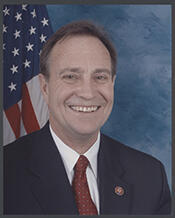
Here you will find contact information for Representative Ed Perlmutter, including email address, phone number, and mailing address.
| Name | Ed Perlmutter |
| Position | Representative |
| State | Colorado |
| District | 7 |
| Party | Democratic |
| Status | Former Representative |
| Term Start | January 4, 2007 |
| Term End | January 3, 2023 |
| Terms Served | 8 |
| Born | May 1, 1953 |
| Gender | Male |
| Bioguide ID | P000593 |
About Representative Ed Perlmutter
Edwin George Perlmutter (born May 1, 1953) is an American lawyer and politician who served as the U.S. representative for Colorado’s 7th congressional district from January 3, 2007, to January 3, 2023. A member of the Democratic Party, he represented a district located in the northern and western suburbs of the Denver metropolitan area and served eight terms in the House of Representatives. His tenure in Congress spanned a significant period in American history, during which he participated in the federal legislative process and represented the interests of his Colorado constituents. He previously served in the Colorado State Senate from 1995 to 2003 and announced on January 10, 2022, that he would not seek re-election in 2022.
Perlmutter was born in Denver, Colorado, on May 1, 1953, the son of Alice Love (née Bristow) and Leonard Michael Perlmutter. His father was Jewish, the son of immigrants from Poland, and his mother was Christian, of English and Irish descent. Raised in this religiously and culturally mixed household, Perlmutter has described himself as a Christian. He grew up in the Denver area and attended Jefferson High School in Edgewater, Colorado, from which he graduated before pursuing higher education in his home state.
Perlmutter attended the University of Colorado at Boulder, where he earned his bachelor’s degree in 1975. He continued at the University of Colorado Law School, receiving his Juris Doctor in 1978. After law school, he entered private legal practice in Colorado, developing a career as an attorney that would underpin his later work in public service and legislation. His legal background provided him with experience in regulatory and business matters that would later inform his work on financial and economic issues in the state legislature and in Congress.
Perlmutter’s formal political career began in the Colorado State Senate, where he was elected to represent the 20th district, covering central Jefferson County. First elected in 1994, he took office in 1995 and served until 2003. He was the first Democrat elected in that district in 30 years and was elected to two four-year terms. During his time in the State Senate, he built a reputation as a Democratic leader in a traditionally competitive area and worked on issues affecting Jefferson County and the broader Denver region. In addition to his legislative duties, he was active in party politics and campaign efforts; notably, he served as co-chair of the John Kerry 2004 presidential campaign in Colorado, assisting Democratic efforts in a key battleground state.
Perlmutter entered federal politics in the mid-2000s, seeking the open seat in Colorado’s newly created 7th congressional district. In 2006, he won the Democratic nomination by defeating former state representative Peggy Lamm and college professor Herb Rubenstein, securing 53 percent of the vote in the primary. The Republican nominee, state education chair Rick O’Donnell, was unopposed in his primary, and Green Party candidate Dave Chandler also entered the race. The seat had been held by Republican Bob Beauprez, who had narrowly won the district in 2002 and was reelected in 2004 with 55 percent of the vote before leaving Congress to run unsuccessfully for governor. Late in the 2006 campaign, O’Donnell came under fire when advertisements highlighted his past support for abolishing Social Security. Subsequent polling, including a SurveyUSA poll and an October 4 Zogby poll, showed Perlmutter with a growing lead, and national handicappers such as the Cook Political Report and CQPolitics rated the race as highly competitive. In the general election, Perlmutter won decisively with 54 percent of the vote to O’Donnell’s 42 percent, contributing to the Democratic Party’s effort to regain the majority in the U.S. House of Representatives.
During his eight terms in Congress, Perlmutter consistently secured reelection in a district that was often considered competitive. He won against Republican nominee John W. Lerew in a subsequent election cycle, and in the 2010 general election he defeated Republican nominee Ryan Frazier and Libertarian nominee Buck Bailey, even as the 7th district was cited as a GOP target in a Republican-leaning midterm year. On November 6, 2012, he defeated Republican nominee Joe Coors Jr. despite newly drawn congressional boundaries that made the district approximately four percentage points less Democratic. In that race, Perlmutter led Coors by nine percentage points in Jefferson County, where about 60 percent of the district’s voters resided, and by 17 percentage points in Adams County, which accounted for roughly 40 percent of the newly configured district. He continued this pattern of electoral success by defeating Republican nominee Don Ytterberg in the 2014 general election with 55.1 percent of the vote, and by winning reelection in 2016 against Republican nominee George Athanasopoulos and Libertarian nominee Martin L. Buchanan, securing 55.18 percent of the vote.
In the House of Representatives, Perlmutter served on several key committees and subcommittees. He was a member of the House Committee on Financial Services, where he sat on the Subcommittee on National Security, International Development and Monetary Policy and the Subcommittee on Oversight and Investigations, reflecting his interest in financial regulation, banking, and economic security. He also served on the House Committee on Science, Space and Technology, including its Subcommittee on Energy and Subcommittee on Space, where he engaged with issues related to scientific research, energy policy, and the nation’s space program. In addition, he was a member of the House Committee on Rules, which plays a central role in determining how legislation is considered on the House floor, and he served on the Select Committee on the Modernization of Congress, which was tasked with recommending improvements to the efficiency, transparency, and operations of the legislative branch.
Perlmutter was active in numerous caucuses that reflected both his district’s priorities and his policy interests. He was a member of the New Democrat Coalition, a group of centrist and pro-growth Democrats, and participated in caucuses including the Aerospace Caucus, Cannabis Caucus, Gun Violence Prevention Task Force, Labor Caucus, NASA Caucus, National Parks Caucus, National Wildlife Refuge Caucus, Olympic and Paralympic Caucus, Pro-Choice Caucus, Science and National Labs Caucus, Sustainable Energy and Environment Caucus, and Climate Solutions Caucus. These affiliations underscored his engagement with issues ranging from labor rights and environmental protection to space exploration, public lands, and gun violence prevention.
A notable legislative focus of Perlmutter’s congressional career was his work on banking access for the cannabis industry, a significant issue for Colorado following the state’s legalization of marijuana. Since 2013, he and Representative Denny Heck regularly introduced legislation to improve access to banking and financial services for cannabis-related businesses, which often operated on a cash basis due to federal banking restrictions. Initially introduced as the Marijuana Business Access to Banking Act, the proposal was later rebranded as the Secure and Fair Enforcement (SAFE) Banking Act in 2017. On September 25, 2019, the House of Representatives passed the SAFE Banking Act by a 321–103 vote, marking the first time a standalone cannabis reform bill had passed either chamber of Congress and highlighting Perlmutter’s role in advancing this policy area.
Perlmutter’s decision on January 10, 2022, not to seek re-election in the 2022 midterm elections marked the end of his 16-year tenure in the U.S. House of Representatives. He left office on January 3, 2023, concluding a public career that included eight terms in Congress and two terms in the Colorado State Senate. Throughout his service, he remained rooted in the Denver metropolitan area he represented, drawing on his background as a Colorado native, attorney, and state legislator to shape his work on financial services, science and technology, cannabis banking reform, and a wide range of domestic policy issues.