Representative Eddie Bernice Johnson
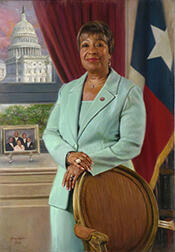
Here you will find contact information for Representative Eddie Bernice Johnson, including email address, phone number, and mailing address.
| Name | Eddie Bernice Johnson |
| Position | Representative |
| State | Texas |
| District | 30 |
| Party | Democratic |
| Status | Former Representative |
| Term Start | January 5, 1993 |
| Term End | January 3, 2023 |
| Terms Served | 15 |
| Born | December 3, 1935 |
| Gender | Female |
| Bioguide ID | J000126 |
About Representative Eddie Bernice Johnson
Eddie Bernice Johnson (December 3, 1934 – December 31, 2023) was an American politician and trailblazing public servant who represented Texas’s 30th congressional district in the United States House of Representatives from January 3, 1993, to January 3, 2023. A member of the Democratic Party, she served 15 consecutive terms in Congress and became one of the most senior and influential members of the Texas delegation. Over the course of three decades in the House of Representatives, she contributed significantly to the legislative process and consistently represented the interests of her Dallas-area constituents during a period of substantial political, social, and technological change in American history.
Johnson was born in Waco, Texas, on December 3, 1934, and grew up in the segregated South, an experience that shaped her lifelong commitment to civil rights, equal opportunity, and public service. After graduating from A. J. Moore High School in Waco, she pursued a career in nursing at a time when professional opportunities for African American women were limited. She trained as a nurse at St. Mary’s College in Notre Dame, Indiana, and later completed additional professional studies in nursing administration. Her early life and formative years in Texas and the Midwest instilled in her a strong belief in education, public health, and community advocacy.
Before entering elective office, Johnson built a distinguished career in nursing and health administration. She became a registered nurse and, through her work in hospitals and health-care institutions, gained firsthand experience with the challenges facing patients, medical professionals, and underserved communities. Her expertise and leadership in the health field led to appointments in administrative roles, including service with the Veterans Administration hospital system in Dallas. This background in health care would later inform much of her legislative focus, particularly on issues of public health, mental health, and access to medical services.
Johnson’s political career began in the Texas House of Representatives, where she was elected in 1972 in a landslide, becoming the first Black woman to win electoral office from Dallas. Taking office in 1973, she quickly emerged as a prominent voice on issues affecting urban communities, education, and health care. Her election marked a significant milestone in Texas political history, reflecting both the growing political engagement of African Americans in the state and the gradual opening of public office to women of color. After her service in the Texas House, she continued her state legislative career in the Texas Senate, where she served three terms. In the Senate, she further developed her reputation as a pragmatic legislator, working on transportation, economic development, and social services, and building the experience and relationships that would underpin her later work in Congress.
In 1992, Johnson was elected to the United States House of Representatives from the newly created 30th congressional district of Texas, which encompassed much of Dallas and surrounding communities. When she took office on January 3, 1993, she became the first registered nurse ever to serve in Congress, bringing a unique professional perspective to federal policymaking. Over 15 terms in the House, from 1993 to 2023, she participated actively in the democratic process, serving on key committees and shaping legislation on transportation, infrastructure, science and technology, and health care. She became particularly well known for her work on the House Committee on Science, Space, and Technology, where she eventually rose to the position of chair, and for her long-standing service on the Committee on Transportation and Infrastructure. Her tenure coincided with major national debates over health reform, economic policy, environmental protection, and technological innovation, and she was a consistent advocate for investment in research, education, and urban development.
As her seniority increased, Johnson assumed a leading role within the Texas congressional delegation and the broader Democratic caucus. At the swearing-in of the 116th United States Congress on January 3, 2019, she became the dean of Texas’s congressional delegation, recognizing her status as its longest-serving member. Following the death of Representative Don Young of Alaska in March 2022, she became the oldest member of the House of Representatives, underscoring her longevity and experience in national politics. Throughout her service, she was known for her focus on constituent services, her advocacy for historically Black colleges and universities, and her efforts to expand opportunities in science, technology, engineering, and mathematics for underrepresented communities.
Johnson announced that she would not seek reelection and retired at the end of the 117th United States Congress, concluding her House service on January 3, 2023. Her retirement marked the end of a 50-year span in elected office, from her first term in the Texas House in the early 1970s through three terms in the Texas Senate and three decades in the U.S. House of Representatives. She left a legacy as a pioneering African American woman in Texas politics, the first registered nurse in Congress, and a senior Democratic leader whose work influenced national policy in health care, transportation, and scientific research.
Eddie Bernice Johnson died on December 31, 2023, in Dallas, Texas, at the age of 89. Her passing was widely noted as the loss of a historic figure in Texas and national politics, whose career reflected both the struggles and the progress of the civil rights era and the expanding role of women and African Americans in the highest levels of government.