Representative Edmund Frederick Erk
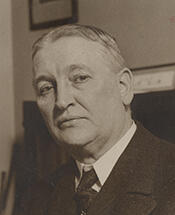
Here you will find contact information for Representative Edmund Frederick Erk, including email address, phone number, and mailing address.
| Name | Edmund Frederick Erk |
| Position | Representative |
| State | Pennsylvania |
| District | 32 |
| Party | Republican |
| Status | Former Representative |
| Term Start | April 15, 1929 |
| Term End | March 3, 1933 |
| Terms Served | 2 |
| Born | April 17, 1872 |
| Gender | Male |
| Bioguide ID | E000203 |
About Representative Edmund Frederick Erk
Edmund Frederick Erk (April 17, 1872 – December 14, 1953) was a Republican member of the United States House of Representatives from Pennsylvania who served in Congress from 1929 to 1933. He was born in Allegheny City, Pennsylvania (now the North Side of Pittsburgh), to German immigrant parents, growing up in the industrial and commercial environment of the greater Pittsburgh area. His early life in a community shaped by immigration and rapid urban growth informed his later work in public service and national politics.
Erk’s formal education is not extensively documented, but as a young man he became engaged extensively in newspaper work in Pittsburgh, Pennsylvania. This early career in journalism provided him with experience in public affairs, communication, and the political issues of the day, and it helped establish connections that would lead to a long tenure on Capitol Hill. Through his work in the press, he developed familiarity with both local and national politics, which prepared him for a series of increasingly responsible positions in the federal government.
Erk began his congressional career as a staff member rather than an elected official. From 1911 to 1919, he served as secretary to Congressman Stephen G. Porter of Pennsylvania, a position that placed him at the center of legislative activity and constituent service. Following this, he became clerk of the United States House Committee on Foreign Affairs, serving in that capacity from June 1, 1919, to November 3, 1930. In this role he was closely involved in the administration and documentation of the committee’s work at a time when the United States was redefining its role in world affairs after World War I. His expertise in foreign relations was further recognized when he served as secretary of the American delegation to the League of Nations Conference at Geneva in 1924 and 1925, giving him direct exposure to international diplomacy and multilateral negotiations.
Edmund Frederick Erk’s own congressional service began during a significant period in American history. A member of the Republican Party, he was elected as a Republican to the Seventy-first Congress to fill the vacancy caused by the death of Stephen G. Porter, and at the same time was elected to the Seventy-second Congress. His tenure in the U.S. House of Representatives thus extended from 1929 to 1933, encompassing the onset of the Great Depression. As a member of the House of Representatives from Pennsylvania, Erk contributed to the legislative process during two terms in office, participating in the democratic process and representing the interests of his constituents during a time of severe economic and social strain. His service coincided with intense debates over economic policy, relief measures, and the appropriate role of the federal government in addressing the national crisis.
After his defeat as an unsuccessful candidate for reelection in 1932, Erk remained active in congressional and political life. He was again an unsuccessful candidate for election in 1934, but continued his work on Capitol Hill by serving as secretary to Congressman Michael J. Muldowney of Pennsylvania from March 4, 1933, to January 2, 1935. In addition to his staff work, he was active as an author and compiler, drawing on his long experience in legislative and foreign affairs. His expertise and reputation led to further service in the Senate, where he served as clerk to United States Senator James J. Davis of Pennsylvania from 1939 to 1945, a period that spanned the prelude to and duration of World War II.
In his later years, Erk resided in Bethesda, Maryland, remaining within the orbit of the nation’s capital after a lifetime of public service. He died in Bethesda on December 14, 1953. His body was returned to his native region for burial, and he was interred in St. John’s Cemetery in Pittsburgh, Pennsylvania, closing a career that had begun in the city’s newspaper offices and extended through decades of service in the House of Representatives, in congressional staff roles, and in international diplomatic work.