Representative Edmund Needham Morrill
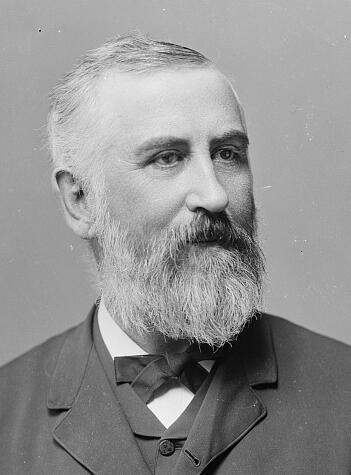
Here you will find contact information for Representative Edmund Needham Morrill, including email address, phone number, and mailing address.
| Name | Edmund Needham Morrill |
| Position | Representative |
| State | Kansas |
| District | 1 |
| Party | Republican |
| Status | Former Representative |
| Term Start | December 3, 1883 |
| Term End | March 3, 1891 |
| Terms Served | 4 |
| Born | February 12, 1834 |
| Gender | Male |
| Bioguide ID | M000968 |
About Representative Edmund Needham Morrill
Edmund Needham Morrill (February 12, 1834 – March 14, 1909) was a U.S. Representative from Kansas and the 13th governor of Kansas. A member of the Republican Party, he was an influential figure in the political development of Kansas in the late nineteenth century, serving four terms in the United States Congress from 1883 to 1891 and later holding the state’s highest executive office.
Morrill’s early life was rooted in the formative years of the American Midwest, a region undergoing rapid settlement and political change. Born on February 12, 1834, he came of age in a period marked by sectional tensions and westward expansion, experiences that would later inform his public service. His early years preceded the Civil War and the organization of Kansas as a state, placing him among the generation that would help shape the institutions and political culture of the Great Plains.
Morrill’s education and early professional development prepared him for a career in public affairs and civic leadership. Like many men of his era who rose to political prominence, he combined formal learning with practical experience in business and local governance. His growing engagement with community and regional issues in Kansas led him naturally toward public office, as he became identified with the Republican Party and its program of economic development, infrastructure building, and support for settlement in the West.
Before entering national office, Morrill established himself as a leading citizen of Brown County, Kansas. He took an active interest in the documentation and promotion of his region, authoring “History and Statistics of Brown County, Kansas,” published in Hiawatha, Kansas, in 1876. This work reflected both his familiarity with local conditions and his commitment to recording the growth of Kansas communities, including their institutions, industries, and civic life. His prominence in county and state affairs helped build the reputation that would carry him to Congress.
Morrill served as a Representative from Kansas in the United States Congress from 1883 to 1891. Elected as a Republican, he completed four consecutive terms in the House of Representatives, participating in the legislative process during a significant period in American history marked by industrial expansion, debates over tariffs and monetary policy, and the continued settlement of the West. In Congress he represented the interests of his Kansas constituents, contributing to national deliberations while advocating for policies that supported the development of his state’s agriculture, transportation, and local institutions. His service in the House placed him among the key Republican lawmakers from the Great Plains during the post-Reconstruction era.
After leaving Congress, Morrill continued his political ascent in Kansas and was elected the 13th governor of Kansas. As governor, he brought to the executive office the experience he had gained in national legislation and local leadership. His administration operated within the broader context of late nineteenth-century state-building, when Kansas was consolidating its public institutions, refining its legal framework, and addressing the economic and social challenges of a rapidly growing population. Morrill’s tenure reflected the Republican emphasis on orderly development, public education, and support for commerce and agriculture, and it further solidified his standing as one of the state’s prominent public figures.
In his later years, Morrill remained identified with the civic and historical life of Kansas. His career and writings were later noted in reference works such as Frank W. Blackmar’s “Kansas: A Cyclopedia of State History, Embracing Events, Institutions, Industries, Counties, Cities, Towns, Prominent Persons, Etc.,” published in 1912, which recognized his role among the state’s leading citizens. Edmund Needham Morrill died on March 14, 1909, leaving a legacy as a legislator, governor, and chronicler of Kansas history who helped shape both the political institutions and the recorded memory of his state.