Senator Edmund Winston Pettus
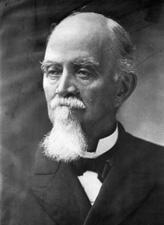
Here you will find contact information for Senator Edmund Winston Pettus, including email address, phone number, and mailing address.
| Name | Edmund Winston Pettus |
| Position | Senator |
| State | Alabama |
| Party | Democratic |
| Status | Former Representative |
| Term Start | March 15, 1897 |
| Term End | July 27, 1907 |
| Terms Served | 2 |
| Born | July 6, 1821 |
| Gender | Male |
| Bioguide ID | P000279 |
About Senator Edmund Winston Pettus
Edmund Winston Pettus (July 6, 1821 – July 27, 1907) was an American lawyer, politician, and military officer who represented Alabama in the United States Senate from 1897 to 1907. A member of the Democratic Party, he served two terms in the Senate and was re-elected to a third term that would have begun in 1909. Before and after his congressional service, he was a prominent figure in Alabama public life, a senior officer in the Confederate States Army during the American Civil War, and, in the Reconstruction era, Grand Dragon of the Ku Klux Klan in Alabama, an organization that terrorized and often killed African Americans.
Pettus was born on July 6, 1821, in Limestone County, Alabama, the youngest of nine children of John Pettus and Alice Taylor Winston. He was a brother of John J. Pettus, who later served as governor of Mississippi, and a distant cousin of Jefferson Davis, future president of the Confederacy. He attended local public schools in Alabama and then pursued further education at Clinton College in Smith County, Tennessee, from which he graduated. After college, he read law under William Cooper in Tuscumbia, Alabama, and was admitted to the bar in 1842. Pettus soon settled in Gainesville, Alabama, where he began practicing law. On June 27, 1844, he married Mary L. Chapman; the couple had three sons, two of whom died in infancy, and two daughters. That same year he was elected solicitor for the Seventh Judicial Circuit of Alabama, marking the beginning of his formal public career.
During the Mexican–American War, from 1846 to 1848, Pettus served as a lieutenant with the Alabama Volunteers. Following the end of hostilities, he moved to California for a period before returning to Alabama by 1853. Upon his return, he again served as solicitor in the Seventh Judicial Circuit. In 1855 he was appointed a judge in that circuit, a position he held until his resignation in 1858. Pettus then relocated to Cahaba in Dallas County, Alabama—then the state’s former capital and now an extinct town—where he resumed the practice of law. By the eve of the Civil War, he had established himself as a lawyer and Democratic Party figure closely aligned with Southern pro-slavery and secessionist interests.
With the secession crisis of 1860–1861, Pettus emerged as an enthusiastic champion of the Confederate cause and of slavery. In 1861 he served as a Democratic Party delegate to the Mississippi secession convention, where his brother John J. Pettus was governor. That same year he helped organize the 20th Alabama Infantry Regiment and was elected one of its first officers. On September 9, 1861, he was commissioned major of the regiment, and on October 8 he was promoted to lieutenant colonel. Serving in the Western Theater of the American Civil War, Pettus saw extensive combat. He was captured by Union forces during the Stones River Campaign on December 29, 1862, but was exchanged a short time later. On May 1, 1863, he was captured again as part of the surrendered Confederate garrison at Port Gibson, Mississippi; he escaped and returned to Confederate lines. On May 28, 1863, he was promoted to colonel and given command of the 20th Alabama.
Pettus and his regiment took part in the Vicksburg Campaign, defending Confederate control of the Mississippi River. When the Vicksburg garrison surrendered on July 4, 1863, Pettus was again taken prisoner and remained so until his exchange on September 12. Six days later he was promoted to brigadier general and, on November 3, 1863, was given command of a brigade in the Army of Tennessee. His brigade fought in the Chattanooga Campaign, holding positions on the extreme southern slope of Missionary Ridge on November 24–25, 1863. In 1864 Pettus participated in the Atlanta Campaign, including the battles of Kennesaw Mountain on June 27, Atlanta on July 22, and Jonesborough from August 31 to September 1. Beginning December 17, 1864, he temporarily commanded a division in the Army of Tennessee. During the 1865 Carolinas Campaign he was sent to defend Columbia, South Carolina, and fought at the Battle of Bentonville from March 19 to 21, where he was wounded in the right leg on the first day of fighting. He was paroled at Salisbury, North Carolina, on May 2, 1865, and was formally pardoned by President Andrew Johnson on October 20, 1865. Military historian Ezra J. Warner later described Pettus as “a fearless and dogged fighter” who “distinguished himself on many fields in the western theater of war,” and historian Jon L. Wakelyn similarly noted that he “distinguished himself in the western command.”
After the Civil War, Pettus returned to Alabama and resumed his law practice in Selma. He became a leading figure in the state Democratic Party and served for more than two decades as chairman of the Alabama delegation to the Democratic National Convention. During the final year of Reconstruction, in 1877, he was named Grand Dragon of the Alabama Ku Klux Klan. In this role he was the supreme leader of the state organization, which used violence, intimidation, and terror to suppress African American political participation and civil rights. With earnings from his legal practice, Pettus also invested in farmland. His postwar political standing rested in part on his opposition to the Reconstruction constitutional amendments that granted citizenship and voting rights to formerly enslaved people and on his prominence in organizing and popularizing the Alabama Klan.
In 1896, at the age of 75, Pettus sought election to the United States Senate as a Democrat. At that time, U.S. senators were chosen by state legislatures rather than by popular vote. He defeated incumbent Senator James L. Pugh in the Alabama legislature and began his first term in the Senate on March 4, 1897. Edmund Winston Pettus served as a senator from Alabama from 1897 to 1907, contributing to the legislative process during two full terms in office and representing the interests of his constituents during a significant period in American history. He was re-elected by the legislature on January 26, 1903, and again on January 22, 1907; the latter election was for a term scheduled to begin in 1909. During his tenure, he was recognized as the last of the Confederate brigadier generals to sit in the United States Senate, symbolizing the continued influence of former Confederate leaders in national politics at the turn of the twentieth century.
Pettus died in office on July 27, 1907, at Hot Springs, North Carolina, at the age of 86, before the commencement of the new term to which he had been elected. He was interred in Live Oak Cemetery in Selma, Alabama. In 1940, a bridge across the Alabama River in Selma was named the Edmund Pettus Bridge in his honor. According to the Smithsonian Institution, “The bridge was named for him, in part, to memorialize his history, of restraining and imprisoning African-Americans in their quest for freedom after the Civil War.” On March 7, 1965, the bridge became a landmark of the civil rights movement when between 525 and 600 civil rights marchers, attempting to march from Selma to Montgomery, were attacked and driven back by Alabama state troopers and local possemen, including Ku Klux Klan members, in an event that became known as “Bloody Sunday.” In subsequent decades, the bridge’s name drew increasing scrutiny. In 2020, Pettus’s great-great-granddaughter Caroline Randall Williams publicly advocated renaming the bridge for civil rights leader John Lewis, arguing that public honors should not commemorate those who “cultivated and prospered from systems of degradation and oppression before and after the Civil War.” At least one other descendant, Dave Pettus, has supported renaming the structure “Bloody Sunday Bridge,” underscoring the continuing reassessment of Edmund Winston Pettus’s legacy.