Representative Edmund Platt
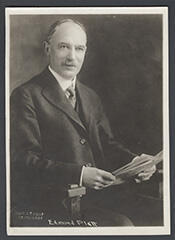
Here you will find contact information for Representative Edmund Platt, including email address, phone number, and mailing address.
| Name | Edmund Platt |
| Position | Representative |
| State | New York |
| District | 26 |
| Party | Republican |
| Status | Former Representative |
| Term Start | April 7, 1913 |
| Term End | March 3, 1921 |
| Terms Served | 4 |
| Born | February 2, 1865 |
| Gender | Male |
| Bioguide ID | P000379 |
About Representative Edmund Platt
Edmund Platt (February 2, 1865 – August 7, 1939) was an American politician, newspaper editor, and corporate executive who served as a Representative from New York in the United States Congress from 1913 to 1920 and as the 4th vice chairman of the Federal Reserve from 1920 to 1930. A member of the Republican Party, he represented New York’s 26th congressional district in the House of Representatives for four terms and later played a significant role in national banking and monetary policy.
Platt was born in Poughkeepsie, New York, where he attended a private school and Riverview Academy. He pursued commercial studies at Eastman Business College in Poughkeepsie, from which he graduated, and learned the printer’s trade, acquiring practical experience in the mechanics of publishing. He subsequently enrolled at Harvard University, graduating in 1888. After Harvard, he taught school and studied law, building a foundation in both education and legal principles that would inform his later public service and work in financial regulation.
In the early phase of his career, Platt moved to Wisconsin, where he edited the Superior Evening Telegram in 1890 and 1891. He returned to his native Poughkeepsie in 1891 and became engaged in editing and publishing the Poughkeepsie Eagle, a prominent local newspaper. His work in journalism and publishing increased his visibility in civic affairs, and he also served as a member of the board of water commissioners of Poughkeepsie, participating in the oversight of local public utilities and municipal services.
Platt entered national politics as a Republican and was elected to the Sixty-third Congress and to the three succeeding Congresses. He held office as a Representative from New York from March 4, 1913, to June 7, 1920, thus serving four terms in the United States House of Representatives. His congressional service occurred during a significant period in American history that encompassed the Progressive Era and World War I. As a member of the House of Representatives, Edmund Platt participated in the democratic process, contributed to the legislative work of Congress, and represented the interests of his constituents in New York’s 26th congressional district. During the Sixty-sixth Congress he served as chairman of the Committee on Banking and Currency, placing him at the center of legislative oversight of the nation’s financial system. Notably, as a congressman he voted against the creation of the Federal Reserve in 1913, a decision that would later stand in contrast to his subsequent service on the Federal Reserve Board.
On June 7, 1920, Platt resigned from Congress to accept appointment by President Woodrow Wilson to the Federal Reserve Board. He became vice chairman of the Federal Reserve Board in August 1920 and served in that capacity until 1930, when he resigned. As the 4th vice chairman of the Federal Reserve, he was involved in the formulation and administration of national monetary policy during a decade marked by postwar economic adjustment, the prosperity of the 1920s, and the onset of the Great Depression. His tenure at the Federal Reserve represented a significant transition from legislative oversight of banking to direct participation in the central banking system he had once opposed.
After leaving the Federal Reserve in 1930, Platt returned to Poughkeepsie and engaged in an extensive banking business, drawing on his long experience in financial affairs, public policy, and corporate governance. He remained associated with the economic life of his community and continued to be recognized for his prior service in Congress and on the Federal Reserve Board.
Edmund Platt died on August 7, 1939, in Chazy, New York, while on a visit. He was interred in Poughkeepsie Rural Cemetery in Poughkeepsie, New York. His career spanned journalism, local public service, four terms in the United States House of Representatives, and a decade in high office at the Federal Reserve, reflecting a lifetime of involvement in public affairs and American financial policy.