Representative Edward Murray Bassett
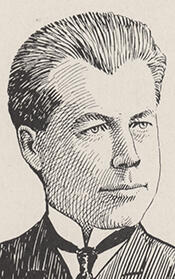
Here you will find contact information for Representative Edward Murray Bassett, including email address, phone number, and mailing address.
| Name | Edward Murray Bassett |
| Position | Representative |
| State | New York |
| District | 5 |
| Party | Democratic |
| Status | Former Representative |
| Term Start | November 9, 1903 |
| Term End | March 3, 1905 |
| Terms Served | 1 |
| Born | February 7, 1863 |
| Gender | Male |
| Bioguide ID | B000225 |
About Representative Edward Murray Bassett
Edward Murray Bassett (February 7, 1863 – October 27, 1948), widely known as “the father of American zoning” and one of the founding figures of modern urban planning, was an attorney, public official, and author who served one term as a Democratic Representative from New York in the United States Congress from 1903 to 1905. He is best remembered for writing the first comprehensive zoning ordinance in the United States, adopted by New York City in 1916, and for his extensive work in city planning, transportation concepts, and land-use law.
Bassett was born on February 7, 1863, in Brooklyn, New York, the son of merchant Charles R. Bassett and Elvira Rogers Bassett. Raised in a commercial and rapidly urbanizing environment, he developed an early familiarity with the growth and challenges of American cities that would later shape his professional focus. His Brooklyn origins and family background placed him at the center of the late nineteenth-century transformation of New York from a collection of communities into a modern metropolis.
Bassett pursued higher education at Hamilton College and then at Amherst College, from which he graduated in 1884. While at Amherst he was elected to Phi Beta Kappa and joined the Delta Upsilon fraternity, distinctions that reflected both his academic ability and his engagement in collegiate life. He continued his studies at Columbia University Law School from 1884 to 1886, during which time he also taught at a private school in Brooklyn operated by R. D. Dodge. In 1886 he graduated from Columbia, was admitted to the bar, and began practicing law in Buffalo, New York. On May 14, 1890, he married Annie R. Preston; the couple had five children: Marion P. Bassett; inventor and engineer Preston Bassett; geologist Isabel Bassett Wasson; Howard M. Bassett; and Helen B. Hauser.
After several years in Buffalo, Bassett returned to New York City in 1892 to continue his legal practice. His interest in public affairs led him into local educational administration, and he served on the Brooklyn School Board from 1899 to 1901. He then chaired the Local School Board from 1901 to 1903, gaining experience in municipal governance and public policy that would inform his later work in both Congress and city planning. These early positions in Brooklyn public life helped establish his reputation as a capable and reform-minded civic leader.
In 1903 Bassett was elected as a Democrat to the United States House of Representatives, representing New York’s 5th congressional district. He served one term from March 4, 1903, to March 3, 1905, during a significant period in American history marked by expanding federal authority and major debates over commerce and infrastructure. As a member of the House of Representatives, he participated in the legislative process and represented the interests of his constituents while contributing to national policy discussions. Among the major projects and issues on which he worked were bankruptcy law, the construction and control of the Panama Canal—where he advocated a canal route through Nicaragua—and the structure of American trade policy, in which he opposed high tariffs. After completing his single term, he declined to run for reelection in order to focus on service at the local and state levels, where he believed he could more directly influence urban development and governance.
Bassett’s post-congressional career was dominated by public service and the emerging field of city planning. In 1907 he was appointed by Governor Charles Evans Hughes to the New York Public Service Commission, where he served until 1911. During his tenure he played a key role in the development of the Dual Contracts, also known as the dual subway plan, which for the first time created subway connections between Manhattan and Brooklyn. He also championed the streamlining of train movement by working to abolish stub-end terminals in favor of the “pendulum” method of train operation, improving efficiency and capacity in urban rail systems. His work on transportation infrastructure reflected his broader interest in the rational organization of the modern city.
By the 1910s Bassett had become a central figure in New York’s efforts to manage growth and building development. He served as vice-chairman of the Brooklyn Committee on City Plan, which issued a report in 1914, and was appointed chairman of the Heights of Buildings Commission in New York City. The final report of that commission in 1916 presented what became the first Zoning Resolution of the City of New York, the first comprehensive zoning ordinance in the United States. This landmark measure regulated building heights, land uses, and bulk, and it established a model for urban zoning across the country. In recognition of his pivotal role, he was frequently described as the “father” and “midwife” of American zoning. Contemporary and later commentators, including officials such as Carl Weisbrod, credited Bassett and his colleagues with crafting a revolutionary document grounded in accepted common-law and constitutional doctrines: that landowners are not entirely free to create nuisances to those around them, and that local governments may regulate land use in the name of public health, safety, and welfare.
Following the adoption of the 1916 zoning ordinance, Bassett continued to shape planning and zoning policy at both the city and national levels. He served as counsel to the Zoning Committee of New York, the Regional Plan of New York and Its Environs, and the New York City Planning Commission. He was a member of the Advisory Committee on City Planning and Zoning, and his expertise led U.S. Secretary of Commerce Herbert Hoover to appoint him president of the National Conference on City Planning. Most of his professional work, both in private practice and on public committees, concerned city planning, zoning, and the legal issues surrounding these fields. He is credited with developing the “freeway” and “parkway” concepts and with coining the term “freeway” to describe a controlled-access urban highway based on the parkway model but open to commercial traffic. In addition to his legal and advisory work, he authored influential books, including Zoning (1936) and The Master Plan, with a Discussion of the Theory of Community Land Planning Legislation (1938), both published by the Russell Sage Foundation, which helped codify and disseminate the principles of modern land-use regulation.
Edward Murray Bassett remained active in planning and legal circles into his later years, continuing to advise on zoning and urban development as American cities expanded and automobile-oriented infrastructure took shape. He died in Brooklyn, Kings County, New York, on October 27, 1948, at the age of 85. He was buried at Ashfield Plains Cemetery in Ashfield, Massachusetts. His papers from 1892 to 1948, preserved in archival collections, and contemporary accounts such as those in the Brooklyn Eagle, attest to his enduring influence on the physical form of New York City and on the broader evolution of American urban planning and zoning law.