Representative Edward Beard
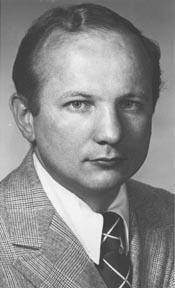
Here you will find contact information for Representative Edward Beard, including email address, phone number, and mailing address.
| Name | Edward Beard |
| Position | Representative |
| State | Rhode Island |
| District | 2 |
| Party | Democratic |
| Status | Former Representative |
| Term Start | January 14, 1975 |
| Term End | January 3, 1981 |
| Terms Served | 3 |
| Born | January 20, 1940 |
| Gender | Male |
| Bioguide ID | B000279 |
About Representative Edward Beard
Edward Peter Beard (January 20, 1940 – January 11, 2021) was an American politician who served as a Democratic member of the United States House of Representatives from Rhode Island’s 2nd congressional district from January 3, 1975, to January 3, 1981. He earlier served in the Rhode Island House of Representatives from 1973 to 1975 and later held municipal office in Providence. His congressional tenure coincided with a period of significant political and economic change in the United States, and he became known as a blue-collar legislator with strong ties to organized labor as well as a figure periodically embroiled in controversy over campaign finances.
Beard was born in Providence, Rhode Island, on January 20, 1940, to Thomas J. Beard and Anna L. Fitzpatrick. His early life was marked by hardship: his father died when he was 11 years old, and his sister later drowned. He attended Assumption Elementary School and Hope High School in Providence but left high school in order to help support his family financially. He subsequently completed his General Educational Development (GED) credential while serving in the Rhode Island Army National Guard from 1960 to 1966. During this period he also spent two years as a boxer, reflecting the working-class milieu from which he emerged.
Before entering elective office, Beard worked primarily as a painter, including employment at the Rhode Island School of Design and as a house painter, earning about $6,000 in 1973. He was an active member of Painters’ Union Local 195, an affiliate of the AFL-CIO, which helped shape his later political identity as a representative of blue-collar interests. He married his wife, Marsha, with whom he had two children. His experience in manual labor and union activity provided the foundation for his political appeal as an advocate for working people and informed his later legislative priorities in the areas of labor, aging, and veterans’ affairs.
Beard’s formal political career began in state politics. In 1972 he defeated incumbent Leonard W. Forrest Jr. in the Democratic primary for a seat in the Rhode Island House of Representatives. He served in the state legislature from 1973 to 1975. While in state office, he proposed legislation in 1974 requiring that all new municipal and state buildings constructed in Rhode Island be accessible to people with disabilities, an early indication of his interest in issues affecting the elderly and disabled. His upset primary victory over an incumbent reflected his ability to mobilize working-class voters and challenge established party figures, a pattern that would continue in his later campaigns.
In 1974 Beard considered seeking either the governorship of Rhode Island or a seat in the United States House of Representatives. He ultimately chose to run for Congress in Rhode Island’s 2nd congressional district and mounted a primary challenge to incumbent Democratic U.S. Representative Robert Tiernan. Despite being heavily outspent—Tiernan reported expenditures of $41,697 to Beard’s $8,192—Beard defeated Tiernan for the Democratic nomination. Tiernan attributed his loss in part to his changed endorsement in the Providence mayoral primary and to the demands of his congressional workload. After the primary, Beard’s campaign cash-on-hand reportedly fell to $40.15. He went on to defeat Republican nominee Vincent J. Rotondo in the general election, entering the 94th Congress on January 3, 1975. During this period he also became involved in intraparty disputes; for example, U.S. Senator John Pastore did not attend a testimonial dinner for Beard on March 8, 1975, prompting Beard to send Pastore a letter in which he called the senator “stupid,” a remark he retracted in a subsequent letter of regret. He also sent sharply worded letters to Governor Philip Noel, Lieutenant Governor J. Joseph Garrahy, and state Democratic chair Charles Reilly, and in 1977 he announced that he would no longer use testimonial dinners to raise campaign funds.
Beard secured reelection in 1976 and 1978 under sometimes difficult political circumstances. In 1976, when Senator Pastore announced his retirement, Beard considered running for the open U.S. Senate seat but decided instead to seek reelection to the House, citing a lack of campaign funds and a desire to retain his committee assignments. That year he failed to win the endorsement of the Rhode Island Democratic State Committee—Eugene J. McCaffrey Jr., the mayor of Warwick, defeated him for the party’s backing, marking the first time a sitting Rhode Island member of Congress did not receive his party’s endorsement. Nevertheless, Beard won the Democratic primary and then defeated Republican Thomas V. Iannitti in the general election. In 1978 he again sought reelection, this time with the formal endorsement of the Democratic Party. He defeated Republican challenger Claudine Schneider with approximately 52 percent of the vote, crediting his victory in part to the coattail effect of appearing on the same ballot as Senator Claiborne Pell and Governor J. Joseph Garrahy. In 1980 he turned back a well-financed primary challenge from Stephen J. Fortunato, who spent over $100,000, but lost the general election rematch to Schneider, ending his three consecutive terms in the House on January 3, 1981.
During his tenure in Congress, Beard served on the House Committees on Education and Labor, Aging, and Veterans’ Affairs, where he sought to represent the interests of working families, senior citizens, and former service members. In 1977 he joined with ten other representatives to found the Blue Collar Caucus, intended to give greater voice to industrial and working-class concerns within the Democratic Party; the caucus was dissolved on February 2, 1979. He supported the unionization efforts of the United Steelworkers at the General Dynamics Electric Boat plant at Quonset Point in 1977 and advocated for victims of byssinosis, a respiratory disease affecting textile workers, criticizing the South Carolina General Assembly for conditions that contributed to the illness. In energy policy, he responded to rising oil prices by urging Rhode Island oil dealers to voluntarily restrain prices and, although initially supportive of nuclear power, withdrew his backing for construction of a nuclear plant in Charlestown, Rhode Island, after the Three Mile Island accident in 1979. In 1980 he accused 50 members of Congress of having been “bought off” by the oil industry, citing a report that documented $3.9 million in political contributions. He also worked on Native American issues, joining Senator John Chafee, Representative Fernand St Germain, and Senator Pell in sponsoring 1978 legislation to appropriate $3.5 million to settle the Narragansett people’s land claims in Charlestown, under which the federal government would purchase 900 acres and the state would donate an additional 900 acres. That same year he voted for the American Indian Religious Freedom Act. Beard’s voting record reflected a socially conservative stance on abortion; he supported the anti-abortion movement, voted to prohibit the use of Medicaid funds for abortions, and backed the Hyde Amendment. Public Citizen gave him a 46 percent rating in 1976, and he voted in favor of the District of Columbia Voting Rights Amendment.
Beard was also active in foreign and national security policy debates. In 1975 he traveled to Nicosia, Cyprus, where Turkish soldiers blocked him from entering the portion of the city controlled by the Turkish Federated State of Cyprus; Turkish senator Kâmran İnan later suggested the incident had been orchestrated “just to create a public image.” Beard was critical of U.S. arms shipments to Turkey in light of the Cyprus conflict. He opposed the normalization of relations with the People’s Republic of China and was the only member of Rhode Island’s congressional delegation to do so; he criticized Governor Garrahy for meeting with Chinese leader Deng Xiaoping, likening such a meeting to one with Adolf Hitler, and he voted in favor of the Taiwan Relations Act in 1979. In response to the Iran hostage crisis, he called for the expulsion of all Iranian nationals from the United States, criticized Iranian students who participated in anti-American protests, and urged U.S. Ambassador to the United Nations Donald McHenry to seek a worldwide boycott of Iranian oil until the hostages were released. He was also sharply critical of Interpol, describing it as a “definite threat to the privacy and basic human rights” of Americans. In presidential politics, he endorsed Senator Frank Church in the 1976 Democratic primaries and in 1979 joined four other House members in a draft effort to persuade Senator Edward M. Kennedy to seek the 1980 Democratic presidential nomination. Beard announced on August 7, 1979, that he would run as a favorite-son candidate in Rhode Island’s presidential primary on Kennedy’s behalf if Kennedy declined to run, and he filed his candidacy with the Federal Election Commission on August 23.
Beard’s congressional career was shadowed by recurring allegations and investigations related to his campaign finances and personal use of political funds. During his tenure he was criticized for his handling of campaign money and accused of failing to report fundraiser revenue, using campaign funds for personal expenses, and accepting bribes from organized crime figures. A 1974 $50-a-head cocktail party fundraiser became the subject of scrutiny when Theodore C. DiStefano claimed he had delivered between $3,000 and $5,000 to Beard at the event, while campaign aide Thomas J. Logan asserted that the event raised at least $5,000. Beard and Michael DiRaimo, chair of the Cranston Democratic City Committee who handled the proceeds, maintained that only $1,100 was turned over to the campaign, and DiRaimo denied receiving money from DiStefano. The Associated Press later located four canceled checks totaling $550, routed through DiStefano and endorsed by DiRaimo and Beard’s wife. Beard subsequently acknowledged accepting $1,000 raised from nursing home owners by DiStefano at a luncheon after the 1974 election. The Associated Press also reported that Beard failed to disclose $1,200 raised at a 1975 fundraiser. The Internal Revenue Service investigated and, on August 11, 1977, concluded that he owed $603.87 in back taxes. During the 1974 campaign he used approximately $7,000 of campaign funds for personal expenses; his 1976 opponent Thomas V. Iannitti accused him of illegally diverting $30,000 in campaign money for personal use, though Iannitti did not provide evidence for that larger figure. In 1976 Beard received a $6,000 personal check from George E. Conley, president of the Mayflower Savings and Loan Association and described by Beard as a longtime friend, to purchase a car; Conley characterized the payment as a loan at 6 percent annual interest, a rate that would save Beard about $500 compared with a typical car loan. In 1981, after Beard left office, mafia hitman Nicholas A. Palmigiano alleged that Beard had accepted $5,000 from mob boss Nicholas Bianco in exchange for performing a favor, leading to Beard’s appearance before a grand jury to answer questions about the claim.
Beard’s background as a painter occasionally intersected with his official duties. In September 1978, Jay Solomon, administrator of the General Services Administration, met with him to discuss the possibility of using Beard as an undercover operative to investigate fraud by painting contractors doing business with the GSA, viewing his occupational experience as an asset. The plan was ultimately abandoned because Beard needed to concentrate on his reelection campaign, and Solomon instead hired a team of inspectors. Beard also engaged in high-profile oversight and advocacy efforts. He was among 31 members of Congress who called for the resignation of Office of Management and Budget Director Bert Lance over Lance’s banking and financial dealings. In the aftermath of the Jonestown massacre in 1978, Beard wrote to Speaker Thomas P. “Tip” O’Neill, President Jimmy Carter, and the Government Accountability Office urging that the federal government seize the assets of the Peoples Temple and that taxpayer funds not be used to identify and repatriate the bodies of the victims.
After his defeat in the 1980 congressional election, Beard remained active in Rhode Island public life. He purchased the Batter’s Choice Tavern in Central Falls, Rhode Island, and in 1982 ran for mayor of Providence, losing in the Democratic primary to Francis Darigan Jr. He later attempted to regain his former congressional seat but was defeated in the Democratic primary by Jack Reed, who would go on to serve in the House and later the Senate. In the 1980s Beard worked in radio at station WHJJ. From 1986 to 2002 he served as director of elderly affairs for the city of Providence, a position that drew on his prior legislative interest in aging and disability issues and placed him in charge of programs and services for the city’s senior citizens.
Edward Peter Beard died in Providence, Rhode Island, on January 11, 2021, at the age of 80, after suffering from Parkinson’s disease. His life and career reflected the trajectory of a working-class Rhode Islander who rose from union ranks to state and national office, played a visible role in the politics of the 1970s, and later returned to local public service, while also facing persistent questions and investigations concerning his political finances and conduct.