Representative Edward P. Boland
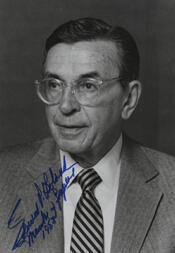
Here you will find contact information for Representative Edward P. Boland, including email address, phone number, and mailing address.
| Name | Edward P. Boland |
| Position | Representative |
| State | Massachusetts |
| District | 2 |
| Party | Democratic |
| Status | Former Representative |
| Term Start | January 3, 1953 |
| Term End | January 3, 1989 |
| Terms Served | 18 |
| Born | October 1, 1911 |
| Gender | Male |
| Bioguide ID | B000600 |
About Representative Edward P. Boland
Edward Patrick Boland (October 1, 1911 – November 4, 2001) was an American politician from the Commonwealth of Massachusetts who served as a Democratic member of the United States House of Representatives from 1953 to 1989. Over the course of 18 consecutive terms, he represented Massachusetts’s 2nd congressional district and became a significant figure in mid- to late-twentieth-century congressional affairs, particularly in the areas of intelligence oversight and foreign policy. His long tenure in Congress spanned a transformative period in American history, during which he consistently participated in the legislative process and represented the interests of his constituents.
Boland was born on October 1, 1911, in Springfield, Massachusetts. He was raised in that city and educated in local schools, coming of age in the years between World War I and the Great Depression. His early life in Springfield, a manufacturing and industrial center in western Massachusetts, helped shape his understanding of working-class concerns and the economic issues that would later influence his public service. Remaining closely tied to his hometown throughout his life, he developed a political base rooted in the neighborhoods and civic institutions of Springfield and the surrounding communities.
Boland entered public life in Massachusetts state politics before moving on to national office. He was elected to the Massachusetts House of Representatives, where he served from 1939 to 1940. In that role, he gained early legislative experience and began building the relationships and reputation that would sustain his later career. Following his term in the state legislature, he was elected Hampden County register of deeds, a position he held from 1941 to 1952. As register of deeds, he oversaw the recording and maintenance of land and property records, a post that kept him in close contact with local officials, attorneys, and residents and further solidified his standing in regional politics.
In 1952, Boland was elected as a Democrat to the United States House of Representatives, taking office on January 3, 1953. He would serve continuously in Congress until January 3, 1989, never losing an election during 50 years as an elected official. As a member of the House of Representatives, he participated actively in the democratic process, contributing to the legislative work of the chamber and representing the interests of his constituents in Massachusetts’s 2nd congressional district. His service coincided with major national developments, including the Cold War, the civil rights movement, the Vietnam War, and the emergence of new debates over intelligence and foreign intervention.
Boland’s congressional career was not without controversy at home. He was in office during the closing of the historic Springfield Armory in 1968, a major economic and symbolic loss for his district. He was harshly criticized by some constituents and local leaders for his inability to prevent its closure, and this issue prompted a serious challenge to his seat in 1968 by Springfield Mayor Charles V. Ryan. Despite the criticism, Boland was re-elected handily, aided significantly by political support from the family of U.S. Senator Ted Kennedy. That election proved to be the last time he faced a major challenger, underscoring the depth of his political strength in a heavily Democratic district.
On Capitol Hill, Boland became best known nationally for his role in shaping congressional oversight of U.S. intelligence activities. His most famous legislative achievement was the Boland Amendment of 1982, a measure that restricted certain U.S. government funding for the Contra rebels in Nicaragua. The amendment was crafted in response to revelations that the Central Intelligence Agency had supervised acts of sabotage in Nicaragua without properly notifying Congress. By limiting support for the Contras, the Boland Amendment became a central element in the broader struggle between the legislative and executive branches over control of foreign policy and covert operations, and it later figured prominently in the Iran–Contra affair. Through this work, Boland helped define the modern framework for congressional scrutiny of intelligence activities.
Boland’s long tenure in Washington also reflected close personal and political ties with other members of the Massachusetts delegation. For many years, he shared a Washington apartment with fellow Massachusetts Congressman Thomas P. “Tip” O’Neill, whose wife remained in Massachusetts while O’Neill served in Congress. This living arrangement, which continued until 1977, symbolized the camaraderie and mutual support within the delegation and placed Boland near the center of the informal networks that shaped House leadership and strategy, particularly as O’Neill rose to become Speaker of the House.
In April 1988, Boland announced that he would not seek a 19th term in Congress, bringing his lengthy federal legislative career to a close at the end of the 100th Congress in January 1989. Before making his retirement public, he privately informed Springfield Mayor Richard Neal of his plans, giving Neal an early opportunity to organize and raise funds for a congressional campaign. As a result, Neal secured a decisive advantage, ran unopposed for the Democratic nomination in the overwhelmingly Democratic district, and went on to win the seat, which has since been renumbered as Massachusetts’s 1st congressional district. Edward Patrick Boland died on November 4, 2001, leaving behind a legacy as a durable and influential Massachusetts Democrat whose half-century in elected office reflected both local loyalty and national impact.