Representative Edward Schroeder Brooks
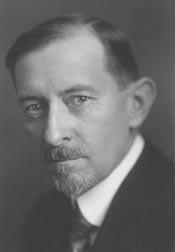
Here you will find contact information for Representative Edward Schroeder Brooks, including email address, phone number, and mailing address.
| Name | Edward Schroeder Brooks |
| Position | Representative |
| State | Pennsylvania |
| District | 20 |
| Party | Republican |
| Status | Former Representative |
| Term Start | May 19, 1919 |
| Term End | March 3, 1923 |
| Terms Served | 2 |
| Born | June 14, 1867 |
| Gender | Male |
| Bioguide ID | B000876 |
About Representative Edward Schroeder Brooks
Edward Schroeder Brooks (June 14, 1867 – July 12, 1957) was a Republican member of the U.S. House of Representatives from Pennsylvania who served two terms in Congress from 1919 to 1923. Over the course of his public life, he participated actively in the legislative process and represented the interests of his constituents during a period of significant political and social change in the United States.
Born on June 14, 1867, Brooks came of age in the post–Civil War era, a time when Pennsylvania was rapidly industrializing and expanding its economic and political influence. His early years were shaped by the social and economic transformations of the late nineteenth century, which provided the broader context for his later involvement in public affairs and Republican Party politics. Details of his family background and early occupations are sparse in the surviving record, but his subsequent rise to national office indicates a sustained engagement with civic life and local political organization.
Brooks’s education prepared him for a career that would eventually lead into public service. Like many men of his generation who entered politics, he benefited from the expanding educational opportunities of the late nineteenth century, which helped equip him with the skills necessary for legislative work, public speaking, and constituency representation. His formative experiences in education and early professional endeavors laid the groundwork for his later role in state and national Republican circles.
By the early twentieth century, Brooks had established himself sufficiently in public and political life to seek national office. A committed member of the Republican Party, he aligned with the dominant political organization in Pennsylvania, which at the time was closely associated with industrial interests, protective tariffs, and a strong national government. His political activity and party loyalty positioned him to secure the Republican nomination for Congress, reflecting both his personal standing and the confidence of party leaders and local voters.
Brooks was elected as a Republican to the U.S. House of Representatives from Pennsylvania and served two consecutive terms from 1919 to 1923. His tenure in Congress coincided with the immediate post–World War I era, a significant period in American history marked by debates over demobilization, veterans’ issues, economic adjustment, and the nation’s role in international affairs. As a member of the House of Representatives, Edward Schroeder Brooks contributed to the legislative process, participated in the democratic governance of the country, and worked to represent the interests of his Pennsylvania constituents within this changing national landscape.
During his service in Congress, Brooks took part in the routine and extraordinary business of the House, including consideration of appropriations, domestic policy measures, and postwar reforms. While specific committee assignments and sponsored legislation are not extensively documented in the surviving summary record, his role as a voting member of the House placed him at the center of decisions affecting both his district and the broader nation. His participation reflected the priorities of a Republican-controlled Congress during a period characterized by calls for “normalcy,” economic growth, and a return to peacetime stability.
After leaving Congress in 1923, Brooks concluded his brief but notable period of national legislative service. Like many former members, he returned to private life while remaining identified with the Republican Party and the public affairs of his state. He lived through the Great Depression, World War II, and the early years of the Cold War, witnessing profound changes in American society and government that followed the era in which he had served.
Edward Schroeder Brooks died on July 12, 1957, closing a long life that spanned from the Reconstruction era into the mid-twentieth century. Remembered primarily for his service as a Republican member of the U.S. House of Representatives from Pennsylvania from 1919 to 1923, he occupies a place in the historical record as one of the many legislators who helped guide the nation through the complex transition from war to peace in the early twentieth century.