Representative Edward Carrington Cabell
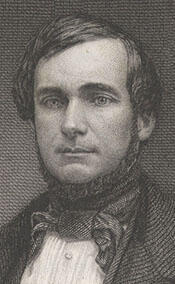
Here you will find contact information for Representative Edward Carrington Cabell, including email address, phone number, and mailing address.
| Name | Edward Carrington Cabell |
| Position | Representative |
| State | Florida |
| District | 1 |
| Party | Whig |
| Status | Former Representative |
| Term Start | December 1, 1845 |
| Term End | March 3, 1853 |
| Terms Served | 4 |
| Born | February 5, 1816 |
| Gender | Male |
| Bioguide ID | C000003 |
About Representative Edward Carrington Cabell
Edward Carrington Cabell (February 5, 1816 – February 28, 1896) was an American lawyer, planter, and politician who became the first U.S. Representative from the State of Florida and served in the United States Congress from 1845 to 1853. A member of the Whig Party, he represented Florida during a significant period in American history, contributing to the legislative process over four terms in office and participating actively in the democratic governance of the young state.
Cabell was born in Richmond, Virginia, on February 5, 1816. He pursued a classical education from an early age, attending Washington College (now Washington and Lee University) in Lexington, Virginia, in 1832 and 1833, and then Reynolds’ Classical Academy in 1833 and 1834. He continued his studies at the University of Virginia in Charlottesville, from which he was graduated in 1836. In 1837 he moved to the Florida Territory and settled near Tallahassee, where he engaged in agricultural pursuits, establishing himself as a planter and becoming involved in the political and civic life of the region.
Cabell’s early political activity in Florida included service as a delegate to the territorial convention of 1838 that met to frame a state constitution in anticipation of Florida’s admission to the Union. After this initial period in Florida, he returned to Virginia to study law and was admitted to the bar in 1840. He then returned to Tallahassee to practice law, combining his legal career with his agricultural interests and emerging as a prominent Whig figure in territorial politics as Florida moved toward statehood.
Upon the admission of Florida as a state in 1845, Cabell stood for election to the United States House of Representatives. He was initially declared elected to the Twenty-ninth Congress and took his seat, serving from October 6, 1845, to January 24, 1846. His opponent, William H. Brockenbrough, contested the election, arguing that certain late-delivered returns should be counted and that some ballots should be excluded based on how they had been delivered. The House investigating committee held that the statutory time limit for returns was directory rather than mandatory and that all valid returns should be included, while rejecting the contention that the method of delivery of ballots should affect their validity. When all returns were counted, Brockenbrough was found to have a narrow majority, and Cabell was deemed ineligible to retain the seat, which was then awarded to Brockenbrough.
Cabell sought to return to Congress and was subsequently elected as a Whig to the Thirtieth Congress and re-elected to the Thirty-first and Thirty-second Congresses, serving from March 4, 1847, to March 3, 1853. Over these terms he represented the interests of his Florida constituents in the House of Representatives during a period marked by sectional tensions, territorial expansion, and debates over slavery and federal policy. During the Thirtieth Congress he served as chairman of the Committee on Expenditures on Public Buildings, overseeing matters related to federal construction and the use of public funds for government facilities. In 1852 he was an unsuccessful candidate for reelection to the Thirty-third Congress, bringing his continuous congressional service to a close.
After leaving Congress, Cabell resumed the practice of law in Tallahassee while maintaining his connections to Southern political affairs. In 1859 he moved to St. Louis, Missouri, where he continued his legal career and became involved in the increasingly polarized politics of the border states on the eve of the Civil War. In May and June 1861 he served as secret commissioner—effectively an unofficial ambassador—for Missouri Governor Claiborne F. Jackson to the Confederate government, reflecting his alignment with the Southern cause. During the Civil War he served in the Confederate Army with the rank of lieutenant colonel.
Following the war, Cabell resumed civilian life and legal practice outside the South for a time. From 1868 to 1872 he practiced law in New York City, then returned to St. Louis, Missouri, where he continued his legal work and re-entered public service. He served as a member of the Missouri State Senate from 1878 to 1882, extending his legislative career beyond his earlier service in Florida and the U.S. Congress. Edward Carrington Cabell died in St. Louis on February 28, 1896, and was interred in Bellefontaine Cemetery, closing a long career that had spanned territorial politics, early statehood, national office, civil war, and postwar public service.