Senator Edward Ward Carmack
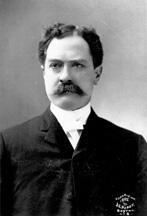
Here you will find contact information for Senator Edward Ward Carmack, including email address, phone number, and mailing address.
| Name | Edward Ward Carmack |
| Position | Senator |
| State | Tennessee |
| Party | Democratic |
| Status | Former Representative |
| Term Start | March 15, 1897 |
| Term End | March 3, 1907 |
| Terms Served | 3 |
| Born | November 5, 1858 |
| Gender | Male |
| Bioguide ID | C000157 |
About Senator Edward Ward Carmack
Edward Ward Carmack (November 5, 1858 – November 9, 1908) was an attorney, newspaperman, and Democratic political figure who represented Tennessee in the United States Congress at the turn of the twentieth century. He served as a member of the U.S. House of Representatives from March 4, 1897, to March 3, 1901, and as a U.S. Senator from March 4, 1901, to March 3, 1907, participating in the legislative process during a significant period in American history. Over the course of three terms in Congress—two in the House and one in the Senate—he was known both for his vigorous partisanship and for the influence he wielded through his parallel career in journalism.
Carmack was born in Sumner County, Tennessee, on November 5, 1858. He attended The Webb School, then located at Culleoka, Tennessee, an institution noted for preparing young men for professional and public life. After his preparatory education, he studied law and was admitted to the bar in 1878. He began the practice of law in Columbia, Tennessee, where he quickly entered public service. In 1881 he served as city attorney of Columbia, and in 1884 he was elected to the Tennessee House of Representatives, marking his formal entry into elective politics in his home state.
Alongside his legal and political work, Carmack developed a prominent career in journalism that would shape both his reputation and his political fortunes. In 1889 he joined the staff of the Nashville Democrat, one of the leading newspapers in the state. When the Nashville Democrat merged with another paper to form the Nashville American, Carmack became editor-in-chief of the new publication, using its editorial pages to advance his political views and to attack his rivals. In 1892 he moved to Memphis to serve as editor of the Memphis Commercial, now The Commercial Appeal. During his tenure there, his editorials brought him into direct and notorious conflict with Ida B. Wells, the African American journalist and anti-lynching crusader. As Wells used her newspaper, the Memphis Free Speech and Headlight, to expose lynching and racial violence—particularly after the 1892 lynching of three Black owners of the People’s Grocery following the so-called Curve Riot—Carmack responded in his columns with vitriolic attacks, demanding retaliation against what he called “the black wench.” In the ensuing backlash, the offices of Wells’s paper were destroyed; Wells, who was out of town at the time, did not return to the South for three decades. Carmack’s role in this episode later became a central part of the controversy surrounding his legacy.
Carmack’s prominence as a lawyer and editor helped propel him to national office. In 1896 he was elected as a Democrat to the United States House of Representatives from Tennessee and served two consecutive terms, from March 4, 1897, to March 3, 1901. His service in the House coincided with the aftermath of the Spanish–American War and the onset of American overseas expansion. In 1901 the Tennessee General Assembly elected him to the United States Senate, where he served one term from March 4, 1901, to March 3, 1907. As a Senator from Tennessee, he participated actively in the democratic process and represented the interests of his constituents during a period marked by debates over imperialism, economic regulation, and social reform. He served on the Lodge Committee, which investigated alleged war crimes committed by U.S. forces in the Philippine–American War, placing him at the center of contentious national discussions over American conduct abroad. Although he remained an influential figure, he failed to secure reelection to a second Senate term and was succeeded in 1907 by former Tennessee governor Robert Love Taylor. After leaving the Senate, Carmack returned to the practice of law.
Carmack soon reentered electoral politics at the state level. In 1908 he sought the Democratic nomination for governor of Tennessee, challenging the incumbent, Malcolm Patterson. The campaign became a referendum on the issue of alcohol regulation. Carmack ran as a strong Prohibitionist, advocating statewide prohibition of liquor, while Patterson was supported by the “wet” lobby that opposed such restrictions. The contest was closely fought, but Carmack was narrowly defeated for the nomination. Following this setback, he turned again to journalism and became editor of the Nashville Tennessean, then a one-year-old daily newspaper that aligned with his prohibitionist views. In this role he continued to use the press as a political weapon, publishing sharp editorials against his opponents, including powerful figures within the state Democratic Party.
The intensity of Carmack’s editorial attacks contributed directly to his violent death. On November 9, 1908, in Nashville, he encountered his publishing and political rival Duncan Brown Cooper, a prominent supporter of Governor Patterson, and Cooper’s son, Robin. Carmack had been warned that Cooper was angered by his anti-Cooper editorials in the Tennessean and had allegedly threatened him. When the men met on the street, Carmack attempted to shoot Duncan Brown Cooper, apparently seeking to act preemptively in the face of these threats. He missed Cooper but wounded Robin Cooper, who returned fire and fatally shot Carmack. Edward Ward Carmack died that day, November 9, 1908, at the age of fifty. His remains were returned to Columbia, Tennessee, where he was buried in Rose Hill Cemetery.
In the years following his death, Carmack was widely memorialized in Tennessee, in large part because of the dramatic circumstances of his killing and his prominence as both a politician and journalist. The Tennessee state legislature commissioned a large bronze statue of him, designed by sculptor Nancy Cox-McCormack in 1924 and dedicated in 1927, which was erected on the grounds of the Tennessee State Capitol in Nashville. The monument, engraved with several of his quotations, stood for decades as an official tribute. A public library on Hartsville Pike (Highway 25E) in Gallatin, Tennessee, was long named in his honor, and a street in Columbia, Tennessee, still bears his name. Over time, however, his outspoken support for lynching and his role in attacks on Ida B. Wells and her newspaper made his commemoration increasingly controversial. A state commission eventually recommended replacing his statue with one of Davy Crockett, and amid nationwide protests following the killing of George Floyd, demonstrators tore down the Carmack statue on May 30, 2020. His life and death continue to be cited in discussions of political violence, press freedom, and racial injustice in the United States.