Representative Edward Dean Cooke
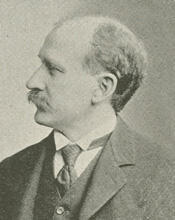
Here you will find contact information for Representative Edward Dean Cooke, including email address, phone number, and mailing address.
| Name | Edward Dean Cooke |
| Position | Representative |
| State | Illinois |
| District | 6 |
| Party | Republican |
| Status | Former Representative |
| Term Start | December 2, 1895 |
| Term End | March 3, 1899 |
| Terms Served | 2 |
| Born | October 17, 1849 |
| Gender | Male |
| Bioguide ID | C000731 |
About Representative Edward Dean Cooke
Edward Dean Cooke (October 17, 1849 – June 24, 1897) was a Republican member of the United States House of Representatives from Illinois who served during the Fifty-fourth and Fifty-fifth Congresses in the closing years of the nineteenth century. His congressional service, from March 4, 1895, until his death in 1897, took place during a significant period in American political and economic history, as the nation grappled with the aftermath of the Panic of 1893, debates over monetary policy, and questions of industrial regulation and labor.
Cooke was born in Cascade, Dubuque County, Iowa, on October 17, 1849. He was raised in northeastern Iowa and received his early education in the common schools, later attending a local academy and the high school in nearby Dubuque. Growing up in a region that was still developing on the western frontier of the Midwest, he was exposed to the rapid growth and political ferment of the post–Civil War era, experiences that helped shape his interest in law and public affairs.
Pursuing a legal education, Cooke studied law in Dubuque before enrolling in the law department of Columbian University in Washington, D.C., an institution that would later become George Washington University. Immersed in the nation’s capital during his studies, he gained familiarity with federal institutions and the workings of national government. He graduated from Columbian University in 1873. That same year he was admitted to the bar and moved to Illinois, where he commenced the practice of law in Chicago, then emerging as a major commercial and transportation center of the Midwest.
Cooke quickly established himself in Chicago’s legal and political circles. As the city expanded in population and economic importance following the Great Chicago Fire of 1871, he built a professional practice that brought him into contact with business interests and civic leaders. His growing prominence led to his election to the Illinois House of Representatives, where he served as a member of the state legislature in 1883. In the state house, he participated in the legislative process at a time when Illinois was addressing issues related to urban growth, transportation, and industrialization, experience that would later inform his work in Congress.
A member of the Republican Party, Cooke advanced within the party ranks in Illinois during an era when Republicans dominated state and national politics. He was elected as a Republican to the United States House of Representatives from Illinois to the Fifty-fourth Congress and was reelected to the Fifty-fifth Congress. His tenure in Congress began on March 4, 1895. During his two terms, he contributed to the legislative process and represented the interests of his Illinois constituents in the House of Representatives. Serving in Washington during the administration of President Grover Cleveland and the early months of President William McKinley’s term, he participated in the democratic process at a time marked by contentious debates over tariffs, currency, and the role of the federal government in regulating commerce.
Cooke’s congressional service was cut short by his death in office. He continued to serve actively in the House until June 24, 1897, when he died in Washington, D.C., while still a sitting member of the Fifty-fifth Congress. His passing ended a career that had taken him from the rural communities of Iowa to the legal and political arenas of Chicago and the national legislature. Following his death, he was interred in Rosehill Cemetery in Chicago, Illinois, a burial place for many of the city’s prominent political and civic figures, underscoring his standing in the public life of Illinois at the close of the nineteenth century.