Senator Edward Irving Edwards
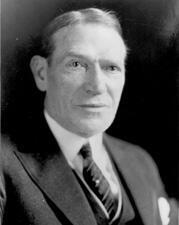
Here you will find contact information for Senator Edward Irving Edwards, including email address, phone number, and mailing address.
| Name | Edward Irving Edwards |
| Position | Senator |
| State | New Jersey |
| Party | Democratic |
| Status | Former Representative |
| Term Start | December 3, 1923 |
| Term End | March 3, 1929 |
| Terms Served | 1 |
| Born | December 1, 1863 |
| Gender | Male |
| Bioguide ID | E000066 |
About Senator Edward Irving Edwards
Edward Irving Edwards (December 1, 1863 – January 26, 1931) was an American attorney, banker, and Democratic Party politician who served as the 37th Governor of New Jersey from 1920 to 1923 and represented the state in the United States Senate from 1923 to 1929. A leading critic of Prohibition, he became a central figure in early twentieth-century New Jersey politics and a prominent representative of urban, ethnic, and anti-Prohibition constituencies within the Democratic Party.
Edwards was born on December 1, 1863, in Jersey City, New Jersey, the son of Emma J. (Nation) and William W. Edwards. He was educated in the local public schools and attended Jersey City High School, later renamed William L. Dickinson High School. From 1880 to 1882 he attended New York University, after which he read law in the office of his brother, William David Edwards, who himself served as a state senator representing Hudson County from 1887 to 1889. This combination of legal training and exposure to state politics helped shape Edwards’s early interest in public affairs.
Before entering full-time political life, Edwards pursued a successful career in business and finance. He engaged in banking and the general contracting business and rose to become president and chairman of the board of directors of the First National Bank of Jersey City. His prominence in local business circles, coupled with his family’s political connections, attracted the attention of the powerful Hudson County Democratic organization. As a businessman with an evident interest in politics and a brother who had served in the State Senate, Edwards emerged as a natural ally for the rising Democratic machine in Hudson County.
Edwards’s formal political career began in state office. He served as New Jersey state comptroller from 1911 to 1917, a position that placed him at the center of the state’s fiscal administration. In 1918 he was elected to the New Jersey Senate, where he became a close political ally and personal friend of Jersey City Mayor Frank Hague, the dominant boss of the Hudson County Democratic machine. This alliance with Hague would prove decisive in Edwards’s subsequent rise to statewide office and in the consolidation of Democratic power in New Jersey.
In 1919 Edwards sought the Democratic nomination for governor. In the primary he faced James R. Nugent, the Essex County party chair and former state party boss. The contest became a proxy struggle between Hague and Nugent for control of the state Democratic organization. Edwards, backed by Hague, won the primary with 53.6 percent of the vote, carrying fifteen counties and rolling up a large majority in Hudson County. His victory established Hague as the undisputed leader of the New Jersey Democratic Party, a position Hague would retain into the late 1940s. In the general election Edwards faced Republican Newton A. K. Bugbee. Despite a broader Republican tide in the Northeast driven by President Woodrow Wilson’s unpopularity, labor and racial unrest, and fears of anarchist violence, Edwards narrowly prevailed. The campaign centered almost exclusively on the new national policy of Prohibition following ratification of the Eighteenth Amendment and passage of the Volstead Act. Although Edwards personally did not drink alcohol, he ran as an avowed “wet” opponent of Prohibition. An Elizabeth newspaper dubbed his effort the “Applejack Campaign,” and his victory was widely attributed to an urban revolt by Catholic and ethnic immigrant voters. Historian Warren E. Stickle later referred to this realignment as the “Edwards Revolution,” noting that it reshaped New Jersey politics for much of the twentieth century and anticipated the New Deal coalition.
Edwards served as the 37th Governor of New Jersey from 1920 to 1923. His term was marked by intense partisan conflict and Republican domination of the state legislature. The State Senate, apportioned with one vote per county, was controlled by rural and small-town interests increasingly aligned with the Republican Party, and after the 1920 Republican landslide the General Assembly was similarly lopsided—only one Democrat served in the legislature of 1921–1922. As a result, Edwards’s role in shaping legislation was limited. Republican majorities repeatedly overrode his vetoes and blocked much of his program, including measures related to public utilities and law enforcement. They enacted, over his objections, the creation of the Port Authority of New York and New Jersey and the establishment of the New Jersey State Police, both of which he had initially opposed but later supported in practice. On Prohibition, Edwards secured passage of a law permitting the manufacture and sale of beverages containing less than 3.5 percent alcohol, which he signed on March 2, 1920, but the legislature repealed it in January 1921 and enacted enforcement statutes over his veto. With legislative avenues largely closed, Edwards turned to executive and legal strategies, joining New Jersey as a plaintiff in Rhode Island v. Palmer, a challenge to the constitutionality of Prohibition enforcement, and publicly urging Congress to amend the Volstead Act to allow light wines and beer. His outspoken opposition to Prohibition led to his name being entered in the Illinois and New Jersey presidential preference primaries in 1920, both of which he won. As governor he also used his appointment powers aggressively, including dismissing members of the Public Utility Commission in a dispute over rate reductions, only to see the legislature reconstitute the body over his veto. He opposed strict Sunday “blue laws” and supported the staging of boxing matches in New Jersey despite moral objections from reformers.
With his gubernatorial term ending in 1923, Edwards devoted much of his final year in office to a campaign for the United States Senate. Running against incumbent Republican Senator Joseph S. Frelinghuysen, he framed the race as a referendum on cultural and social issues. His campaign slogan, “Wine, Women, and Song,” stood in sharp contrast to the Republican platform of “100-percent Americanism, blue laws, Sunday closing laws, compulsory English lessons, immigration restriction, and prohibition.” Edwards’s message resonated with urban, immigrant, and anti-Prohibition voters, and he defeated Frelinghuysen by a convincing margin, reversing President Warren G. Harding’s earlier landslide in the state and further solidifying Frank Hague’s dominance over the Democratic Party in New Jersey.
Edward Irving Edwards served as a Senator from New Jersey in the United States Congress from March 4, 1923, to March 3, 1929. A member of the Democratic Party, he contributed to the legislative process during one term in office and continued to champion the interests of his largely urban and ethnic constituency. In the Senate he remained a leading critic of Prohibition, using his position to advocate modification of the Volstead Act and to oppose measures that strengthened federal enforcement. His tenure coincided with a period of Republican control of both Congress and the presidency, which limited Democratic influence on national policy but allowed Edwards to position himself as a prominent spokesman for “wet” forces and for those skeptical of moralistic legislation. In 1928 he sought reelection, again emphasizing his opposition to Prohibition. His Republican opponent, Hamilton Fish Kean, undercut this appeal by publicly calling for modification of the Volstead Act and eventually declaring himself as opposed to Prohibition as Edwards. Although the Anti-Saloon League withdrew its endorsement of Kean, the Republican candidate benefited from widespread prosperity associated with President Calvin Coolidge’s administration and from rural resistance to the urban-based Democratic coalition. Kean defeated Edwards in a landslide, ending Edwards’s Senate career in March 1929.
In his personal life, Edwards married Blanche Smith on November 14, 1888. The couple had two children, Edward Irving Edwards Jr. and Elizabeth Jule Edwards. Blanche Edwards remained an important presence throughout his rise in business and politics until her death in 1928, which marked the beginning of a difficult final period in his life. Edwards was an Episcopalian and a Freemason, affiliations that reflected his standing in both religious and fraternal communities in New Jersey.
Following his wife’s death and his departure from the Senate in March 1929, Edwards’s fortunes declined sharply. He suffered severe financial losses in the Wall Street Crash of 1929 and became embroiled in an electoral fraud scandal that further damaged his public standing. Politically, he broke with his longtime ally Frank Hague and threatened to join a reform coalition opposed to Hague’s machine in the 1930 elections. He initially explored a bid for the governorship in 1931 but found his path blocked by Hague’s preferred candidate, A. Harry Moore, underscoring the extent to which he had fallen out of favor with the organization that had once propelled his career.
In his final months, Edwards faced serious health challenges. He was diagnosed with skin cancer while also confronting financial ruin and political isolation. On January 26, 1931, at the age of 67, he died by suicide, shooting himself in his apartment at 131 Kensington Avenue in Jersey City, New Jersey. He was buried in Bayview – New York Bay Cemetery in Jersey City, in the family plot of his older brother, William David Edwards, who had died in 1916.