Representative Edward Everett Eslick
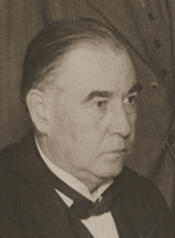
Here you will find contact information for Representative Edward Everett Eslick, including email address, phone number, and mailing address.
| Name | Edward Everett Eslick |
| Position | Representative |
| State | Tennessee |
| District | 7 |
| Party | Democratic |
| Status | Former Representative |
| Term Start | December 7, 1925 |
| Term End | March 3, 1933 |
| Terms Served | 4 |
| Born | April 19, 1872 |
| Gender | Male |
| Bioguide ID | E000216 |
About Representative Edward Everett Eslick
Edward Everett Eslick (April 19, 1872 – June 14, 1932) was an American politician, lawyer, and banker who served as a Democratic member of the United States House of Representatives for Tennessee’s 7th congressional district from 1925 until his death in 1932. Over four consecutive terms in Congress, he represented his constituents during a significant period in American history, contributing to the legislative process in the years leading up to and including the early Great Depression.
Eslick was born near Pulaski in Giles County, Tennessee, on April 19, 1872, the son of Merritt Eslick and Martha Virginia (Abernathy) Eslick. He grew up in rural Middle Tennessee and attended the local public schools before pursuing higher education. He later enrolled at Bethel College in Russellville, Kentucky, where he continued his studies in preparation for a professional career. His early life in Giles County and his education in both Tennessee and Kentucky helped shape his understanding of the agricultural and economic concerns of the region he would later represent.
After completing his studies, Eslick read law and was admitted to the bar in 1893. He commenced the practice of law in Pulaski, Tennessee, establishing himself as a local attorney. In addition to his legal practice, he became involved in banking and agricultural pursuits, reflecting the economic base of his home county and the broader region. His work in these fields gave him practical experience with the financial and farming interests that were central to his district’s livelihood. On June 6, 1906, he married Willa McCord Blake in Birmingham, Alabama, beginning a partnership that would later have its own place in congressional history.
Eslick’s involvement in public affairs grew steadily in the early twentieth century. A committed Democrat, he served as an alternate delegate from Tennessee to the Democratic National Convention in 1916, participating in national party deliberations during the presidency of Woodrow Wilson. During World War I, he furthered his public service as a government appeal agent for Giles County, a role in which he assisted with matters related to the draft and wartime administration. These responsibilities increased his visibility and influence in Tennessee politics and laid the groundwork for his eventual election to national office.
In 1924, Eslick was elected as a Democrat to the Sixty-ninth Congress to represent Tennessee’s 7th congressional district, and he took his seat in the U.S. House of Representatives on March 4, 1925. He was subsequently reelected to the three succeeding Congresses, serving continuously until his death in 1932. As a member of the House of Representatives, Edward Everett Eslick participated actively in the democratic process and represented the interests of his constituents during a period marked by the prosperity of the 1920s, the onset of the Great Depression, and growing national debate over economic relief and veterans’ benefits. His legislative service coincided with major shifts in federal policy and public expectations of government, and he contributed to the deliberations that shaped this era.
Eslick’s congressional service ended abruptly and dramatically on June 14, 1932. While addressing the House of Representatives at the Capitol in Washington, D.C., in support of the Wright Patman World War I Bonus Bill—which proposed the immediate payment of financial bonuses to World War I veterans that had been scheduled for 1945—he suffered a fatal heart attack. He died that same day at age 60 years and 56 days, becoming one of the members of the United States Congress who died in office during the first half of the twentieth century. His remains were returned to Pulaski, Tennessee, where he was interred in Maplewood Cemetery. Following his death, his wife, Willa McCord Eslick, was elected to fill out the remainder of his term in Congress, extending the Eslick family’s representation of Tennessee’s 7th district and underscoring the lasting political legacy of Edward Everett Eslick’s years of public service.