Representative Edward Hogue Funston
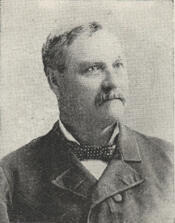
Here you will find contact information for Representative Edward Hogue Funston, including email address, phone number, and mailing address.
| Name | Edward Hogue Funston |
| Position | Representative |
| State | Kansas |
| District | 2 |
| Party | Republican |
| Status | Former Representative |
| Term Start | December 3, 1883 |
| Term End | March 3, 1895 |
| Terms Served | 6 |
| Born | September 16, 1836 |
| Gender | Male |
| Bioguide ID | F000429 |
About Representative Edward Hogue Funston
Edward Hogue Funston (September 16, 1836 – September 10, 1911) was an American politician and farmer who served as a Republican U.S. Representative from Kansas from 1883 to 1895. Over six terms in the House of Representatives, he contributed to the legislative process during a significant period in American history, representing the interests of his Kansas constituents and eventually chairing the Committee on Agriculture. He was also the father of Frederick Funston, who later became a major general in the United States Army and a recipient of the Medal of Honor.
Funston was born near New Carlisle, Clark County, Ohio, on September 16, 1836. He attended local country schools in the New Carlisle area and continued his education at Linden Hill Academy in New Carlisle. He later studied at Marietta College in Marietta, Ohio, receiving the classical and academic training that prepared him for a career in teaching and public life. His early years in rural Ohio and his education in small academies and college environments helped shape his familiarity with agricultural and community concerns that would later inform his political career.
Before entering public office, Funston worked as a schoolteacher. With the outbreak of the American Civil War, he entered the Union Army in 1861 as a lieutenant in the Sixteenth Ohio Battery. During his military service he participated in the principal engagements along the Mississippi River, taking part in the Union campaigns that sought control of that vital waterway. He remained in the service for the duration of the conflict and was mustered out in 1865, returning to civilian life with the experience of four years of wartime duty.
In 1861, Funston married Ann Eliza Mitchell of West Charleston, Ohio, who was then eighteen years old. She was a cousin of his Civil War battery commander and a great-grandniece of the frontiersman Daniel Boone. The couple had several children: Frederick, James Burton, Pogue Warwick, Ella (who married and became Ella Eckdall), Aldo, and Edward H. Jr. They were also the parents of two other children, a boy and a girl, who died in infancy. Their son Frederick Funston would later gain national prominence as a major general in the United States Army and as a Medal of Honor recipient for his actions during the Philippine–American War.
In 1867, Funston moved west and settled on a farm near Carlyle, in Allen County, Kansas. Establishing himself as a farmer, he quickly became involved in local and state politics during a formative period in Kansas’s post–Civil War development. He served as a member of the Kansas House of Representatives from 1873 to 1876 and was chosen Speaker of the House in 1875, reflecting the confidence his colleagues placed in his leadership. He later served in the Kansas Senate from 1880 to 1884 and was elected president of that body in 1880. Through these roles he gained substantial legislative experience and a reputation as an influential Republican figure in Kansas politics.
Funston’s state-level service led to his election to the United States Congress. A member of the Republican Party, he was first elected to the Forty-eighth Congress to fill the vacancy caused by the death of Representative Dudley C. Haskell. He took his seat on March 21, 1884. He was subsequently reelected to the Forty-ninth and to the three succeeding Congresses, serving continuously from March 21, 1884, to March 3, 1893. During this period he participated actively in the democratic process in the House of Representatives and represented the agricultural and economic interests of his Kansas district. In the Fifty-first Congress he served as chairman of the Committee on Agriculture, a position from which he helped shape federal agricultural policy at a time when farming and rural issues were central to national debates.
Funston presented his credentials as a Member-elect to the Fifty-third Congress and began serving on March 4, 1893. His service in that Congress, however, was cut short when his election was successfully contested by Horace L. Moore. As a result of the contest, Funston’s tenure in the Fifty-third Congress ended on August 2, 1894, when Moore was seated in his place. In all, Funston’s congressional career spanned six terms, from 1883 to 1895, encompassing his initial special election and his subsequent reelections, and it coincided with a period of significant political and economic change in the United States.
After leaving Congress, Funston returned to his farm in Kansas, resuming the agricultural pursuits that had long anchored his personal and professional life. He lived in Iola, Kansas, in his later years, remaining a respected figure in the community and in state Republican circles. He died at his home in Iola on September 10, 1911, just six days before his seventy-fifth birthday. Edward Hogue Funston was interred in Iola Cemetery, Iola, Kansas, closing a life that bridged the eras of the Civil War, Reconstruction, and the emergence of Kansas as a settled and politically influential state.