Representative Edward Gilmore
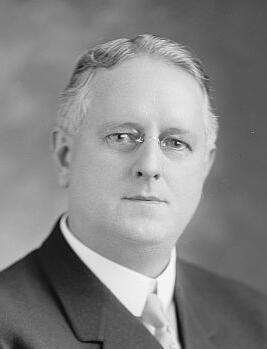
Here you will find contact information for Representative Edward Gilmore, including email address, phone number, and mailing address.
| Name | Edward Gilmore |
| Position | Representative |
| State | Massachusetts |
| District | 14 |
| Party | Democratic |
| Status | Former Representative |
| Term Start | April 7, 1913 |
| Term End | March 3, 1915 |
| Terms Served | 1 |
| Born | January 4, 1867 |
| Gender | Male |
| Bioguide ID | G000221 |
About Representative Edward Gilmore
Edward Gilmore (January 4, 1867 – April 1924) was a United States Representative from Massachusetts and a long‑time Democratic Party official and local officeholder in Brockton, Massachusetts. He was born in Brockton, Plymouth County, Massachusetts, where he attended the public schools. Seeking further education while already engaged in work, he pursued studies through Massachusetts State University extension classes, which supplemented his practical experience in business and public affairs.
After completing his schooling, Gilmore engaged in mercantile pursuits in Brockton. His involvement in local business life helped establish his standing in the community and provided a foundation for his entry into politics. Active early in Democratic Party circles, he became a member of the Democratic State committee, serving from 1896 to 1903. During this period he also gained prominence at the national level within the party, serving as a delegate to the Democratic National Conventions in 1900 and 1904, where he participated in shaping the party’s platforms and presidential nominations.
Gilmore’s formal public service began in municipal government. He was elected to the Brockton Board of Aldermen and served as its president from 1901 to 1906, a role in which he helped oversee city governance during a time of industrial growth and urban development in Brockton. Building on his municipal experience, he advanced to state office as a member of the Massachusetts House of Representatives in 1907 and 1908, where he took part in the legislative process at the state level and further solidified his reputation as a Democratic leader.
Gilmore’s congressional service came during a significant period in American history, coinciding with the early years of the Woodrow Wilson administration and the Progressive Era. A member of the Democratic Party, he was elected as a Democrat to the Sixty‑third Congress and served one term in the U.S. House of Representatives from March 4, 1913, to March 3, 1915, representing a Massachusetts district. During his tenure in Congress, he contributed to the legislative process and participated in the democratic governance of the nation, representing the interests of his constituents in Massachusetts. His service in Congress took place amid major national debates over tariff reform, banking and currency legislation, and progressive social and economic policies.
After leaving Congress, Gilmore continued his public career in federal and local administrative posts. He was appointed postmaster of Brockton and served in that capacity from 1915 to 1923, overseeing postal operations in a growing industrial city and maintaining close contact with the community he had long represented. Following his service as postmaster, he became a city assessor in Brockton in 1923 and 1924, contributing to the administration of local taxation and municipal finance.
Edward Gilmore died in Boston, Massachusetts, in April 1924; contemporary records list his date of death as April 10, 1924, while some accounts state April 19, 1924. He was interred in Calvary Cemetery in his native Brockton. His career reflected a steady progression from local business and municipal service to state and national office, followed by continued engagement in public administration in his home city.