Representative Edward La Rue Hamilton
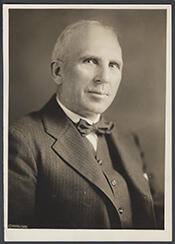
Here you will find contact information for Representative Edward La Rue Hamilton, including email address, phone number, and mailing address.
| Name | Edward La Rue Hamilton |
| Position | Representative |
| State | Michigan |
| District | 4 |
| Party | Republican |
| Status | Former Representative |
| Term Start | March 15, 1897 |
| Term End | March 3, 1921 |
| Terms Served | 12 |
| Born | December 9, 1857 |
| Gender | Male |
| Bioguide ID | H000108 |
About Representative Edward La Rue Hamilton
Edward La Rue Hamilton (December 9, 1857 – November 2, 1923) was an American lawyer and Republican politician from Michigan who served twelve consecutive terms as a United States Representative. His long tenure in Congress, from 1897 to 1921, spanned a transformative period in American history that included the Spanish–American War, the Progressive Era, and World War I, during which he played a sustained role in the legislative process and in the representation of his Michigan constituents.
Hamilton was born on December 9, 1857, in Niles Township, Berrien County, Michigan. He was raised and educated locally, attending the public grade schools of Niles Township and later Niles High School, from which he graduated in 1876. Growing up in southwestern Michigan in the years following the Civil War, he came of age in a region that was developing rapidly in agriculture, commerce, and transportation, conditions that would shape the concerns of the district he later represented in Congress.
After completing his secondary education, Hamilton pursued the study of law. He read law in Michigan, following the common practice of the period, and prepared for admission to the bar through apprenticeship and independent study rather than formal law school training. In 1884 he was admitted to the bar and commenced the practice of law in Niles, Michigan. As a practicing attorney, he built a professional reputation in his community, which provided the foundation for his entry into public life and elective office.
Hamilton was elected as a Republican from Michigan’s 4th congressional district to the Fifty-fifth Congress and was subsequently re-elected to the eleven succeeding Congresses, serving continuously from March 4, 1897, to March 3, 1921. His district, located in southwestern Michigan, included communities whose interests ranged from agriculture and small manufacturing to growing urban centers, and he participated actively in the democratic process as their representative. During his twelve terms in the U.S. House of Representatives, he contributed to federal legislation across a period marked by debates over imperial expansion, regulatory reforms, and wartime measures, reflecting the evolving priorities of both his party and the nation.
Within the House, Hamilton attained positions of influence, most notably as chairman of the Committee on Territories in the Fifty-eighth through the Sixty-first Congresses. In that capacity, he was involved in legislative oversight and policy concerning the governance and development of U.S. territories during an era when questions of territorial administration, statehood, and the status of newly acquired lands were central to national politics. His work on this committee placed him at the intersection of domestic policy and American expansion, as Congress addressed the legal and political frameworks for territories that would later become states or remain under U.S. jurisdiction.
Hamilton chose not to be a candidate for renomination in 1920, bringing his congressional career to a close at the end of his twelfth term on March 3, 1921. After leaving Congress, he returned to private life and resumed the practice of law. He continued his legal work in Michigan, drawing on his long experience in national affairs and his established standing in the community, and remained professionally active until his final illness.
Edward La Rue Hamilton died in St. Joseph, Michigan, on November 2, 1923. He was interred in Silverbrook Cemetery in Niles, Michigan, returning in death to the community where he had been educated, begun his legal career, and first entered public service. His more than two decades in the House of Representatives, including his leadership of the Committee on Territories, marked him as a significant figure in Michigan’s congressional history during the late nineteenth and early twentieth centuries.