Representative Edward Stevens Henry
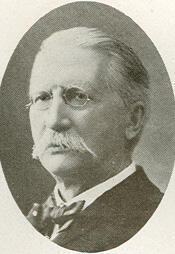
Here you will find contact information for Representative Edward Stevens Henry, including email address, phone number, and mailing address.
| Name | Edward Stevens Henry |
| Position | Representative |
| State | Connecticut |
| District | 1 |
| Party | Republican |
| Status | Former Representative |
| Term Start | December 2, 1895 |
| Term End | March 3, 1913 |
| Terms Served | 9 |
| Born | February 10, 1836 |
| Gender | Male |
| Bioguide ID | H000505 |
About Representative Edward Stevens Henry
Edward Stevens Henry (February 10, 1836 – October 10, 1921) was an American businessman and Republican politician from Connecticut who served as a member of the United States House of Representatives for Connecticut’s 1st congressional district from 1895 to 1913. Over nine consecutive terms in Congress, he contributed to the legislative process during a significant period in American history, representing the interests of his constituents and participating actively in the democratic process. In addition to his long congressional service, he served as the 44th Treasurer of Connecticut from 1889 to 1893, held seats in both the Connecticut House of Representatives and the Connecticut Senate, and was mayor of Rockville, Connecticut.
Henry was born in Gill, Franklin County, Massachusetts, on February 10, 1836, the oldest of six children. In 1849, when he was thirteen years old, he moved with his parents to Rockville, in the town of Vernon, Connecticut. He attended the public schools there and entered the workforce at an early age. By the age of nineteen he had gone into the dry-goods business, beginning a career in commerce that would underpin his later prominence as a businessman and banker in the community.
Alongside his mercantile activities, Henry became a significant figure in local finance. He was one of the organizers of the People’s Saving Bank in Rockville and served as its treasurer from 1870 until his death in 1921, a tenure of more than fifty years. He was also engaged in agriculture as a farmer and breeder of livestock, interests that later informed his legislative priorities and committee assignments in Congress. His combined experience in business, banking, and farming helped establish him as a leading citizen in Rockville and provided a practical foundation for his public service.
Henry’s political career began at the state level. He served as a member of the Connecticut House of Representatives in 1883 and later as a member of the Connecticut Senate from 1887 to 1888. In 1888 he was chosen as a delegate at large to the Republican National Convention, reflecting his growing influence within the party. That same year he was elected the 44th Treasurer of the State of Connecticut, serving from 1889 to 1893. During his tenure as state treasurer he was credited with abolishing the state tax, a notable fiscal reform that enhanced his reputation as a capable steward of public finances.
After completing his term as state treasurer, Henry continued his rise in public life at the municipal level. He served as the third mayor of Rockville from 1894 to 1895, further strengthening his ties to the community he had called home since childhood. His first bid for national office came earlier, when he was nominated by the Republican Party for Congress in 1892 but was defeated by Democrat Lewis Sperry. Undeterred, he ran again two years later and, in 1894, was elected as a Republican to the Fifty-fourth Congress.
Henry took his seat in the U.S. House of Representatives on March 4, 1895, and was subsequently reelected to the eight succeeding Congresses, serving continuously until March 3, 1913. As a member of the House of Representatives during a transformative era that included the closing of the American frontier, the rise of industrialization, and the early Progressive Era, he played a steady, if regionally focused, role in national affairs. He served on the House Committee on Agriculture for much of his time in Congress, where his background as a farmer and livestock breeder informed his work. He also served as chairman of the Committee on Expenditures on Public Buildings during the 60th and 61st Congresses, overseeing aspects of federal spending on government facilities.
In his legislative positions, Henry was known as a proponent of agriculture, a protectionist in matters of tariff policy, and a supporter of the gold standard during the monetary debates of the late nineteenth and early twentieth centuries. Among the measures associated with his name was the Oleomargarine Act, commonly known as the Henry Bill, which sought to discourage the imitation of butter and regulate the production and sale of oleomargarine. After nine terms in office, he declined to be a candidate for renomination in 1912, bringing his congressional career to a close in March 1913.
Following his retirement from Congress, Henry returned to Rockville and resumed his former mercantile pursuits and his long-standing role in local banking. He continued as treasurer of the People’s Saving Bank and remained an influential figure in the community until his death. Edward Stevens Henry died in Rockville, Connecticut, on October 10, 1921, and was interred in Grove Hill Cemetery. His local legacy is commemorated in Henry Park in Rockville, located on land he donated and named in his honor, reflecting both his civic generosity and his enduring connection to the town he helped shape.