Representative Edward Keating
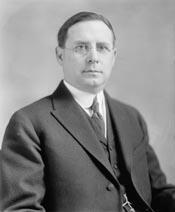
Here you will find contact information for Representative Edward Keating, including email address, phone number, and mailing address.
| Name | Edward Keating |
| Position | Representative |
| State | Colorado |
| District | 3 |
| Party | Democratic |
| Status | Former Representative |
| Term Start | April 7, 1913 |
| Term End | March 3, 1919 |
| Terms Served | 3 |
| Born | July 9, 1875 |
| Gender | Male |
| Bioguide ID | K000035 |
About Representative Edward Keating
Edward Keating (July 9, 1875 – March 18, 1965) was an American newspaper editor, politician, and advocate for improved conditions for the working class who represented Colorado in the United States House of Representatives from 1913 to 1919. Over the course of his career he was in turn a Colorado newspaper editor, a three-term Democratic U.S. Representative, and a long‑time editor and manager of the national labor newspaper Labor, jointly owned by several railroad unions. Deeply involved in political campaigns across the country, he worked to elect union‑friendly legislators and became a prominent voice for organized labor in the first half of the twentieth century.
Keating’s early years, as later recounted in his memoirs, were marked by modest circumstances that helped shape his sympathy for working people. His reminiscences about his youth, collected in the early‑life section of his book The Gentleman from Colorado, emphasized formative experiences that acquainted him with the hardships of wage earners and the struggles of families of limited means. These experiences contributed to his lifelong identification with labor causes and his determination to use journalism and politics as instruments of reform.
Before entering national politics, Keating established himself as a Colorado newspaper editor. Working in the state’s press, he developed a reputation as an energetic journalist and an articulate spokesman for progressive ideas. His editorial work brought him into close contact with local and regional political issues, including labor disputes and questions of economic fairness, and it provided him with a public platform from which he began to influence opinion on behalf of workers and their organizations. This period in Colorado journalism laid the groundwork for his later campaigns and his eventual election to Congress.
Keating was elected as a Democrat to the United States House of Representatives and served as a Representative from Colorado from 1913 to 1919, a significant period in American history that encompassed the Progressive Era and the First World War. During his three terms in office, he participated actively in the legislative process and represented the interests of his Colorado constituents in the House of Representatives. As a member of the Democratic Party, he aligned himself with efforts to improve conditions for working men and women and to advance reforms associated with the broader progressive movement. His congressional experiences, which he later described in detail in the congressional section of The Gentleman from Colorado, highlighted both the public debates and the behind‑the‑scenes negotiations that characterized national politics in that era.
Defeated for reelection in 1918, Keating left Congress in 1919 and immediately took up a new role at the national level in the labor movement’s communications efforts. That year, fifteen associated railroad labor organizations founded the national weekly newspaper Labor in Washington, D.C., and Keating became its editor and manager. Under his leadership, which continued from 1919 until his retirement on April 1, 1953, Labor served as a central voice for railroad workers and other union members, reporting on industrial disputes, legislative developments, and political campaigns affecting organized labor. Through editorials and political advocacy, he used the paper to support candidates and policies favorable to working people, extending his influence well beyond Colorado to the national stage.
While editing Labor, Keating also wrote for a broader audience under a pseudonym. Using the pen name Raymond Lonergan, he contributed a weekly Washington column for the Chicago Tribune during most of his years as editor of Labor. These columns offered readers across the country an insider’s view of national politics, particularly as it affected labor and social legislation. In 1953, coinciding with his retirement from active editorial work, he published The Story of Labor: Thirty-three Years on Rail Workers’ Fighting Front, in which he reminisced about his decades at the helm of Labor and the many political campaigns in which the paper and its sponsoring unions became involved.
Keating’s stature within labor and progressive circles was such that he was occasionally mentioned for high national office. Senator Huey Long of Louisiana, in his book My First Days in the White House, wrote that he would have chosen Keating to serve as Secretary of Labor had he become president, a testament to Keating’s reputation as a knowledgeable and steadfast advocate for workers. In 1964, near the end of his life, Keating published The Gentleman from Colorado, a memoir that was less a conventional, chronological autobiography than a series of reminiscences about people and incidents with which he had been connected. Organized into five sections—early life, newspaper and political stories, interesting people, congressional experiences, and the railroad unions—the book offered what he described as a “what‑really‑happened behind the scenes” perspective on events spanning his journalistic, political, and labor‑advocacy careers.
Edward Keating died on March 18, 1965, closing a long life spent at the intersection of journalism, politics, and organized labor. From his beginnings in Colorado newspaper offices to his service in Congress and his three decades as editor and manager of Labor, he remained committed to advancing the interests of working people and to shaping public policy through the written word and electoral politics.