Representative Edward Austin Kelly
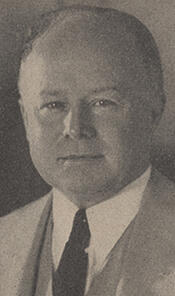
Here you will find contact information for Representative Edward Austin Kelly, including email address, phone number, and mailing address.
| Name | Edward Austin Kelly |
| Position | Representative |
| State | Illinois |
| District | 3 |
| Party | Democratic |
| Status | Former Representative |
| Term Start | December 7, 1931 |
| Term End | January 3, 1947 |
| Terms Served | 7 |
| Born | April 3, 1892 |
| Gender | Male |
| Bioguide ID | K000071 |
About Representative Edward Austin Kelly
Edward Austin Kelly (April 3, 1892 – August 30, 1969) was an American businessman and Democratic politician from Chicago, Illinois, most notable for his service as a United States Representative from Illinois from 1931 to 1943 and from 1945 to 1947. Over seven terms in the House of Representatives, he contributed to the legislative process during a period that encompassed the Great Depression, the New Deal, World War II, and the immediate postwar years, representing the interests of his Chicago constituents in the national legislature.
Kelly was born in Chicago, Illinois, on April 3, 1892, the son of John J. Kelly and Nellie (O’Connor) Kelly. He was educated in the Chicago public schools, attending Longfellow School and Lake High School. Demonstrating an early aptitude for business, he completed his formal business training at Orr’s Business College in Chicago, from which he graduated in 1911. Outside the classroom, he was active in athletics and played semi-professional baseball between 1912 and 1916 for teams based in Chicago, Normal, Lemont, Aurora, and DeKalb, experiences that helped establish his local connections and public profile.
Following his schooling, Kelly began his professional career in the industrial sector. From 1916 to 1920 he was employed as an accountant with the Illinois Steel Corporation, gaining practical experience in finance and corporate operations. During World War I, he entered military service in the United States Army. From 1917 to 1919 he served in Battery D of the 332nd Field Artillery Regiment, a unit of the 86th Division, and attained the rank of sergeant. After his honorable service in the war, he returned to Chicago and entered private enterprise, establishing and operating the E. A. Kelly Co., through which he engaged in the real estate and insurance businesses.
Kelly’s business success and community involvement led him into Democratic Party politics in Chicago. He became active in local party affairs and rose to prominence as president of the 32nd Ward Democratic Association, a position that placed him within the city’s influential political organization. Building on this base of support, he sought national office and, as a Democrat, was elected to the United States House of Representatives in 1930. He took his seat in the Seventy-second Congress on March 4, 1931, at the outset of the Great Depression, and was subsequently reelected five times, serving continuously until January 3, 1943. During these six consecutive terms, he participated in the democratic process in the House of Representatives as Congress addressed economic recovery, social welfare legislation, and the nation’s growing involvement in global affairs. He was an unsuccessful candidate for reelection in 1942, which temporarily ended his initial period of congressional service.
After leaving Congress in 1943, Kelly remained active in public life in Chicago. He served as executive assistant to the chief justice of the Chicago municipal court, a role that involved administrative and liaison responsibilities within the city’s judicial system. In addition, he was appointed a member of the Chicago Planning Commission, contributing to the city’s long-term development and land-use planning. These positions allowed him to apply his legislative experience and business background to local governance and urban policy while maintaining his standing in Democratic political circles.
Kelly returned to national office in the mid-1940s. In 1944 he was again elected to the United States House of Representatives and served one additional term from January 3, 1945, to January 3, 1947, during the closing months of World War II and the beginning of the postwar era. This brought his total service in Congress to seven terms, from 1931 to 1943 and from 1945 to 1947. He was an unsuccessful candidate for reelection in 1946, after which he did not return to Congress. Following the conclusion of his final term, he resumed his activities in the real estate business in Chicago.
In the late 1940s, Kelly continued to play a role in Democratic Party affairs at the state and national levels. In 1948, rising Chicago political leader Richard J. Daley maneuvered to “buy” Kelly out of his position, leading to Kelly’s decision to step down from the Democratic National Committee. According to contemporary accounts, Kelly’s withdrawal from the national committee was linked to intra-party struggles over the 1948 presidential election. Daley indicated that Kelly would support President Harry S. Truman’s candidacy, and Kelly’s departure from the committee was seen as a setback to efforts by the Kennedy family and their allies to replace Truman as the Democratic Party’s presidential nominee at the 1948 Democratic National Convention.
In his personal life, Kelly married RoseMay R. Eulert in 1922. The couple remained married until his death and were the parents of three children: two sons, Edward A. Kelly Jr. and Robert J. Kelly, and a daughter, Rosemary. Maintaining his residence and principal business interests in Chicago throughout his life, Kelly was closely identified with the city’s political and civic life over several decades.
Edward Austin Kelly died in Chicago on August 30, 1969. He was interred at Saint Mary Catholic Cemetery in Evergreen Park, Illinois. His career as a businessman, local party leader, and seven-term Democratic Representative from Illinois reflected the interplay of urban politics, national policymaking, and party organization in mid-twentieth-century American public life.