Representative Edward Lane
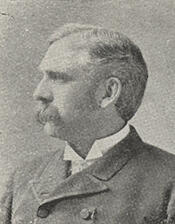
Here you will find contact information for Representative Edward Lane, including email address, phone number, and mailing address.
| Name | Edward Lane |
| Position | Representative |
| State | Illinois |
| District | 17 |
| Party | Democratic |
| Status | Former Representative |
| Term Start | December 5, 1887 |
| Term End | March 3, 1895 |
| Terms Served | 4 |
| Born | March 27, 1842 |
| Gender | Male |
| Bioguide ID | L000058 |
About Representative Edward Lane
Edward Lane (Illinois politician) (1842–1912) was an American lawyer, judge, and Democratic politician who served as a Representative from Illinois in the United States Congress from 1887 to 1895. Over the course of four consecutive terms in the House of Representatives, he contributed to the legislative process during a significant period in American history, representing the interests of his Illinois constituents as a member of the Democratic Party.
Born in 1842, Lane came of age in the decades preceding and during the American Civil War, a context that shaped the political and legal environment in which he would later work. Details of his early life, including his exact birthplace and family background, are less prominently recorded than his professional achievements, but his subsequent career indicates that he received a solid education that prepared him for the study and practice of law. Like many lawyers of his generation, he likely read law under established practitioners before admission to the bar, entering a profession that was closely intertwined with public service and politics in nineteenth-century America.
Lane established himself as a lawyer in Illinois, building a reputation that led to service on the bench. As an American lawyer and judge, he participated in the administration of justice at the state or local level, presiding over cases and applying the law in an era marked by rapid economic growth, westward expansion, and evolving legal doctrines. His judicial experience strengthened his standing in the community and provided him with practical insight into the legal and social issues that would later come before Congress, including questions of commerce, infrastructure, and the rights and obligations of citizens and businesses.
Transitioning from the judiciary to elective office, Lane entered national politics as a Democrat from Illinois. He was elected to the United States House of Representatives and served from 1887 to 1895, encompassing four terms in office. His tenure in Congress spanned the Fiftieth through the Fifty-third Congresses, a period that included the presidencies of Grover Cleveland and Benjamin Harrison and was characterized by debates over tariffs, monetary policy, federal regulation of interstate commerce, and the role of the federal government in economic affairs. As a member of the House of Representatives, Edward Lane participated in the democratic process, engaged in committee work, and cast votes on legislation affecting both his district and the nation, consistently representing the interests of his Illinois constituents within the framework of the Democratic Party’s priorities of the time.
Lane’s congressional service occurred during a transformative era in American history, as the country grappled with the consequences of industrialization, labor unrest, and regional economic disparities. Within this context, he contributed to the legislative deliberations that shaped federal policy in the late nineteenth century. His background as a lawyer and judge informed his approach to statutory interpretation and institutional reform, and his work in Congress reflected the interplay between local concerns in Illinois and broader national questions of economic development and governance.
After leaving Congress in 1895, Lane returned to private life, resuming his legal and civic activities in Illinois. Although he no longer held federal office, his experience as a four-term Representative and former judge ensured that he remained a respected figure in his community. Edward Lane died in 1912, closing a career that spanned the courtroom, the bench, and the halls of Congress, and placing him among the notable Illinois Democrats who helped shape federal legislation during the closing decades of the nineteenth century.