Representative Edward James Livernash
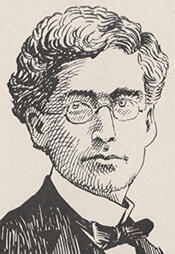
Here you will find contact information for Representative Edward James Livernash, including email address, phone number, and mailing address.
| Name | Edward James Livernash |
| Position | Representative |
| State | California |
| District | 4 |
| Party | Democratic |
| Status | Former Representative |
| Term Start | November 9, 1903 |
| Term End | March 3, 1905 |
| Terms Served | 1 |
| Born | February 14, 1866 |
| Gender | Male |
| Bioguide ID | L000365 |
About Representative Edward James Livernash
Edward James Livernash, subsequently Count Edward James de Nivernais (February 14, 1866 – June 1, 1938), was an American newspaperman, lawyer, and politician who served one term as a U.S. Representative from California. A member of the Democratic Party, he represented California’s fourth congressional district in the Fifty-eighth Congress from March 4, 1903, to March 3, 1905, and late in life adopted the French form of the family name, de Nivernais, by decree of court.
Livernash was born on February 14, 1866, in Lower Calaveritas, a California mining camp near San Andreas. He was the son of an Irish mother and a father of French-Canadian descent. Raised in the mining regions of California, he attended the common schools of the state. His early exposure to frontier communities and working-class life in the mining camps helped shape his later political and journalistic interests, particularly his sympathy for labor and reform causes that would emerge more clearly in his public career.
At the age of fifteen, Livernash became a printer, entering the newspaper trade at a young age. Demonstrating early entrepreneurial and political ambition, he founded a Democratic newspaper, the Pacific Sentinel, at Cloverdale, California, when he was only sixteen. Intending to strengthen his qualifications for a career in journalism, he studied law and was admitted to the bar of California in 1887. Although he qualified as a lawyer, his principal vocation remained journalism. In 1891 he joined the staff of the San Francisco Examiner, one of the leading newspapers in the state, and held various editorial posts there, gaining prominence in the city’s journalistic circles.
Livernash’s early adulthood was marked by both professional distinction and personal controversy. On September 26, 1891, he was arrested for public indecency at the San Francisco Ferry Building after a police sergeant discovered him wearing women’s clothing and blackface. When he was taken to the police station, officers found several toxic chemicals, including chloroform and prussic acid, in his bag. Livernash changed his account of the incident several times, but was ultimately charged only with the misdemeanor of wearing women’s clothing in public and fined. One month later, on October 29, 1891, he was again arrested in Cloverdale after he shot 71-year-old Darius Ethridge four times in the face with a pair of revolvers; Ethridge survived the attack. Earlier that evening, Livernash had visited Ethridge, an acquaintance, and left a bottle of poisoned wine. When Ethridge did not drink it, Livernash returned that night, held him at gunpoint, and demanded that he rewrite his will to include Livernash; when Ethridge refused, Livernash opened fire. Committed to Napa State Hospital, he was held in custody until his attempted-murder trial opened a year later. His defense argued that he was a somnambulist and had not been awake when he tried to kill Ethridge. To support this claim, a doctor hypnotized Livernash so he could recount the incident, making him the first person in American history to testify in court under hypnosis. After thirty hours of deliberation, the jury failed to reach a verdict, resulting in a hung jury and a retrial. Five months later, at his second trial, Livernash represented himself, abandoned the hypnosis theory, and asserted that he suffered from bouts of insanity inherited from his parents. He called several witnesses, including Congressman Thomas J. Geary, to corroborate his story. After a five-hour closing argument by Livernash, the jury deliberated for only seven minutes before finding him not guilty. Contemporary observers speculated that his actions may have been motivated by financial distress, noting that two weeks before the cross-dressing incident the office of the Livermore Herald, a newspaper he had recently acquired, burned down uninsured, causing him an estimated loss of more than $5,000 and making Ethridge, an elderly bachelor of substantial means, a logical target.
Despite these episodes, Livernash continued to build his reputation as a journalist. In 1897 he was sent by the San Francisco Examiner to the Klondike region of Canada as part of an expedition, alongside poet Joaquin Miller, to investigate and report on the Klondike Gold Rush that had begun the previous year. During his time in the North, he gained the confidence of the mining community and was chosen by the miners to represent them in Ottawa and present their views regarding new mining laws, a role that underscored both his advocacy skills and his growing prominence as a public figure. His family life was struck by tragedy on February 18, 1898, when his brother, J. J. Livernash, committed suicide by gunshot. Earlier that evening, J. J. had gone to the offices of The San Francisco Call and “sold the story of his own suicide,” delivering a sealed packet he said contained a story of “public interest,” with instructions that payment be sent to his wife and the packet opened the following morning. By the time the packet was opened, he had killed himself, and The Call published the story.
Livernash’s political career culminated in his election to Congress. In 1902 he ran for the Fifty-eighth Congress (term March 4, 1903 – March 3, 1905) to represent California’s fourth congressional district, based in San Francisco, on both the Democratic and Union Labor tickets. The dual nomination was unusual, and under then-prevailing California law he was initially required to choose which party designation would appear on the ballot. In October 1902, however, the California Supreme Court ruled that the provision limiting a candidate to a single ballot designation was invalid, allowing both the Democratic and Union Labor designations to appear next to his name. In the general election he faced the incumbent Republican Julius Kahn, Socialist Party candidate William Costley, and Prohibition Party candidate Joseph Rowell. Livernash received 16,146 votes (49.17 percent) to Kahn’s 16,005 (48.74 percent), with Costley and Rowell sharing the remaining 2.09 percent. Kahn contested the election, alleging that many of the votes in Livernash’s narrow plurality were illegally cast, but the contest was unsuccessful and the election was upheld. As a member of the House of Representatives from 1903 to 1905, Livernash participated in the legislative process during a significant period in American history, representing the interests of his San Francisco constituents and contributing to the work of the Democratic Party in the chamber. He served only one term, losing his bid for reelection to Kahn in 1904.
After leaving Congress, Livernash returned to journalism. In 1906 he became managing editor of the Rocky Mountain News in Denver, Colorado, a prominent Western newspaper. His tenure there was brief; after only thirteen weeks he resigned following criticism from Senator Thomas M. Patterson, the paper’s owner, over an editorial published in December 1906. In subsequent years he withdrew from the forefront of public life. From 1909 to 1912 he resided in France, during which period he adopted the French form of his family name, becoming known as Count Edward James de Nivernais by decree of court. Upon returning to the United States in 1912, he settled near Belmont, California, where he devoted himself to study and literary pursuits rather than active political or journalistic engagement.
Edward James Livernash, later Count Edward James de Nivernais, spent his final years in California. He died in Agnew, California, on June 1, 1938. His remains were cremated at Cypress Lawn Cemetery in Colma, California.