Senator Edward Livingston
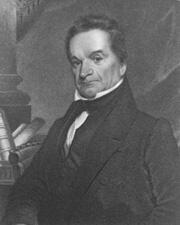
Here you will find contact information for Senator Edward Livingston, including email address, phone number, and mailing address.
| Name | Edward Livingston |
| Position | Senator |
| State | Louisiana |
| Party | Jackson |
| Status | Former Representative |
| Term Start | December 7, 1795 |
| Term End | December 31, 1831 |
| Terms Served | 7 |
| Born | May 28, 1764 |
| Gender | Male |
| Bioguide ID | L000366 |
About Senator Edward Livingston
Edward Livingston (May 28, 1764 – May 23, 1836) was an American jurist, statesman, and slaveholder who became one of the most influential legal minds of the early republic and a prominent national political figure. He represented both New York and Louisiana in the United States Congress, served as a U.S. Representative and Senator from Louisiana, was the 47th mayor of New York City, and later held the posts of United States Secretary of State from 1831 to 1833 and Minister to France from 1833 to 1835 under President Andrew Jackson. A member of the Jackson Party in his later career, he contributed significantly to the legislative process over multiple terms in Congress and played a central role in the drafting of the Louisiana Civil Code of 1825, a civil code based largely on the Napoleonic Code.
Livingston was born in Clermont, in colonial Albany County in the Province of New York (an area that after April 4, 1786, lay within Columbia County, New York). He was the youngest son of Judge Robert Livingston and Margaret (née Beekman) Livingston and belonged to the prominent Livingston family, whose members were deeply involved in the political and legal life of New York. His father served in the New York Provincial Assembly and as a judge of the New York Supreme Court of Judicature, while his mother was heir to extensive landholdings in Dutchess and Ulster counties. Among his many distinguished siblings were Robert R. Livingston, Chancellor of New York and a key figure in the Louisiana Purchase; Janet Livingston, wife of General Richard Montgomery; Margaret Livingston, wife of New York Secretary of State Thomas Tillotson; Henry Beekman Livingston; Catharine Livingston, wife of Methodist clergyman Freeborn Garrettson; merchant John R. Livingston; Gertrude Livingston, wife of Governor Morgan Lewis; Joanna Livingston, wife of Peter R. Livingston, acting Lieutenant Governor of New York; and Alida Livingston, wife of John Armstrong Jr., who served as U.S. Senator, U.S. Secretary of War, and U.S. Minister to France. His maternal grandparents were Henry Beekman, a descendant of Wilhelmus Beekman, and Janet (née Livingston) Beekman, while his paternal grandfather was Robert Livingston of Clermont, son of Robert Livingston the Elder, first Lord of Livingston Manor, and Alida (née Schuyler) Van Rensselaer Livingston. Livingston graduated from the College of New Jersey (now Princeton University) in 1781, receiving a classical education that prepared him for the legal profession.
After reading law, Livingston was admitted to the bar in 1785 and began practicing in New York City. He quickly rose to prominence in a legal community that included such notable contemporaries as James Kent, Aaron Burr, and Alexander Hamilton. His ability as an advocate and his political connections propelled him into public life. From 1795 to 1801, he served as a Democratic-Republican U.S. Representative in the United States Congress from the state of New York. During this period he emerged as a leader of the opposition to the Jay Treaty with Great Britain, introducing a resolution calling upon President George Washington to provide Congress with details of the treaty negotiations, a request Washington refused. At the close of Washington’s administration, Livingston voted with Andrew Jackson and other radicals against the customary address to the president. In the House he was a prominent opponent of the Alien and Sedition Acts, introduced legislation to protect American seamen, and in 1800 sharply criticized President John Adams for permitting the extradition of Jonathan Robbins, who had committed murder aboard a British warship and then falsely claimed American citizenship in South Carolina. In the celebrated debate over the Robbins case, Livingston’s position was opposed by John Marshall, later Chief Justice of the United States.
In 1801, Livingston was appointed United States Attorney for the District of New York and, while retaining that federal office, was also appointed mayor of New York City the same year, becoming the city’s 47th mayor. His tenure as mayor was marked by his energetic response to a severe yellow fever outbreak in 1803, during which he worked to contain the disease and alleviate suffering, ultimately contracting a violent attack of the fever himself. Upon his recovery, he discovered that his private affairs were in disarray and that, through the mismanagement or dishonesty of a confidential clerk, public funds entrusted to him as U.S. Attorney had been lost, leaving him deeply indebted to the federal government. He surrendered all his property, resigned both his offices in 1803, and early in 1804 moved to New Orleans, then on the eve of becoming the Territory of Orleans following the Louisiana Purchase negotiated in part by his brother Robert R. Livingston. In New Orleans he rapidly built a large and lucrative law practice and, by 1826, had repaid the federal government in full, including interest that by then exceeded the original principal.
Livingston’s arrival in Louisiana coincided with the transformation of its legal system from a blend of Roman, French, and Spanish law to one incorporating elements of Anglo-American jurisprudence. Almost immediately he was appointed by the territorial legislature to prepare a provisional code of judicial procedure. The resulting act, passed in April 1805, remained in force from 1805 to 1825 and helped shape the administration of justice in the territory and later state. In 1807 he became embroiled in the Batture Ste. Marie controversy after successfully litigating a client’s claim to alluvial land near New Orleans and accepting part of that land as his fee. His efforts to improve the property provoked popular unrest; his workmen were attacked, and territorial Governor William C. C. Claiborne referred the dispute to the federal government. President Thomas Jefferson, who believed Livingston had favored Aaron Burr in the election of 1800 and suspected him of sympathy with Burr’s later schemes, asserted that the batture belonged to the United States, undermining Livingston’s title. Livingston sued Jefferson in 1810, but Chief Justice John Marshall dismissed the case in 1811 for lack of jurisdiction. Jefferson subsequently published a pamphlet defending his position, to which Livingston issued a detailed reply. During the War of 1812, after Louisiana’s admission as a state, Livingston played a vital role in organizing the ethnically diverse population of New Orleans against the British threat. He used his influence to secure amnesty for the privateer Jean Lafitte and his followers when they offered to assist in the city’s defense, and in 1814–1815 he served as adviser and one of several aides-de-camp to Major General Andrew Jackson, with whom he enjoyed a close personal friendship.
Livingston’s most enduring legacy in Louisiana lay in his work as a codifier and legislator. In 1820 he entered the Louisiana House of Representatives, and in 1821 the legislature commissioned him to prepare a comprehensive code of criminal law and procedure, later known as the “Livingston Code.” Drafted in both French and English to meet the needs of a bilingual jurisdiction, the project ultimately comprised four parts: crimes and punishments, criminal procedure, rules of evidence in criminal cases, and reform and prison discipline. Although substantially completed in 1824, the manuscript was accidentally destroyed by fire and had to be rewritten; it was again completed in 1826 but not printed in full until 1833, and it was never formally adopted by the state. Nonetheless, the Livingston Code was quickly reprinted in England, France, and Germany and widely praised for its clarity, vigor, and humanitarian spirit, particularly its provisions abolishing capital punishment and making penitentiary labor a voluntary reward for good conduct, accompanied by improved conditions. Sir Henry Maine later described Livingston as “the first legal genius of modern times,” and the code’s section on reform and prison discipline influenced penal legislation in several countries, including its adoption by the short-lived Federal Republic of Central America under President Francisco Morazán. Parallel to this work, Livingston served as the leading member of the commission that drafted the Louisiana Civil Code of 1825, much of which the legislature adopted. The most important chapters, including those on contracts, were prepared by Livingston himself, building on preliminary work done by James Brown and Louis Moreau-Lislet, who had produced the 1808 Digest of the Civil Laws then in force in the Territory of Orleans.
In national politics, Livingston’s Louisiana career brought him back to Congress and into the inner circle of Andrew Jackson. He first returned to the federal legislature as a U.S. Representative from Louisiana, serving from 1823 to 1829 and becoming the first person to represent Louisiana’s 1st congressional district. He then served as a U.S. Senator from Louisiana from 1829 to 1831. Although one source incorrectly characterizes this service as extending from 1795 to 1831 and encompassing seven terms, his Louisiana senatorial tenure in fact lasted from 1829 until his appointment to the Cabinet in 1831. As a member of the Jackson Party, he supported the administration’s policies and became one of Jackson’s most trusted advisers. In 1831 Jackson appointed him United States Secretary of State, a position he held until 1833. During his two years in the Department of State, Livingston drafted several important state papers for the president, most notably Jackson’s famous proclamation of December 10, 1832, denouncing South Carolina’s doctrine of nullification and affirming the supremacy of federal law. His authorship of this anti-nullification proclamation placed him at the center of one of the most consequential constitutional crises of the antebellum era.
After leaving the State Department, Livingston was appointed minister plenipotentiary to France, serving from 1833 to 1835. His principal mission was to secure French compliance with the 1831 treaty negotiated by William C. Rives, under which France agreed to pay an indemnity of twenty-five million francs for French depredations on American shipping, largely arising from the Berlin and Milan decrees, while the United States undertook to pay 1,500,000 francs in satisfaction of French claims. Livingston conducted the negotiations with skill and moderation, but the French Chamber of Deputies refused to appropriate funds for the first installment due in 1833, and relations between the two countries deteriorated. Ultimately, he was instructed to close the American legation and return home, leaving the final resolution of the dispute to his successors. His diplomatic service marked the culmination of a long public career that had ranged from municipal administration and legislative leadership to high executive office and international negotiation.
Livingston married twice. On April 10, 1788, he wed Mary McEvers, daughter of Charles McEvers and Mary (née Bache) McEvers; her sister Eliza McEvers later became the second wife of Livingston’s brother, the merchant John R. Livingston. Edward and Mary had two sons and a daughter before her death from scarlet fever on March 13, 1801. In June 1805, while residing in New Orleans, he married Marie Louise Magdaleine Valentine “Louise” d’Avezac de Castera Moreau de Lassy (1785–1860), a 19-year-old widow and refugee from the Haitian Revolution. She was the daughter of a wealthy landowner and the sister of Auguste Davezac, a politician and diplomat who twice served as U.S. Minister to the Netherlands. Louise Livingston was widely credited with exerting a strong influence on her husband’s public career. The couple had two children, only one of whom survived to adulthood: Coralie Livingston (1806–1873), who married Thomas Pennant Barton, son of noted physician Benjamin Smith Barton, in April 1833. Livingston’s personal and family life remained closely intertwined with the broader political and diplomatic networks of the early United States.
In his later years, Livingston divided his time between public service and his estate in New York. In 1831 he took up residence at Montgomery Place in Red Hook, New York, an estate bequeathed to him by his sister. There he spent his final years after his return from France, maintaining an interest in legal reform and public affairs. He was elected to the American Philosophical Society in 1825 and to the American Antiquarian Society in 1833, reflecting the esteem in which he was held by the intellectual community. Livingston died at Montgomery Place on May 23, 1836, five days before his seventy-second birthday. His influence endured in both law and public memory. The town of Livingston, Guatemala, was named in honor of his Livingston Code, and he is also the namesake of counties in Illinois, Michigan, and Missouri; Livingston Parish in Louisiana; and towns named Livingston in Tennessee and Alabama, with the Tennessee town lending its name in turn to Livingston, Texas, Lake Livingston, and the Livingston Dam. In Louisiana, Edward Livingston High School in New Orleans and Fort Livingston, a nineteenth-century coastal fortification now commemorated at Fort Livingston State Commemorative Area, were named for him, underscoring his lasting association with the state whose legal and political institutions he helped to shape.