Senator Edward Lloyd
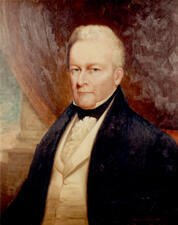
Here you will find contact information for Senator Edward Lloyd, including email address, phone number, and mailing address.
| Name | Edward Lloyd |
| Position | Senator |
| State | Maryland |
| Party | Jackson |
| Status | Former Representative |
| Term Start | December 2, 1805 |
| Term End | March 3, 1827 |
| Terms Served | 4 |
| Born | July 22, 1779 |
| Gender | Male |
| Bioguide ID | L000376 |
About Senator Edward Lloyd
Edward Lloyd was born on July 22, 1779, at “Wye House” in Talbot County, Maryland, into one of the colony’s and later the state’s most prominent political families. He was the son of Edward Lloyd (1744–1796), a Maryland delegate to the Continental Congress, and the grandson of Edward Lloyd (1670–1718), who had served as Colonial Governor of Maryland from 1709 to 1714. The Lloyd family’s long-standing involvement in public affairs and their extensive landholdings on Maryland’s Eastern Shore placed him from birth within the social and political elite of the state. Growing up in this environment, he was exposed early to the responsibilities of public life and the management of large agricultural estates dependent on enslaved labor.
Lloyd received a private education typical of the Maryland gentry of his era, studying under tutors who prepared him in classical subjects, law, and the practical aspects of estate and agricultural management. Although detailed records of formal schooling are sparse, his later career in lawmaking and executive office indicates a solid grounding in legal and political principles. As a young man he assumed increasing responsibility in the oversight of family properties, experience that would later inform his positions on economic and agricultural policy. His upbringing and education combined to prepare him for a public career that followed the pattern established by his father and grandfather.
Lloyd entered public life in the early years of the new republic. He was elected to the United States House of Representatives as a Democratic-Republican from Maryland and served in the Eighth Congress from March 4, 1803, to March 3, 1805, representing his state at the national level during the administration of President Thomas Jefferson. After this initial period in Congress, he returned to Maryland politics and was elected Governor of Maryland, serving from November 9, 1809, to December 28, 1811. As governor, he presided over the state during the tense years leading up to the War of 1812, a time marked by growing friction with Great Britain and debates over military preparedness and state-federal relations. Following his gubernatorial term, he continued to be active in state affairs and remained a leading figure in Maryland’s Democratic-Republican, and later Jacksonian, political circles.
Lloyd’s most extended period of national service came in the United States Senate. He was elected as a United States Senator from Maryland and served from March 4, 1819, to January 14, 1826. During this time, he completed multiple terms in office, and his service in Congress, extending from his earlier House tenure in 1803–1805 through his years in the Senate, thus spanned much of the period from 1805 to 1827. A member of the political movement that evolved into the Jackson Party, Lloyd contributed to the legislative process during four terms in national office, including his House term and successive Senate terms. His Senate career coincided with a significant period in American history, encompassing the Missouri Compromise of 1820, debates over the expansion of slavery, questions of internal improvements, and the emergence of new party alignments that would culminate in the Jacksonian era. As a senator, he participated in the democratic process and represented the interests of his Maryland constituents, particularly those of the agrarian and slaveholding Eastern Shore.
Lloyd’s congressional service placed him at the center of national deliberations as the United States grappled with sectional tensions and the balance between federal and state authority. In the Senate he was identified with the interests of his region and class, and his positions reflected the priorities of Maryland’s planter elite. While detailed records of his votes on every measure are limited, his alignment with the Democratic-Republican and later Jacksonian currents indicates support for limited federal government in domestic affairs, suspicion of concentrated financial power, and a defense of states’ rights within the Union. His legislative work contributed to shaping policy during a transformative era in which the nation expanded westward and its political institutions evolved toward the Second Party System.
After resigning from the Senate in January 1826, Lloyd returned to Maryland, where he continued to exert influence in state politics and society. He resumed the management of his estates and remained a prominent figure in regional affairs. His family continued its tradition of public service: his son Edward Lloyd (1798–1861) became President of the Maryland State Senate in 1852–1853, and his grandson Edward Lloyd (1825–1907) likewise served as President of the Maryland State Senate in 1878 and 1892, extending the Lloyd family’s political legacy well into the nineteenth century. Through these descendants, the political prominence of the Lloyd name in Maryland endured for several generations.
Edward Lloyd died on June 2, 1834, at his estate in Talbot County, Maryland. He was interred on his family property, closing a life that had linked the colonial, revolutionary, and early national periods of American history. As a U.S. Congressman, Governor of Maryland, and United States Senator, he embodied the continuity of leadership provided by established families in the early republic. His career in Congress, particularly his Senate service from 1819 to 1826, unfolded during a critical era of national development, and his participation in the legislative and executive processes reflected both the priorities of his state and the broader currents of American political change.