Representative Edward Coke Mann
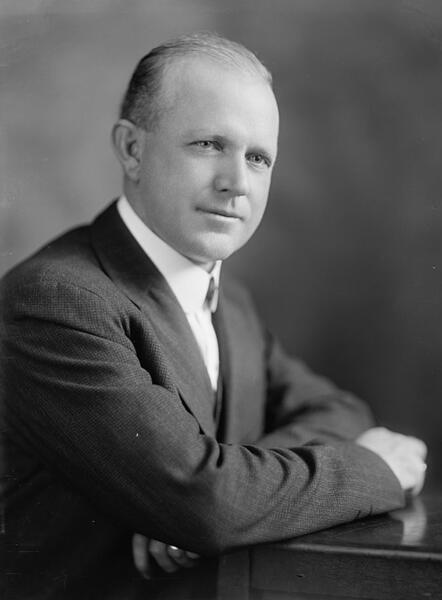
Here you will find contact information for Representative Edward Coke Mann, including email address, phone number, and mailing address.
| Name | Edward Coke Mann |
| Position | Representative |
| State | South Carolina |
| District | 7 |
| Party | Democratic |
| Status | Former Representative |
| Term Start | May 19, 1919 |
| Term End | March 3, 1921 |
| Terms Served | 1 |
| Born | November 21, 1880 |
| Gender | Male |
| Bioguide ID | M000101 |
About Representative Edward Coke Mann
Edward Coke Mann was born on November 21, 1880, in Lowndesville, Abbeville County, South Carolina. Raised in the post-Reconstruction South, he came of age in a region still grappling with the political, social, and economic legacies of the Civil War. His early life in a small South Carolina community exposed him to the concerns of rural constituents whose interests he would later represent in public office. Although details of his immediate family background are comparatively sparse, his subsequent professional path suggests an upbringing that valued education, public service, and engagement in civic affairs.
Mann pursued higher education in South Carolina, attending The Citadel in Charleston, a military college that emphasized discipline, leadership, and public duty. He later studied law, gaining the formal training that would underpin his legal and political career. After completing his legal education and being admitted to the bar, he established himself as an attorney in South Carolina. His legal practice placed him at the intersection of local economic and political life, and it provided him with experience in interpreting and applying the law at a time when the state and the nation were undergoing rapid change in areas such as industrial development, race relations, and electoral politics.
Building on his legal credentials, Mann entered public life through service in state and local roles before advancing to the national stage. As a Democrat in a period when the Democratic Party dominated South Carolina politics, he aligned himself with the prevailing political order of the early twentieth-century South. His work as an attorney and public figure helped him cultivate a reputation as a capable advocate for his community, and it positioned him to seek higher office. By the time he ran for Congress, he was recognized as part of the generation of Southern Democrats who navigated the transition from the agrarian nineteenth century into the more industrial and internationally engaged America of the early 1900s.
Edward Coke Mann served as a Representative from South Carolina in the United States Congress from March 4, 1919, to March 3, 1921. Elected as a member of the Democratic Party to the House of Representatives, he served one term during the Sixty-sixth Congress. His tenure coincided with a significant period in American history, immediately following World War I and during the early months of the postwar adjustment that included debates over the League of Nations, demobilization of troops, and the economic and social realignments that followed the conflict. As a member of the House, Mann participated in the legislative process and contributed to deliberations on national policy at a time when the United States was redefining its role on the world stage and addressing domestic issues such as veterans’ affairs, agricultural concerns, and industrial labor tensions. Throughout this period, he represented the interests of his South Carolina constituents, bringing their perspectives into the broader national discussion.
During his single term in Congress, Mann’s service reflected the priorities and constraints of a Southern Democrat in the immediate postwar era. While detailed records of his individual votes and sponsored measures are limited, his presence in the House placed him among those charged with responding to the challenges of reintegrating soldiers into civilian life, managing wartime debts, and confronting the early stirrings of the social changes that would characterize the 1920s. His role in Congress underscored his commitment to the democratic process and to the representation of a largely rural, agrarian constituency within a rapidly modernizing nation. Although he did not remain in Congress beyond his first term, his legislative experience marked the high point of his federal public service.
After leaving Congress in 1921, Mann returned to South Carolina and resumed the practice of law, reengaging with the legal and civic life of his home state. His post-congressional years were spent once again in close contact with the communities whose interests he had represented in Washington, applying his experience in national government to local and regional concerns. He continued to be identified with the Democratic Party and with the professional class of lawyers and public men who shaped South Carolina’s political and legal institutions in the early twentieth century. Edward Coke Mann died on November 11, 1931, in Greenville, South Carolina. His career, though marked by only one term in the U.S. House of Representatives, reflected the trajectory of a Southern lawyer-politician who rose from small-town origins to national office during a transformative period in American history, and who participated directly in the workings of representative government at a moment of profound national transition.