Representative Edward Colston Marshall
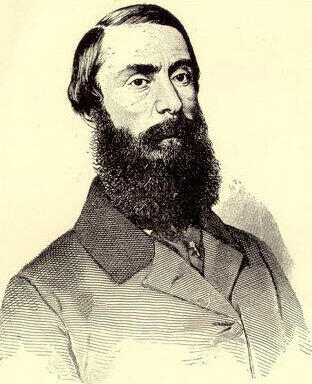
Here you will find contact information for Representative Edward Colston Marshall, including email address, phone number, and mailing address.
| Name | Edward Colston Marshall |
| Position | Representative |
| State | California |
| District | -1 |
| Party | Democratic |
| Status | Former Representative |
| Term Start | December 1, 1851 |
| Term End | March 3, 1853 |
| Terms Served | 1 |
| Born | June 29, 1821 |
| Gender | Male |
| Bioguide ID | M000151 |
About Representative Edward Colston Marshall
Edward Colston Marshall (June 29, 1821 – July 9, 1893) was an American lawyer and Democratic politician who served as a United States Representative from California’s at-large district from 1851 to 1853 and as attorney general of California from 1883 to 1887. Over the course of a career that spanned both coasts and several decades, he participated in the legislative and legal development of California during a formative period in the state’s and the nation’s history.
Marshall was born in Woodford County, Kentucky, on June 29, 1821. He received his early education in his native state and pursued higher studies at Centre College in Danville, Kentucky. He subsequently attended Transylvania University in Lexington, Kentucky, from which he graduated. Seeking further professional preparation, he enrolled at Washington College in Lexington, Virginia (now Washington and Lee University), where he studied law. After completing his legal studies, he was admitted to the bar and began the practice of law.
In the mid-1840s, Marshall moved west, first to San Francisco, California, and later to Sonora, California, where he continued his legal practice. During this period he also served in the Mexican–American War, an experience that placed him among the many young lawyers and professionals whose military service preceded or paralleled their entry into public life. His relocation to California coincided with the state’s early years of American governance and rapid population growth, providing him with opportunities in both law and politics.
Marshall entered national politics as a member of the Democratic Party representing California. He was elected as a Democrat to the Thirty-second Congress and served as a Representative from California’s at-large district from March 4, 1851, to March 3, 1853. His single term in Congress occurred during a significant period in American history, as the nation grappled with sectional tensions and the political implications of rapid territorial expansion. He was renominated in 1852 but withdrew before the general election, concluding his brief tenure in the U.S. House of Representatives. During this time he contributed to the legislative process and participated in the democratic governance of the newly admitted state, representing the interests of his California constituents at the federal level.
After leaving Congress, Marshall settled in Marysville, California, where he resumed the practice of law. He remained active in public affairs and, in 1856, was an unsuccessful candidate for election to the United States Senate from California. Following this defeat, he returned to Kentucky and devoted himself to legal pursuits there for the next twenty-one years, maintaining his professional identity primarily as an attorney rather than as an officeholder during this extended period away from California politics.
Marshall returned to California in 1877 and reestablished his law practice in San Francisco. His reentry into the state’s legal and political life culminated in his election as attorney general of California in 1882. He served in that statewide office from 1883 to 1887, overseeing the legal affairs of the state government and contributing to the development and enforcement of California law during a time of continued growth and institutional consolidation. His tenure as attorney general marked the most prominent executive position of his career and capped his long involvement in public service.
Edward Colston Marshall died in San Francisco on July 9, 1893. He was interred in Mountain View Cemetery in Oakland, California. His career, which encompassed military service, a term in the United States House of Representatives, a statewide executive office, and decades of legal practice in both Kentucky and California, reflected the mobility and political fluidity of nineteenth-century American public life.