Representative Edward Francis McDonald
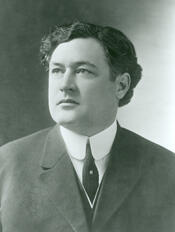
Here you will find contact information for Representative Edward Francis McDonald, including email address, phone number, and mailing address.
| Name | Edward Francis McDonald |
| Position | Representative |
| State | New Jersey |
| District | 7 |
| Party | Democratic |
| Status | Former Representative |
| Term Start | December 7, 1891 |
| Term End | March 3, 1893 |
| Terms Served | 1 |
| Born | September 21, 1844 |
| Gender | Male |
| Bioguide ID | M000409 |
About Representative Edward Francis McDonald
Edward Francis McDonald (September 21, 1844 – November 5, 1892) was an American Democratic Party politician who represented New Jersey’s 7th congressional district in the United States House of Representatives from 1891 to 1893. A member of the Democratic Party, he contributed to the legislative process during one term in office, serving in the Fifty-second Congress during a significant period in American political and economic history.
McDonald was born in Ireland on September 21, 1844. When he was six years of age, he immigrated to the United States with his parents, who settled in Newark, New Jersey. He attended the Newark public schools, receiving his basic education there. As a young man, he learned the machinist trade and became a skilled mechanic, a background that grounded him in the industrial life of northern New Jersey during the post–Civil War era.
During the American Civil War, McDonald enlisted in Company I of the Seventh Regiment, New Jersey Volunteer Infantry, in 1861. He served in the Union Army until 1862, when he was honorably discharged. Returning to civilian life, he continued his work as a mechanic and machinist, gaining experience in the rapidly developing industrial economy of the region.
McDonald moved from Newark to Harrison, New Jersey, in 1874, a relocation that marked the beginning of his active engagement in local and state politics. In that same year, he was elected a member of the New Jersey General Assembly, initiating his public career. He also entered the real estate business, an interest he maintained alongside his political activities. In 1877 he was elected director at large of the Board of Chosen Freeholders of Hudson County, was reelected in 1879, and served a total of four years in that capacity. He further strengthened his local standing by serving as treasurer of Harrison in 1881, managing municipal finances during a period of growth and industrial expansion.
McDonald advanced to higher state office at the close of the 1880s. He presented credentials as a member-elect to the New Jersey Senate in 1890 and served throughout that legislative session until the last day, when he was unseated in a contested election. In the following session, however, he was restored to his seat, underscoring both the contentious nature of New Jersey politics at the time and his continued support among Democratic constituencies. His combined experience in local government, county administration, and the state legislature provided the foundation for his subsequent service in the national legislature.
In national politics, McDonald was elected as a Democrat to the Fifty-second Congress, representing New Jersey’s 7th congressional district. He served in the United States House of Representatives from March 4, 1891, until his death in 1892, a period often referenced as 1891 to 1893 for the full term of that Congress. As a member of the House of Representatives, Edward Francis McDonald participated in the democratic process and represented the interests of his constituents from an increasingly urban and industrial district. His tenure coincided with debates over tariffs, monetary policy, and labor issues that were central to the national agenda in the early 1890s, and he contributed to the legislative process during this significant period in American history.
McDonald died in office in Harrison, New Jersey, on November 5, 1892, just a few days before the congressional election that would have determined his potential return to the House. His death placed him among the members of the United States Congress who died while still serving during the nineteenth century. He was interred in Holy Sepulchre Cemetery in East Orange, New Jersey, closing a career that had taken him from immigrant child and Civil War soldier to local official, state legislator, and United States Representative.