Senator Edward Hall Moore
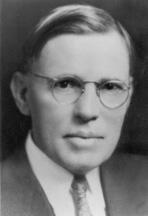
Here you will find contact information for Senator Edward Hall Moore, including email address, phone number, and mailing address.
| Name | Edward Hall Moore |
| Position | Senator |
| State | Oklahoma |
| Party | Republican |
| Status | Former Representative |
| Term Start | January 6, 1943 |
| Term End | January 3, 1949 |
| Terms Served | 1 |
| Born | November 19, 1871 |
| Gender | Male |
| Bioguide ID | M000895 |
About Senator Edward Hall Moore
Edward Hall Moore (November 19, 1871 – September 2, 1950) was an American politician, businessman, and philanthropist who served as a United States Senator from Oklahoma from January 3, 1943, to January 3, 1949. A member of the Republican Party during his congressional career, he represented Oklahoma in the Senate for one term, participating in the legislative process during a significant period that spanned the final years of World War II and the early postwar era.
Moore was born on a farm near Maryville, Nodaway County, Missouri, on November 19, 1871. He attended local public schools and then enrolled at Chillicothe Normal School in Chillicothe, Missouri, from which he graduated in 1892. After completing his studies there, he taught school in several Missouri counties, including Nodaway, Atchison, and Jackson. His early years as a teacher reflected both his interest in public speaking and his commitment to education, interests that would later influence his decision to pursue a legal and political career.
Motivated in part by his enjoyment of public speaking and debate, Moore enrolled in the Kansas City School of Law, where he studied law and graduated in 1900. He was admitted to the Missouri bar in 1901 and began practicing law in Maryville. Seeking broader opportunities, he soon moved to Okmulgee, then a city in Indian Territory, where he became city attorney. In 1905 he returned to Missouri to marry Cora McComb, whom he had met in Chillicothe, and the couple then settled in Okmulgee. There Moore continued to practice law until 1919, while simultaneously beginning to invest in real estate, laying the foundation for his later business ventures.
By 1919 Moore had grown dissatisfied with the practice of law and decided to enter the oil business full time. He became a wildcatter and first struck oil in the Holmes Field of Okfuskee County, Oklahoma. Capitalizing on this success, he organized the Independent Oil & Gas Company, serving as its president and expanding operations into Kansas and Texas. By 1930 the company’s estimated value ranged between $25 million and $40 million, at which point he sold it to Phillips Petroleum Company. In 1932 he formed another enterprise, E. H. Moore, Inc., which developed more than 400 wells across Oklahoma, Kansas, Texas, and California before he sold this company in 1941. In addition to his oil interests, Moore became a substantial farmer and cattle raiser, and he sold his cattle operation two years after divesting his second oil company.
In his early years, Moore’s political sympathies were aligned with the Democratic Party. However, during the 1930s he became increasingly disillusioned with President Franklin D. Roosevelt’s New Deal policies, particularly their expansion of federal power and regulation. When Roosevelt announced his candidacy for a third term in 1940, Moore actively campaigned for the Republican nominee, Wendell Willkie, opposing Roosevelt’s reelection. Although Willkie lost the election, Moore’s involvement in that campaign marked his definitive shift to the Republican Party and his emergence as a prominent Republican figure in Oklahoma, aided by his considerable personal wealth and business reputation.
Moore’s entry into elective office came under unusual circumstances. In 1942, former Senator William B. Pine, the Republican nominee for the U.S. Senate seat in Oklahoma, died before the general election. Party leaders and others proposed Moore as Pine’s replacement, in part because he was financially able to fund his own campaign. Moore accepted the nomination and ran against the incumbent Democratic Senator Joshua B. Lee. In the general election he defeated Lee by a margin of 55 percent to 45 percent, winning a six-year term in the United States Senate and taking office on January 3, 1943.
During his Senate service from 1943 to 1949, Moore was a consistent opponent of New Deal and similar domestic spending programs. He voted in favor of almost all military appropriations, reflecting his support for a strong national defense during World War II and the early Cold War period, but he opposed federal spending for public improvements, including projects that would have benefited Oklahoma directly. At the same time, he supported measures favorable to the oil industry, consistent with his background as an oil producer. Ideologically, he was more internationalist than many of his Republican colleagues, favoring a degree of American engagement in world affairs. Nevertheless, in 1945 he was one of seven senators who voted against full United States entry into the United Nations, expressing reservations about the new international organization. He also took a strong stand against what he viewed as excessive federal regulation of private enterprise, most notably in his unsuccessful effort to block the reconfirmation of Leland Olds as chairman of the Federal Power Commission, accusing Olds of being fundamentally opposed to private enterprise and characterizing his views as “Communistic.”
Moore chose not to seek reelection in 1948 and thus concluded his Senate career at the end of his term on January 3, 1949. He was succeeded by Democrat Robert S. Kerr. After leaving office, Moore retired from public life and active political involvement, though he remained a prominent figure in Oklahoma due to his long-standing business activities and philanthropy. In 1948 he was inducted into the Oklahoma Hall of Fame, where he was praised as a “statesman and philanthropist,” recognition that reflected both his public service and his contributions to the state’s economic development.
Edward Hall Moore died in Tulsa, Oklahoma, on September 2, 1950. He was interred in Okmulgee Cemetery in Okmulgee, Oklahoma, the community where he had built his legal practice, launched his oil enterprises, and maintained deep personal and professional ties throughout his life.