Representative Edward de Veaux Morrell
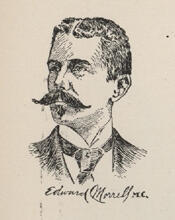
Here you will find contact information for Representative Edward de Veaux Morrell, including email address, phone number, and mailing address.
| Name | Edward de Veaux Morrell |
| Position | Representative |
| State | Pennsylvania |
| District | 5 |
| Party | Republican |
| Status | Former Representative |
| Term Start | December 4, 1899 |
| Term End | March 3, 1907 |
| Terms Served | 4 |
| Born | August 7, 1863 |
| Gender | Male |
| Bioguide ID | M000965 |
About Representative Edward de Veaux Morrell
Edward de Veaux Morrell (August 7, 1863 – September 1, 1917) was a Republican member of the United States House of Representatives from Pennsylvania who served four consecutive terms in Congress from 1899 to 1907. His legislative career unfolded during a significant period in American history at the turn of the twentieth century, when he participated in the democratic process and represented the interests of his Pennsylvania constituents in the national legislature.
Morrell was born in Newport, Rhode Island, on August 7, 1863, the son of Edward Morrell and Ida Alicia (née Powel) Morrell. He was connected through his mother to the prominent Powel family of Philadelphia, a lineage that linked him to longstanding civic and social traditions in Pennsylvania. Raised in an environment that valued education and public service, he attended private schools before pursuing higher education in Philadelphia.
Morrell graduated from the University of Pennsylvania in 1885, where he was a member of the St. Anthony Hall fraternity. He continued his studies at the University of Pennsylvania Law School, was admitted to the bar in 1887, and commenced the practice of law in Philadelphia. His early legal career coincided with growing involvement in local affairs, and he quickly emerged as an active participant in the civic life of the city, combining professional work with public service and military engagement.
Before entering national politics, Morrell held municipal office as a member of the select council of Philadelphia from 1891 to 1894, helping to shape local policy during a period of rapid urban and industrial growth. He was also active in the Pennsylvania National Guard, where he rose to the rank of colonel of the Third Regiment and later brigadier general commanding the First Brigade. His military experience and interest in public order and defense would later inform his work in Congress. In addition to his political and military roles, he contributed to the development of local infrastructure, establishing the first telephone line north of the Frankford section of Philadelphia and building an electric-light plant there, reflecting his engagement with emerging technologies and urban modernization.
Morrell entered Congress as a Republican when he was elected to the Fifty-sixth Congress to fill the vacancy caused by the death of Representative Alfred C. Harmer. He was subsequently reelected to the Fifty-seventh, Fifty-eighth, and Fifty-ninth Congresses, serving continuously from 1899 to 1907. During his tenure in the House of Representatives, he contributed to the legislative process over four terms in office and represented his Pennsylvania district during a transformative era marked by industrial expansion and evolving federal responsibilities. He served as chairman of the House Committee on the Militia during the Fifty-eighth and Fifty-ninth Congresses, a position that drew on his National Guard background and placed him at the center of debates over the organization and readiness of the nation’s citizen-soldier forces. In 1904, he delivered a notable speech defending the Fourteenth and Fifteenth Amendments against Democratic criticisms, aligning himself publicly with the constitutional protections of civil and political rights. Morrell was not a candidate for renomination in 1906, bringing his congressional service to a close at the end of the Fifty-ninth Congress.
After leaving Congress, Morrell remained active in civic affairs in Philadelphia. He served as a member of the board of education of Philadelphia from 1912 to 1916, participating in the oversight and development of the city’s public school system during a time of expanding educational needs and reform. His continued involvement in local governance underscored a long-standing commitment to public service beyond his years in federal office.
In his personal life, Morrell married Louise Bouvier Drexel (1863–1945) in 1889. She was the daughter of prominent financier Francis Anthony Drexel and Emma Bouvier Drexel, and the niece of Anthony J. Drexel, one of the most influential American financiers of the nineteenth century. Through his wife’s family, Morrell was connected to notable figures in American financial and social history. Louise’s mother, Emma Bouvier, was the aunt of John Vernou Bouvier Jr., making Louise a relative of the paternal grandfather of future First Lady Jacqueline Kennedy Onassis. Louise’s half-sister, Katharine Drexel, later became a Roman Catholic nun and philanthropist and was canonized as Saint Katharine Drexel on October 1, 2000, by Pope John Paul II. Edward and Louise Morrell resided in the Torresdale section of Philadelphia, where their estate became a local landmark.
In his later years, Morrell’s health declined, and he traveled to Colorado Springs, Colorado, in an effort to recuperate. He died there on September 1, 1917. His remains were returned to Pennsylvania and interred in the family crypt at Eden Hall in Torresdale. The North East Philadelphia neighborhood of Morrell Park, adjacent to Torresdale and located on the former site of the Morrell family’s summer estate, was named in his honor, reflecting the enduring local recognition of his role as a public servant, military officer, and community figure.