Representative Edward Overton
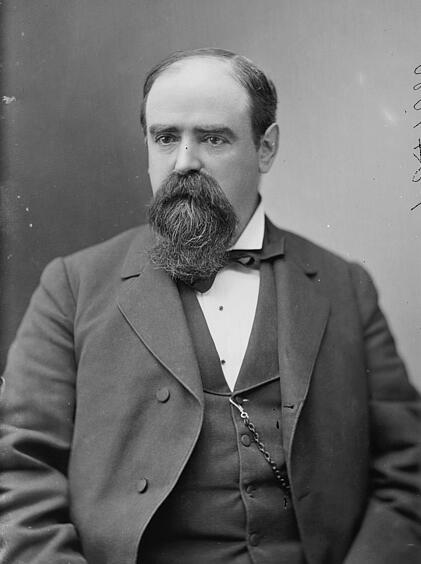
Here you will find contact information for Representative Edward Overton, including email address, phone number, and mailing address.
| Name | Edward Overton |
| Position | Representative |
| State | Pennsylvania |
| District | 15 |
| Party | Republican |
| Status | Former Representative |
| Term Start | October 15, 1877 |
| Term End | March 3, 1881 |
| Terms Served | 2 |
| Born | February 4, 1836 |
| Gender | Male |
| Bioguide ID | O000145 |
About Representative Edward Overton
Edward Overton Jr. (February 4, 1836 – September 18, 1903) was a Republican member of the U.S. House of Representatives from Pennsylvania who served two terms in Congress from 1877 to 1881. As a Representative, he contributed to the legislative process during a significant period in American history, participating in the democratic process and representing the interests of his constituents as a member of the Republican Party.
Born on February 4, 1836, Overton came of age in the decades preceding the Civil War, a time of growing sectional tension and political realignment in the United States. Details of his early life, including his family background and upbringing, placed him within the broader social and economic transformations of nineteenth-century America, in which questions of union, industry, and expansion shaped the outlook of emerging political leaders. His formative years occurred against this backdrop, helping to frame the perspectives he later brought to public service.
Overton pursued an education that prepared him for professional and civic engagement, reflecting the increasing importance of formal training for those entering law, politics, and public administration in the mid-nineteenth century. His studies equipped him with the legal and rhetorical skills that would be essential in both local affairs and national legislative work. Like many of his contemporaries who later entered Congress, he combined academic preparation with practical experience, positioning himself for a career that bridged law, politics, and public life.
Before his election to the national legislature, Overton developed a career that established his reputation within Pennsylvania. Through his professional endeavors and participation in public affairs, he became known in his community and state, aligning himself with the principles of the Republican Party during the post–Civil War and Reconstruction eras. His work during these years provided the foundation for his later congressional service, as he gained familiarity with the concerns of his region and the broader policy debates of the time.
Overton was elected as a Republican to the U.S. House of Representatives from Pennsylvania and served from 1877 to 1881, encompassing the Forty-fifth and Forty-sixth Congresses. His tenure coincided with the end of Reconstruction and the beginning of the Gilded Age, a period marked by industrial expansion, contested civil rights policies, and evolving federal roles in economic and social matters. As a member of the House of Representatives, Edward Overton participated in the democratic process and contributed to the legislative work of Congress, representing the interests of his constituents and supporting the Republican Party’s positions on issues of national importance.
During his two terms in office, Overton took part in debates and votes on legislation that reflected the priorities and challenges of the late nineteenth century, including questions of federal authority, economic development, and the integration of a rapidly changing national economy. His service in Congress from 1877 to 1881 placed him among those lawmakers who navigated the transition from the immediate postwar era to a period of rapid industrialization and political realignment. In fulfilling his responsibilities as a Representative, he helped shape the policies that affected both Pennsylvania and the nation during this critical time.
After leaving Congress in 1881, Overton returned to private life while remaining identified with the Republican Party and the public service he had rendered. His later years were spent away from the national spotlight, but his congressional record and earlier professional activities continued to mark him as a figure of significance in Pennsylvania’s political history. Edward Overton Jr. died on September 18, 1903, closing a life that spanned from the antebellum period through the Civil War and Reconstruction into the dawn of the twentieth century.