Representative E. Scott Rigell
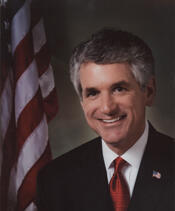
Here you will find contact information for Representative E. Scott Rigell, including email address, phone number, and mailing address.
| Name | E. Scott Rigell |
| Position | Representative |
| State | Virginia |
| District | 2 |
| Party | Republican |
| Status | Former Representative |
| Term Start | January 5, 2011 |
| Term End | January 3, 2017 |
| Terms Served | 3 |
| Born | May 28, 1960 |
| Gender | Male |
| Bioguide ID | R000589 |
About Representative E. Scott Rigell
Edward Scott Rigell (born May 28, 1960) is an American businessman and politician who served as the U.S. representative for Virginia’s 2nd congressional district from 2011 to 2017. A member of the Republican Party, he represented a coastal district centered on the Hampton Roads area and contributed to the legislative process during three terms in office. His service in Congress occurred during a significant period in American history marked by debates over federal spending, health care reform, and national security. Rigell is the last representative from Virginia’s 2nd congressional district who did not serve in the United States Navy.
Rigell built his career in the private sector before entering politics, becoming a successful automobile dealer and businessman. He owned car dealerships in the Hampton Roads region, and his experience as an employer and entrepreneur shaped his views on economic and fiscal policy. During the federal “Cash for Clunkers” program, his dealerships sold 138 cars under the initiative. Although he later criticized such efforts as “reckless bailouts and an out-of-control federal debt,” he emphasized that the subsidies went to buyers rather than dealers and stated that he felt “an obligation to the people who work for him, and his customers.” By the time he entered electoral politics, he had established himself as a prominent local business figure with the personal resources to self-finance a substantial portion of a congressional campaign.
Rigell’s formal entry into politics came with his 2010 campaign for Congress. Running as a Republican in Virginia’s 2nd congressional district, he sought to unseat first-term Democratic incumbent Glenn Nye. In the Republican primary, Rigell won the nomination in a six-way race, defeating, among others, Bert Mizusawa. The Hill rated this primary as one of the top seven congressional primaries of that election cycle, reflecting the competitiveness and national interest in the race. Rigell was widely viewed as the favorite in the primary, in part because he enjoyed support from the National Republican Congressional Committee and, at least after the primary, from House Republican leader Eric Cantor. He was also endorsed by Republican Virginia governor Bob McDonnell. As of June 4, 2010, Rigell had contributed $775,000 of his personal wealth to his campaign, underscoring his financial commitment to winning the seat.
Rigell’s primary campaign drew scrutiny from opponents over both his business activities and his prior political contributions. His dealerships’ participation in the Cash for Clunkers program became a line of attack, even as he argued that his involvement reflected a responsibility to his employees and customers rather than support for the program’s underlying policy. He also came under attack for having made campaign contributions to Barack Obama during the 2008 Democratic primaries and to Virginia Democrat Louise Lucas in her bid against Republican Randy Forbes. Rigell explained that he believed Hillary Clinton would have been a worse option for president than Obama at that time, and he maintained that his broader political philosophy was firmly conservative. Throughout the campaign, he stated that his top priority was reducing government spending and that he supported replacing the existing health care law with market-based reforms.
In the November 2010 general election, Rigell defeated Democratic incumbent Glenn Nye and entered the 112th Congress in January 2011 as the representative for Virginia’s 2nd congressional district. As a member of the House of Representatives, he participated in the democratic process and represented the interests of his constituents in a district with a large military presence and significant maritime and tourism industries. He focused on fiscal issues, job creation, and economic growth, often emphasizing the need to address the federal deficit and debt. During his time in office, he stated that he would focus on economic issues over social issues, remarking in the 2014 election cycle, “I wake up every day not thinking about the social issues. I sought office because I know we can do better on job creation and I’m also concerned about our fiscal trajectory.”
Rigell was reelected twice. In 2012 he was challenged by businessman and Democratic nominee Paul Hirschbiel, and in 2014 he faced Democrat Suzanne Patrick in the general election. In these campaigns he continued to stress economic priorities, including strengthening opportunities for women and families through policies such as early childhood education and improved prospects for students after high school or college. He argued that by focusing on fiscal responsibility and economic growth, Congress could “strengthen things that are important to women and, of course, to men as well,” and he presented himself as a pragmatic conservative attentive to both local and national concerns.
During the 2016 presidential election cycle, Rigell took a notable stance within his party. A Republican, he broke with the party establishment in August 2016 by withdrawing his support for Donald Trump, the Republican nominee for president, and instead endorsing Libertarian nominee Gary Johnson. This decision led to his being characterized as a “Never Trump” Republican and underscored his willingness to diverge from party leadership when he believed circumstances warranted it. Earlier, Rigell had announced that he would not seek re-election in 2016, and he declined to run for a fourth term. He left office in January 2017 at the conclusion of his third term, closing a congressional career defined by his business background, his focus on fiscal and economic issues, and his occasional independence from party orthodoxy.