Representative Edward Watts Saunders
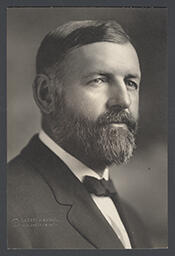
Here you will find contact information for Representative Edward Watts Saunders, including email address, phone number, and mailing address.
| Name | Edward Watts Saunders |
| Position | Representative |
| State | Virginia |
| District | 5 |
| Party | Democratic |
| Status | Former Representative |
| Term Start | December 4, 1905 |
| Term End | March 3, 1921 |
| Terms Served | 8 |
| Born | October 20, 1860 |
| Gender | Male |
| Bioguide ID | S000077 |
About Representative Edward Watts Saunders
Edward Watts Saunders (October 20, 1860 – December 16, 1921) was a Virginia lawyer, legislator, and judge who served as Speaker of the Virginia House of Delegates, a Democratic Representative from Virginia in the United States Congress from 1905 to 1921, and later as a justice of the Supreme Court of Appeals of Virginia. His long public career spanned the late nineteenth and early twentieth centuries and included prominent roles in both state and national government.
Saunders was born on October 20, 1860, in Franklin County, Virginia. He received his early education from tutors at home and later attended Bellevue Academy in Bedford County, Virginia. From Bellevue Academy he entered the University of Virginia, where he pursued classical studies. After his initial graduation, he joined Professor F. P. Brent in conducting a classical school at Onancock in Accomack County, Virginia, reflecting an early engagement with education and scholarship.
In the fall of 1881, Saunders returned to the University of Virginia to study law. He became a member of the law class taught by the noted legal scholar Professor John B. Minor and received his Bachelor of Law degree in 1882. That same year, he opened a law office in Rocky Mount, the county seat of Franklin County, Virginia, beginning a legal career that would underpin his subsequent work in public office. His practice in Rocky Mount established him as a local attorney of standing and provided the base from which he entered political life.
Saunders’s formal political career began with his election to the Virginia House of Delegates in 1887. He served in the House of Delegates for seven terms, building influence within the Democratic Party and the state legislature. From 1899 to 1901 he held the powerful leadership post of Speaker of the Virginia House of Delegates, presiding over the lower chamber of the General Assembly during a period of significant political and constitutional change in the Commonwealth. In 1901 he was elected Judge of the Fourth Judicial Circuit of Virginia. Following the reorganization of the judicial circuits mandated by the Virginia Constitution of 1902, he became Judge of the Seventh Judicial Circuit, continuing his judicial service at the trial-court level.
While serving as a circuit judge, Saunders was elected to fill a vacancy in the United States House of Representatives, marking the beginning of his congressional service. A member of the Democratic Party, he entered Congress in 1905 and remained there for eight consecutive terms, serving until 1921, a span of thirteen years. His tenure in the House of Representatives coincided with a significant period in American history, including the Progressive Era and World War I, during which he participated in the legislative process and represented the interests of his Virginia constituents.
Saunders’s electoral record in Congress reflected both the competitiveness and the eventual consolidation of his position. In 1906 he was elected to the U.S. House of Representatives with 50.88 percent of the vote in a special election, defeating Republican John W. Simmons; he was concurrently elected in the general election that year unopposed. In 1908 he was re-elected with 50.28 percent of the vote, defeating Republican John M. Parsons and Independent E. Matthews. He secured re-election again in 1910 with 50.35 percent of the vote, defeating Republican John M. Parsons, Independent John B. Anglin, and Socialist Bruce Anderson. His margins increased in subsequent contests: in 1912 he was re-elected with 62.05 percent of the vote over Republican A. B. Hamner and Independent J. Celphas Shelton; in 1914 he won 65.47 percent of the vote, defeating Republican Charles A. Hermans, Independent William A. Fulton, and Socialist W. R. Keele. By 1916 and 1918, his position was sufficiently secure that he was re-elected unopposed in both elections.
In 1920, after concluding his long service in the U.S. House of Representatives, Saunders was elected to the Supreme Court of Appeals of Virginia, the state’s highest court. As a justice of that court, he brought to the bench decades of experience as a lawyer, legislator, and trial judge. However, his tenure on the Supreme Court of Appeals was brief. Judge Saunders served less than two years on the court before his death. He died at his home in Rocky Mount, Virginia, on December 16, 1921, during a recess, or vacation, of the court, closing a distinguished career in Virginia and national public life.