Representative Edward J. Stack
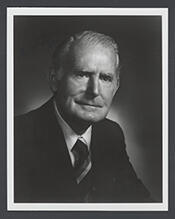
Here you will find contact information for Representative Edward J. Stack, including email address, phone number, and mailing address.
| Name | Edward J. Stack |
| Position | Representative |
| State | Florida |
| District | 12 |
| Party | Democratic |
| Status | Former Representative |
| Term Start | January 15, 1979 |
| Term End | January 3, 1981 |
| Terms Served | 1 |
| Born | April 29, 1910 |
| Gender | Male |
| Bioguide ID | S000772 |
About Representative Edward J. Stack
Edward John Stack was an American attorney and Democratic politician who served as a Representative from Florida in the United States Congress from 1979 to 1981. His single term in the U.S. House of Representatives took place during a significant period in American history, when the nation was grappling with economic challenges, energy concerns, and shifting political currents at the close of the 1970s. As a member of the House of Representatives, he participated in the federal legislative process and represented the interests of his Florida constituents, contributing to debates and decisions that shaped national policy during his tenure.
Born into the broader American tradition of law and public service that had developed over the preceding two centuries, Stack’s career followed in the path of earlier lawyer-legislators who combined legal training with public office. That tradition can be traced back to figures such as John Stark Edwards (August 23, 1777 – February 22, 1813), an attorney, public official, soldier, and landowner in the early United States. Edwards was born in New Haven, Connecticut, the son of Pierpont and Frances (Ogden) Edwards. His father named him after his friend General John Stark, the hero of the Battle of Bennington in the American Revolutionary War. Pierpont Edwards, himself a distinguished lawyer and member of the Congress of the Confederation, was a son of theologian and Princeton president Jonathan Edwards and Sarah Pierpont, and a founder of the Toleration Party in Connecticut. As a major investor in the Connecticut Land Company, Pierpont Edwards owned a one‑twentieth share of the Western Reserve, including the township of Mesopotamia in what became Trumbull County, Ohio.
John Stark Edwards’s education and early legal training exemplified the rigorous preparation common to many early American public figures. He graduated from Princeton College in 1796, studied law under his father in New Haven, and attended lectures by Judge Tapping Reeve at the Litchfield Law School, one of the nation’s earliest formal law schools. Admitted to the bar at New Haven in the spring of 1799, he was described by contemporaries as over six feet tall, stoutly built and muscular, with a florid complexion and a commanding presence. That same year, in June 1799, he left New Haven for the Northwest Territory to act as sales agent for his father’s lands in the Western Reserve, arriving at Warren, Ohio, in the company of other early settlers and future leaders, including John Kinsman, Calvin Pease, Simon Perkins, George Tod, Ebenezer Reeve, Josiah Pelton, and Turhand and Jared P. Kirtland.
In Ohio, Edwards became one of the first lawyers to settle in the Western Reserve and quickly took on both professional and civic responsibilities, much as later generations of lawyers, including Edward John Stack, would do in their own communities. Edwards cleared land and erected a log house in Mesopotamia Township, Trumbull County, and in 1803 built the first sawmill there. Although he resided in Mesopotamia until about 1804, he spent much of his time in Warren to attend to his legal practice and official duties. His name appears in the first case on the docket of the Trumbull County court in 1800, and he was among the attorneys who defended Joseph McMahon in a widely noted trial concerning the killing of a Native American. On July 1800, territorial governor Arthur St. Clair commissioned him Recorder of Trumbull County, an office he held until his death in 1813. He was admitted to the bar in Geauga County in 1810 and helped found the Erie Literary Society, which established Burton Academy at Burton, Ohio, in 1805, an institution whose successors later became part of Western Reserve University. He was also active in the Erie Lodge of the Free and Accepted Masons, eventually serving as its secretary.
Edwards’s personal life and military service further reflected the intertwining of family, education, and public duty that characterized many early American officeholders. On February 28, 1807, he married Louisa Maria Morris (1787–1866) at Springfield, Vermont. She was the daughter of General Lewis Morris, a former United States congressman from Vermont, and Mary (Dwight) Morris, and the granddaughter of Timothy Dwight, president of Yale College. The couple had three children, of whom only William J. Edwards survived to adulthood. Louisa Edwards was well educated and widely read; she studied her husband’s law library, including Blackstone’s Commentaries, and many of the early records of the Trumbull County Recorder’s office are believed to be in her handwriting. In March 1811, Edwards was commissioned colonel of the Second Regiment, Third Brigade, Fourth Division of the Ohio militia. After the surrender of General William Hull at Detroit in August 1812 raised fears of British and Native American incursions, he marched with part of his regiment to Cleveland to help organize the region’s defense before returning to Warren when his services were no longer required.
In October 1812, John Stark Edwards was elected as Representative to the Thirteenth United States Congress from Ohio’s 6th congressional district, becoming the first man elected to Congress who resided on the Western Reserve. Unlike Edward John Stack, who would take his seat and serve a full term in the U.S. House of Representatives from Florida from 1979 to 1981, Edwards never had the opportunity to assume his congressional duties. In January 1813, he left Warren with two companions intending to travel to the Danbury (Marblehead) Peninsula in what was then Huron County, Ohio, to attend to his property. Near Lower Sandusky, a thaw and difficult conditions led his companions to turn back, but Edwards continued, became wet and chilled, and fell ill with malarial fever on the road. He died in Huron County on February 22, 1813, and his body was returned to Warren for burial. His widow later married Robert Montgomery of Youngstown in 1814, and they had three additional children: Robert Morris, Caroline Sarah (who married Dr. M. Hazeltine), and Ellen Louisa (who married Samuel Hine). Edwards’s home in Warren, though moved from its original site, still stands and now serves as a museum, a surviving reminder of the early legal and political culture that formed part of the broader historical backdrop to the later congressional service of figures such as Edward John Stack.