Representative Edward Lowber Stokes
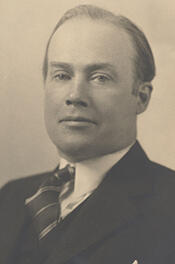
Here you will find contact information for Representative Edward Lowber Stokes, including email address, phone number, and mailing address.
| Name | Edward Lowber Stokes |
| Position | Representative |
| State | Pennsylvania |
| District | 6 |
| Party | Republican |
| Status | Former Representative |
| Term Start | December 7, 1931 |
| Term End | January 3, 1935 |
| Terms Served | 2 |
| Born | September 29, 1880 |
| Gender | Male |
| Bioguide ID | S000946 |
About Representative Edward Lowber Stokes
Edward Lowber Stokes (September 29, 1880 – November 8, 1964) was an American politician, investment banker, and international polo player from Philadelphia, Pennsylvania, who served as a Republican member of the U.S. House of Representatives from 1931 to 1935. Over the course of two terms in Congress, he represented Pennsylvania’s 2nd congressional district from 1931 to 1933 and Pennsylvania’s 6th congressional district from 1933 to 1935, participating in the legislative process during a significant period in American history and representing the interests of his constituents as a member of the Republican Party.
Stokes was born on September 29, 1880, in Philadelphia, Pennsylvania. He received his early education in that city and later attended St. Paul’s School in Concord, New Hampshire, from which he graduated. Outside of his professional and political life, he became known as an international polo player and served as captain of the Philadelphia Country Club polo team, reflecting both his athletic interests and his social prominence in the Philadelphia area.
Before entering national politics, Stokes pursued a career in finance. He was first employed as a clerk for a trust company, gaining early experience in the financial sector. He subsequently engaged in investment work and eventually founded his own firm, Edward Stokes & Co., through which he established himself as an investment dealer and banker. In addition to his business activities, he was active in the religious life of his community, serving as a vestryman of historic Christ Church in Philadelphia from 1913 to 1940, a role that indicated his longstanding involvement in civic and ecclesiastical affairs.
Stokes’s initial foray into elective politics came with his candidacy for the Pennsylvania House of Representatives in 1930, although he was unsuccessful in that bid. The following year, however, he entered national office when he was elected as a Republican to the 72nd Congress in 1931 to fill the vacancy caused by the death of Representative George S. Graham. He took his seat as the representative for Pennsylvania’s 2nd congressional district and served in that capacity from 1931 to 1933, at the onset of the Great Depression, contributing to the work of the House of Representatives during a time of profound economic and social challenge.
Following the reapportionment and redistricting that followed the 1930 census, Stokes was elected to represent Pennsylvania’s 6th congressional district, serving from 1933 to 1935. During these two consecutive terms in the U.S. House of Representatives, he participated in the democratic process and contributed to the legislative deliberations of the early New Deal era. He did not seek renomination to the House in 1934 because he became a candidate for Governor of Pennsylvania that year, reflecting his ambition to continue his public service at the state executive level, although this gubernatorial effort was not successful.
After leaving Congress in 1935, Stokes returned to his financial and business pursuits while remaining intermittently active in politics. He continued his work in investment banking and maintained his leadership of Edward Stokes & Co. He again sought public office in the postwar period, running once more for Congress in 1950 and later standing as a candidate for mayor and for councilman at large in 1952. Although these later campaigns did not result in election, they demonstrated his continued engagement in public affairs and his ongoing interest in municipal and national governance. He remained active in investment banking until his retirement in 1955.
In his later years, Stokes lived in the Philadelphia region, maintaining the social, religious, and civic ties that had characterized much of his life. He died in Willistown Township, Pennsylvania, on November 8, 1964. Edward Lowber Stokes was interred at St. David’s Episcopal Church in Radnor, Pennsylvania, closing a life that combined business leadership, athletic distinction, religious service, and a notable, if relatively brief, tenure in the United States Congress.