Representative Edward Swann
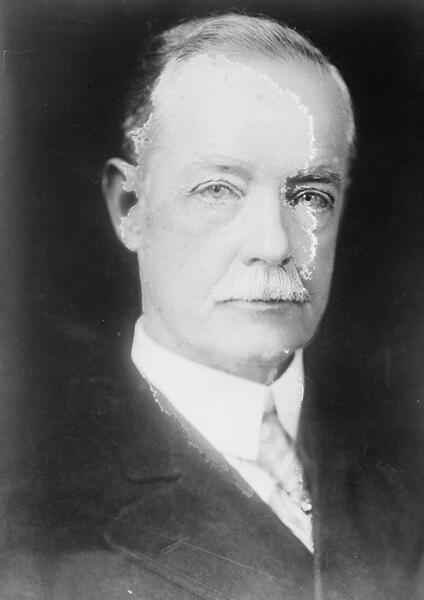
Here you will find contact information for Representative Edward Swann, including email address, phone number, and mailing address.
| Name | Edward Swann |
| Position | Representative |
| State | New York |
| District | 10 |
| Party | Democratic |
| Status | Former Representative |
| Term Start | December 2, 1901 |
| Term End | March 3, 1903 |
| Terms Served | 1 |
| Born | March 10, 1862 |
| Gender | Male |
| Bioguide ID | S001090 |
About Representative Edward Swann
Edward Swann (March 10, 1862 – September 19, 1945) was an American lawyer, jurist, and Democratic politician from New York who served as a Representative from New York in the United States Congress from 1902 to 1903. He was born on March 10, 1862, in Madison, Florida. Little is recorded about his early family life or schooling in Florida, but his subsequent professional training and career were centered in New York, where he became closely associated with the Tammany Hall Democratic organization.
Swann pursued legal studies in New York City and graduated from Columbia Law School in 1886. He was admitted to the bar the same year and immediately commenced the practice of law in New York City. Entering politics as a member of Tammany Hall, he built a reputation within the city’s Democratic circles as both a practicing attorney and a party loyalist. His affiliation with Tammany Hall would shape much of his public life, providing the political base for his later congressional and judicial service.
Swann’s congressional career occurred during a significant period in American history at the turn of the twentieth century. A member of the Democratic Party, he contributed to the legislative process during one term in office. He was elected as a Democrat to the Fifty-seventh Congress to fill the vacancy caused by the death of Representative Amos J. Cummings. Chosen in a special election held on November 4, 1902, he took his seat on December 1, 1902, and served until March 3, 1903. During this part of one term in the U.S. House of Representatives, he participated in the democratic process and represented the interests of his New York constituents, serving in the House during the closing months of that Congress. Although his tenure was brief, it placed him among the ranks of New York Democrats active in national politics during the early 1900s.
After leaving Congress in March 1903, Swann resumed the practice of law in New York City. He remained active in Democratic politics and, in November 1904, sought to return to the House of Representatives, this time as a candidate from New York’s 13th Congressional District. In that race he was defeated by Republican Herbert Parsons, reflecting the competitive partisan environment of New York City politics in the early twentieth century. Despite this setback, Swann’s legal and political career continued to advance, supported by his ongoing ties to Tammany Hall.
Swann moved from elective legislative office into the judiciary when, in November 1907, he was elected a judge of the Court of General Sessions in New York County, an important criminal court in the city. He took office on January 1, 1908, and his judicial role further solidified his standing in New York’s legal community. His prominence increased again when he became New York County District Attorney. In a special election in November 1915, he was elected district attorney, defeating the incumbent, Charles A. Perkins. He assumed office in 1916 and was re-elected in November 1917 to a full term, serving as New York County District Attorney from 1916 to 1921. During these years he was a central figure in the prosecution of criminal cases in Manhattan, operating under intense public and political scrutiny.
Swann’s tenure as district attorney was controversial and frequently challenged by reform organizations. He was accused several times by civic and reform groups of misconduct and malfeasance in office, and there were repeated calls for his removal. Since the precedent set in 1900, when Governor Theodore Roosevelt removed New York County District Attorney Asa Bird Gardiner, efforts to unseat district attorneys had become a recurring feature of New York City politics. In Swann’s case, however, neither Republican Governor Charles S. Whitman nor Democratic Governor Al Smith found sufficient grounds to remove him from office, and he completed his term despite the sustained criticism. His relationship with Tammany Hall remained a defining element of his public image, shaping both his support base and his opposition.
In November 1920, Tammany Hall leaders sought to move Swann out of the district attorney’s office by nominating him for the New York Supreme Court (First Department). He ran for that judicial post but was defeated. Following this loss, Tammany bosses pressed to have him appointed to a vacancy in the New York Court of General Sessions, but Governor Al Smith declined to make the appointment. During much of 1921, Swann spent extended periods out of state, partly in Florida and partly in Missouri, leaving the day-to-day administration of the district attorney’s office largely in the hands of his chief assistant, Joab H. Banton. On May 21, 1921, while in Salisbury, Chariton County, Missouri, he married Margaret W. Geisinger, a great-niece of Commodore David Geisinger, further cementing personal ties beyond New York.
In his later years, Swann withdrew from the front lines of New York politics and public office. He ultimately returned to his native state region, spending his final years in Florida. Edward Swann died on September 19, 1945, in Sewall’s Point, Florida. He was buried at St. Peter’s Episcopal Cemetery in Fernandina Beach, Nassau County, Florida, closing the life of a lawyer, jurist, and Democratic officeholder whose career spanned private legal practice, a brief term in the U.S. House of Representatives, judicial service, and a contentious but influential tenure as New York County District Attorney.