Senator Edward Tiffin
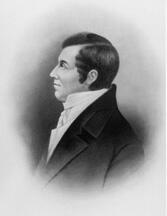
Here you will find contact information for Senator Edward Tiffin, including email address, phone number, and mailing address.
| Name | Edward Tiffin |
| Position | Senator |
| State | Ohio |
| Party | Republican |
| Status | Former Representative |
| Term Start | October 26, 1807 |
| Term End | December 31, 1809 |
| Terms Served | 1 |
| Born | June 19, 1766 |
| Gender | Male |
| Bioguide ID | T000268 |
About Senator Edward Tiffin
Edward Tiffin (June 19, 1766 – August 9, 1829) was an American politician and public servant who became the first governor of Ohio and later served as a United States senator from Ohio as a member of the Democratic-Republican Party. Born in England and later emigrating to the United States, he rose to prominence in the Northwest Territory during its formative years and played a central role in the creation and early governance of the state of Ohio. Over the course of his career, he also served as Speaker of the Territorial House of Representatives, president of the Ohio Constitutional Convention of 1802, a member and Speaker of the Ohio House of Representatives, the first commissioner of the United States General Land Office, and Surveyor General of the Northwest Territory.
After settling in Chillicothe in the Northwest Territory, Tiffin became the first doctor in the town, traveling on horseback, day and night, to treat the afflicted in the surrounding region. He arrived in the territory with a letter of recommendation from George Washington addressed to Arthur St. Clair, governor of the Northwest Territory, urging that Tiffin be considered for public office. This endorsement, combined with his medical practice and growing local reputation, quickly drew him into territorial politics and public affairs at a time when the region’s political and institutional foundations were still being formed.
Tiffin’s political career began in earnest in the government of the Northwest Territory. He served as Speaker of the Territorial House of Representatives from 1799 to 1801, presiding over the legislative body during a critical period of transition toward statehood. In 1802 he was chosen president of the Ohio Constitutional Convention, where he played a decisive role in framing the state’s first constitution. During the convention he cast a tie-breaking vote to deny the voting franchise to the new state’s 337 African American residents, a decision that shaped the early political and civil landscape of Ohio. Tiffin was also a leading figure in the Chillicothe Junto, a group of Democratic-Republican politicians based in Chillicothe—including Thomas Worthington and Nathaniel Massie—who were instrumental in securing Ohio’s admission to the Union in 1803 and in directing its politics for years thereafter.
With statehood achieved, Tiffin was the obvious and nearly unopposed choice to become the first governor of Ohio. He was elected almost without opposition to his first term in 1803 and was re-elected by similarly overwhelming numbers two years later, reflecting his broad popularity and the dominance of his political faction. As governor, he confronted early challenges to the security and stability of the young state, and during his second term he acted promptly to help thwart the Burr conspiracy, an alleged scheme led by former Vice President Aaron Burr that threatened the peace and integrity of the western territories. His administration laid much of the groundwork for Ohio’s early development, and contemporaries later credited him with an exceptional talent for the administration of public affairs.
Tiffin entered national office when he was elected to the United States Senate in 1806 as a Democratic-Republican. He resigned the governorship in March 1807 to take his seat in the Senate, where he served as a senator from Ohio from 1807 to 1809, completing one term in office before resigning after the death of his first wife. During his tenure in the Senate, he was described as “ever faithful to the interests of the West and diligent in seeking the welfare of its inhabitants.” He secured an appropriation of public money for the improvement of the Ohio River, worked to obtain better and speedier transportation of the mails, and advocated for a more rapid and efficient system for surveying western lands. He also pressed for modifications to the federal land laws to “guard the purchasers of them from unnecessary embarrassments and frequent ruin,” seeking to protect settlers and small land buyers. In a notable action, he voted for the expulsion of his fellow Ohio senator, John Smith, who had been implicated in the Burr conspiracy, underscoring his opposition to that plot and his commitment to public integrity.
After resigning from the Senate in 1809, Tiffin returned to Ohio but remained active in state politics. He was elected to the Ohio House of Representatives and served as Speaker of the House from 1809 to 1811, once again occupying a leadership position in the legislative branch. On April 16, 1809, he remarried, taking as his second wife Mary Porter, originally from Delaware and then a resident of Ross County, Ohio. His continued legislative service reinforced his influence in shaping Ohio’s laws and institutions during its early years as a state.
Tiffin’s career later shifted toward federal administrative service, where he played a key role in managing and organizing the public lands of the expanding United States. He became the first commissioner of the United States General Land Office, the federal agency responsible for overseeing the allocation and management of public lands. In this capacity he helped supervise the disposition of western lands at a time of rapid settlement and growth. During the War of 1812, he was instrumental in quickly removing federal records from Washington, D.C., before the city was sacked, thereby preserving important government documents. In 1814 he exchanged positions with Josiah Meigs and became Surveyor General of the Northwest Territory, a post that allowed him to reside nearer his home in Chillicothe. He held the office of Surveyor General until his death, continuing to influence the orderly survey and development of the western country.
Edward Tiffin died at Chillicothe, Ohio, on August 9, 1829, at the age of 64, while still serving as Surveyor General of the United States for the Northwest Territory. His death was noted in contemporary newspapers, including the Brattleboro Messenger of Brattleboro, Vermont, which reported: “At Chillicothe, Doct. Edward Tiffin, formerly Governor of Ohio, and late Surveyor General of the United States, aged 64 years.” He was buried in Grandview Cemetery in Ross County, Ohio. In 1822, the city of Tiffin in northwestern Ohio was named in his honor, reflecting the esteem in which he was held by his contemporaries. Later assessments of his career lauded his statesmanship, with one account observing that no man who had occupied the gubernatorial chair of Ohio possessed a greater genius for the administration of public affairs, and that his work in advancing and developing Ohio had not been equaled by any other figure in the state’s history.