Representative Edward Waterman Townsend
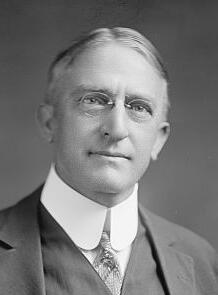
Here you will find contact information for Representative Edward Waterman Townsend, including email address, phone number, and mailing address.
| Name | Edward Waterman Townsend |
| Position | Representative |
| State | New Jersey |
| District | 10 |
| Party | Democratic |
| Status | Former Representative |
| Term Start | April 4, 1911 |
| Term End | March 3, 1915 |
| Terms Served | 2 |
| Born | February 10, 1855 |
| Gender | Male |
| Bioguide ID | T000332 |
About Representative Edward Waterman Townsend
Edward Waterman Townsend (February 10, 1855 – March 15, 1942) was an American author, journalist, and Democratic Party politician who served as a Representative from New Jersey in the United States Congress from 1911 to 1915. He represented New Jersey’s 7th congressional district from 1911 to 1913 and, following redistricting after the 1910 United States Census, represented the 10th congressional district from 1913 to 1915. Over the course of his two terms in the House of Representatives, he participated actively in the legislative process and represented the interests of his New Jersey constituents during a significant period in American political and social history.
Townsend was born in Cleveland, Ohio, on February 10, 1855, the son of Horace Gilbert Townsend. He was educated in both private and public schools in Cleveland, receiving a general education that prepared him for a career in letters and public life. In 1875 he left Ohio for San Francisco, California, where he began what would become a long and varied career in newspaper and literary work. His early professional years on the West Coast immersed him in journalism and writing, experiences that helped shape his later prominence as a humorist and commentator on American urban life. On April 16, 1884, he married Annie Lake.
In 1893 Townsend moved to New York City, where he continued his reportorial and literary pursuits and became more widely known as an author. He wrote novels, plays, and short stories, as well as a textbook on the United States Constitution, reflecting both his literary talent and his growing interest in public affairs and government. His most popular fictional writings were the “Chimmie Fadden” Bowery boy stories, humorous sketches that depicted New York’s working-class life and gained a broad readership. In 1900 he became a resident of Montclair, New Jersey, establishing the community ties that would later underpin his political career.
Townsend entered elective office as a member of the Democratic Party and was elected to the Sixty-second Congress from New Jersey’s 7th congressional district, taking his seat in the United States House of Representatives on March 4, 1911. After the reapportionment and redistricting that followed the 1910 United States Census, he was elected to represent New Jersey’s 10th congressional district in the Sixty-third Congress. He served continuously from March 4, 1911, to March 3, 1915. During these two terms, he contributed to the legislative process as the nation confronted issues of industrial regulation, tariff reform, and the early years of the Woodrow Wilson administration. A Democrat in a period of significant party realignment and progressive reform, he participated in the democratic process at the federal level and sought to advance the interests of his New Jersey constituents. He was an unsuccessful candidate for reelection in 1914 to the Sixty-fourth Congress.
After leaving Congress in March 1915, Townsend remained in public service at the local level. He was appointed postmaster of Montclair, New Jersey, serving in that capacity from 1915 to 1923. In this role he oversaw postal operations during and after World War I, a period of expanding federal services and increasing communication demands. Following the conclusion of his term as postmaster, he moved back to New York City in 1924, where he resumed his newspaper and literary pursuits. By this time a well-established figure in American letters, he continued to write and remained engaged with the literary community.
In his later years, Townsend was recognized for his contributions to American literature and journalism and became a member of the National Institute of Arts and Letters, reflecting his standing among his contemporaries in the arts. He lived in New York City until his death there on March 15, 1942. Edward Waterman Townsend was interred in Forest Hill Cemetery in Utica, New York, closing a life that had spanned journalism, literature, and national political service.