Senator Edward Zorinsky
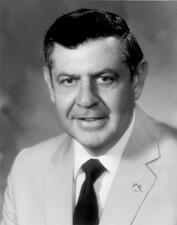
Here you will find contact information for Senator Edward Zorinsky, including email address, phone number, and mailing address.
| Name | Edward Zorinsky |
| Position | Senator |
| State | Nebraska |
| Party | Democratic |
| Status | Former Representative |
| Term Start | January 3, 1977 |
| Term End | January 3, 1989 |
| Terms Served | 6 |
| Born | November 11, 1928 |
| Gender | Male |
| Bioguide ID | Z000013 |
About Senator Edward Zorinsky
Edward Zorinsky (November 11, 1928 – March 6, 1987) was an American businessman and politician who represented Nebraska in the United States Senate from 1976 until his death in 1987. A member of the Democratic Party during his Senate career, he contributed to the legislative process over three terms in office, serving during a significant period in American history and participating actively in the democratic process on behalf of his constituents. He was the first Jewish person elected to statewide office in Nebraska and the first Democrat elected to the U.S. Senate from Nebraska since 1934.
Zorinsky was born in Omaha, Nebraska, to Sonia (née Feldman) and Hymie Zorinsky, both Russian Jewish immigrants. He was raised in Omaha and attended Saunders and Rosehill elementary schools before graduating from Omaha Central High School in 1945. His upbringing in a family of immigrants and his early life in Omaha would later shape his understanding of local concerns and his political identity as a representative of Nebraskans at both the municipal and federal levels.
After high school, Zorinsky pursued higher education at several institutions. He attended the University of Minnesota from 1945 to 1946 and then Creighton University in Omaha from 1946 to 1948. He completed his undergraduate studies at the University of Nebraska, where he received a Bachelor of Science degree in chemistry and zoology in 1949. In addition to his civilian education, he served in the U.S. Army Reserve from 1949 to 1962, combining military service with his emerging business career. In 1966, he enrolled at Harvard University to pursue graduate work, further broadening his academic and professional background.
For twenty-three years, Zorinsky worked in the wholesale tobacco and candy business, establishing himself as a businessman in Omaha. His public service began to expand in the late 1960s, when he served as a member of the Nebraska Judicial Qualifications Commission from 1968 to 1971 and as a member of the Board of Directors of the Omaha Public Power District from 1969 to 1973. Originally a lifelong Republican, he entered elective office as mayor of Omaha, serving from 1973 to 1976. He earned substantial local popularity for his leadership during severe weather emergencies, notably his widely praised response to a blizzard and a series of tornadoes that struck Omaha in 1975.
In 1976, Zorinsky decided to seek federal office after U.S. Senator Roman Hruska, a Republican who had served for 22 years, chose not to run for re-election. Initially pursuing the Republican nomination, Zorinsky concluded that he would not secure it and switched parties to run as a conservative Democrat. He won the Democratic nomination by defeating Hess Dyas, a former state party chairman, and went on to defeat U.S. Representative John Y. McCollister in the general election by a margin of 53% to 47%. With this victory, he became the first Democratic Senator elected from Nebraska since 1934 and the first Jewish person to win statewide election in Nebraska. Days before the end of his term, Senator Hruska resigned on December 27, 1976, and Governor J. James Exon appointed Zorinsky to the Senate seat he had already won in the November election, allowing him to assume office early.
Zorinsky served in the United States Senate from December 27, 1976, until his death on March 6, 1987, completing more than a decade of service that spanned three terms in office. He was re-elected in 1982 with over 66% of the vote, reflecting strong support from Nebraska voters. In the Senate, he was generally regarded as a moderate to conservative Democrat, often voting with Republicans on significant issues. His ideological profile led Republican leaders to court him to return to their party in 1982, and he publicly threatened to change parties in 1986, though he ultimately remained a Democrat. During his tenure, he served as chairman of the Senate Subcommittee on Western Hemisphere Affairs, where he played a role in shaping U.S. policy toward Latin America. In that capacity, he advocated financial and military assistance to the new Sandinista National Liberation Front regime in Nicaragua in 1979, reflecting his engagement with Cold War–era foreign policy in the Western Hemisphere. Throughout his Senate career, he participated in the legislative process during a period marked by shifting domestic and international challenges, representing the interests of Nebraskans in national debates.
Zorinsky’s life and career ended abruptly on March 6, 1987, in Omaha, Nebraska, when he suffered a fatal heart attack during the Omaha Press Club gridiron show, shortly after performing a song-and-dance routine. His death in office placed him among the members of the United States Congress who died while serving between 1950 and 1999. In recognition of his public service and his prominence in Nebraska political life, several landmarks were named in his honor after his death. One of the largest man-made lakes in Nebraska was designated Ed Zorinsky Lake, and the surrounding Zorinsky Lake Park, located in Omaha, commemorates his legacy in the city where he was born, raised, and first elected to public office. In addition, the Edward Zorinsky Federal Building in Omaha bears his name, underscoring his lasting impact on both his state and the nation.