Representative Edwin Adair
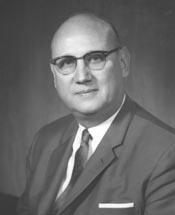
Here you will find contact information for Representative Edwin Adair, including email address, phone number, and mailing address.
| Name | Edwin Adair |
| Position | Representative |
| State | Indiana |
| District | 4 |
| Party | Republican |
| Status | Former Representative |
| Term Start | January 3, 1951 |
| Term End | January 3, 1971 |
| Terms Served | 10 |
| Born | December 14, 1907 |
| Gender | Male |
| Bioguide ID | A000024 |
About Representative Edwin Adair
Edwin Ross Adair (December 14, 1907 – May 5, 1983) was an American lawyer, World War II veteran, and Republican politician who served ten consecutive terms as a U.S. Representative from Indiana from 1951 to 1971 and later as United States Ambassador to Ethiopia from 1971 to 1974. Over two decades in the House of Representatives, he contributed to the legislative process during a significant period in American history, representing the interests of his Indiana constituents while participating in major national debates on civil rights and foreign policy.
Adair was born in Albion, Noble County, Indiana, on December 14, 1907. He attended the public grade and high schools in Albion, receiving his early education in the community where he was raised. Seeking higher education in the liberal arts, he enrolled at Hillsdale College in Hillsdale, Michigan, from which he graduated with an A.B. degree in 1928. He then moved to Washington, D.C., to pursue legal studies at George Washington University Law School, earning his LL.B. degree in 1933. His years in the nation’s capital exposed him early to the workings of the federal government and national politics, experience that would later inform his congressional career.
After completing his legal education, Adair was admitted to the Indiana bar in 1933 and commenced the practice of law in Fort Wayne, Indiana. Establishing himself in private practice, he became active in local legal and civic affairs. In 1940 he was appointed probate commissioner of Allen County, Indiana, a position he held for a decade, from 1940 to 1950. In that role he oversaw matters related to estates, guardianships, and other probate proceedings, gaining administrative and judicial experience that complemented his work as a practicing attorney.
With the outbreak of World War II, Adair was called to active military duty. In September 1941 he entered service as a second lieutenant in the Quartermaster Corps Reserve of the United States Army. He served on active duty until October 1945, participating in some of the most significant campaigns of the European Theater. He received battle stars for his service in the Normandy, Northern France, Ardennes, Rhine, and Central European campaigns, reflecting sustained involvement in major operations from the D-Day invasion through the final phases of the war in Europe. Following his discharge, he returned to Fort Wayne and resumed his legal and public service career.
Adair entered national politics as a member of the Republican Party and was elected to the U.S. House of Representatives from Indiana’s 4th congressional district in 1950. He took his seat in the Eighty-second Congress on January 3, 1951, and was subsequently reelected to the nine succeeding Congresses, serving continuously until January 3, 1971. During his twenty years in the House, he served through the administrations of Presidents Harry S. Truman, Dwight D. Eisenhower, John F. Kennedy, and Lyndon B. Johnson, a period marked by the Cold War, the civil rights movement, and the early stages of U.S. involvement in Vietnam. As a member of the House of Representatives, Adair participated in the democratic process and represented the interests of his Indiana constituents while contributing to national legislative deliberations.
In matters of civil rights, Adair’s voting record reflected support for the major federal civil rights legislation of the era. He voted in favor of the Civil Rights Acts of 1957, 1960, 1964, and 1968, as well as the Voting Rights Act of 1965, aligning himself with bipartisan efforts to end segregation and protect voting rights for African Americans and other minorities. He voted “present” on the proposed Twenty-fourth Amendment to the U.S. Constitution, which ultimately abolished the poll tax in federal elections, a stance that distinguished his position from those who either supported or opposed the amendment outright. After ten terms in office, he was an unsuccessful candidate for reelection in 1970 to the Ninety-second Congress, bringing his long tenure in the House to a close.
Following his congressional service, Adair was appointed by President Richard Nixon as United States Ambassador to Ethiopia. He served in that diplomatic post from 1971 to 1974, a period during which Ethiopia, under Emperor Haile Selassie, was an important American ally in the Horn of Africa amid Cold War tensions. As ambassador, Adair represented U.S. interests in Addis Ababa, managing bilateral relations, overseeing American diplomatic and aid programs, and engaging with Ethiopian officials during a time of growing internal unrest that would soon lead to significant political change in the country.
After completing his ambassadorial service, Adair returned to Fort Wayne, Indiana, where he resumed the practice of law. He continued to reside in Fort Wayne for the remainder of his life, maintaining his ties to the community that had been central to his legal and political career. Edwin Ross Adair died in Fort Wayne on May 5, 1983. He was interred at Greenlawn Memorial Park and Mausoleum in Fort Wayne. In recognition of his long public service, the federal building and United States courthouse in Fort Wayne bears his name as the E. Ross Adair Federal Building and United States Courthouse.