Representative Edwin Le Roy Antony
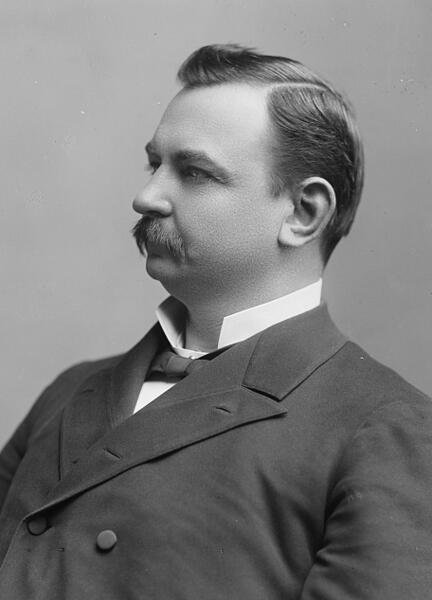
Here you will find contact information for Representative Edwin Le Roy Antony, including email address, phone number, and mailing address.
| Name | Edwin Le Roy Antony |
| Position | Representative |
| State | Texas |
| District | 9 |
| Party | Democratic |
| Status | Former Representative |
| Term Start | December 7, 1891 |
| Term End | March 3, 1893 |
| Terms Served | 1 |
| Born | January 5, 1852 |
| Gender | Male |
| Bioguide ID | A000264 |
About Representative Edwin Le Roy Antony
Edwin Le Roy Antony (January 5, 1852 – January 16, 1913) was an American lawyer, jurist, and Democratic politician who represented Texas in the United States House of Representatives from 1892 to 1893. Born on January 5, 1852, he came of age in the post–Civil War South, a period that shaped both his legal career and his later public service. Details of his early childhood and family background are less fully documented, but his subsequent educational and professional trajectory reflects the opportunities and political culture of the Reconstruction and post-Reconstruction eras in the American South.
Antony pursued higher education at the University of Georgia, an important regional institution that drew students from across the South. While there, he was active in campus intellectual and social life, becoming a member of the Phi Kappa Literary Society, one of the university’s principal debating and literary organizations. He also joined the Fraternity of Phi Gamma Delta (commonly known as FIJI), a national social fraternity that provided him with a network of peers and future professional contacts. His participation in these organizations suggests an early interest in public speaking, debate, and civic affairs, skills that would later support his work as an attorney, judge, and legislator.
After completing his studies, Antony read law and entered the legal profession in Texas, where he established himself as a practicing attorney. He settled in Milam County, a central Texas jurisdiction, and advanced rapidly in public legal service. He was appointed or elected prosecuting attorney of Milam County, a role in which he represented the state in criminal proceedings and gained experience in courtroom advocacy and the administration of justice. His performance in that capacity contributed to his reputation as a capable lawyer and led to further advancement within the Texas judicial system.
Building on his experience as a prosecutor, Antony subsequently served as a district judge in Texas. In that position, he presided over a broad range of civil and criminal cases, applying state law and shaping legal outcomes in his district. His tenure as a district judge reflected both professional recognition and public trust, and it placed him among the more prominent legal figures in his region. This judicial service, combined with his earlier prosecutorial work, formed the foundation for his later entry into national politics and prepared him for the legislative responsibilities he would assume in Congress.
Antony’s congressional service began during the Fifty-second Congress, at a moment of transition in Texas’s representation. A member of the Democratic Party, he was elected to the U.S. House of Representatives from the State of Texas to fill the vacancy caused by the resignation of Representative Roger Q. Mills. He took his seat on June 14, 1892, and served until March 4, 1893. Although this amounted to a single term in office, his tenure coincided with a significant period in American political and economic history, marked by debates over tariffs, monetary policy, and federal authority in the closing years of the nineteenth century. As a member of the House of Representatives, Antony participated in the legislative process, represented the interests of his Texas constituents, and contributed to the work of the Democratic majority in that Congress.
During his time in Congress from 1891 to 1893, as reflected in the broader context of the Fifty-second Congress, Antony served as part of a delegation from a rapidly developing state whose politics were dominated by the Democratic Party. His service followed the long-standing Democratic tradition in Texas and aligned with the party’s regional priorities in the South, including issues related to agriculture, trade, and the evolving national economy. Although his service in the House was limited to the remainder of Mills’s term, he was part of the institutional life of the chamber and participated in the democratic process at the federal level.
After leaving Congress on March 4, 1893, Antony returned to private life and the practice of law in Texas. While specific details of his later professional activities are less extensively recorded, his background as a prosecuting attorney, district judge, and former Representative suggests that he remained a respected figure in legal and civic circles. He continued to reside in Texas during a period of ongoing economic and political change in the state, as it transitioned further into the twentieth century.
Edwin Le Roy Antony died in Dallas, Texas, on January 16, 1913. His death marked the close of a career that had encompassed local, judicial, and national service. He was buried in Oakland Cemetery in Dallas, a resting place for many of the city’s notable citizens. His life and work reflect the trajectory of a Southern lawyer and Democrat who rose from county-level legal service to the federal legislature during a formative era in both Texas and United States history.